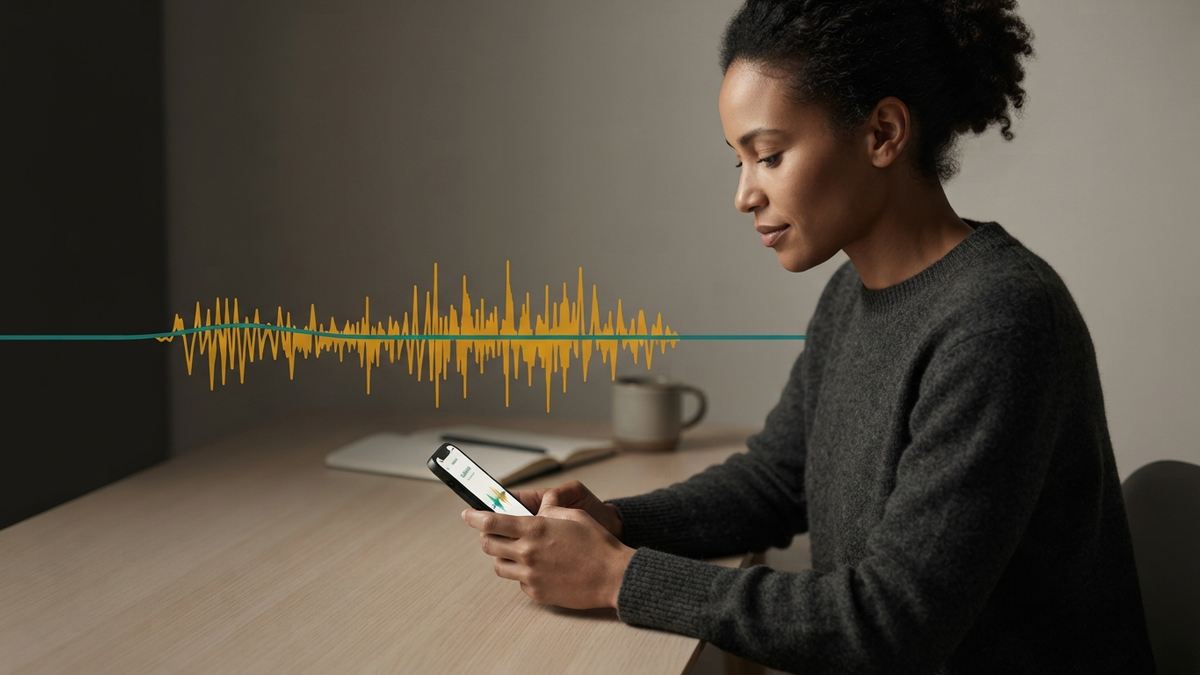
High performers rarely burn out gradually. They function — meet the deadline, run the meeting, close the deal — right up until they can't, and the drop feels sudden even though the load had been building for months. It feels sudden because the part of you that would normally flag "something's wrong" is exactly what chronic stress tends to shut off first. That's not a willpower problem. It's a body-awareness problem, and it has a name: interoception.
The pattern coaches keep seeing — including "quiet burnout"
Ask a performance or wellness coach about their most capable clients, and you'll hear a version of the same story: the person who was fine on Tuesday and unreachable by Friday. Not a slow fade — a wall. Coaches and somatic practitioners have taken to calling the lead-up state "functional freeze": a person keeps meeting external demands while internally running on empty.
Coach Samuel Au captured one version of that pattern in plain language. A strong engineering manager kept hitting every deadline — "I'm fine. Honestly. The work's getting done." What changed was the between-session channel: long voice notes stopped; updates became "short now. Clean. Done." "She wasn't failing. She was withdrawing. Still shipping, still reliable, still "fine."" He calls it quiet burnout — "almost nobody catches it, because it doesn't look like burnout" (Samuel Au on LinkedIn, 2025). Output stayed intact. The person behind it thinned out.
Burnout-aware coach educator Kelly Swingler warns that standard coach training often misses this class of signal: if you are brought in "to coach 'performance', whilst missing the signs of Burnout, you're not helping — you become part of the problem." You don't have to niche in burnout, she argues, "but I do believe that every single coach, needs Burnout awareness" — at least enough to adapt questions when the signs show (Kelly Swingler on LinkedIn, July 2025). (She cites industry burnout percentages with caveats that the figures "keep changing"; those stats are not repeated here as settled facts.)
Swingler is also explicit about claim-safety in a related post: coaches ask “How do I tell a client they’re at burnout?” Her answer: “You don’t.” “That’s not your role.” “Diagnosis belongs to medical professionals.” “This work is not about diagnosing burnout” — and labeling a client as burned out “could be doing more harm than good” (Kelly Swingler on LinkedIn, Aug 2026). Burnout awareness is not a license to diagnose; medical professionals own that call. Tools that surface load and recovery trends for coaching questions belong on the awareness side of that line.
The numbers that are sourced for leaders still show how common pressure is at the top of the curve. Vistage's Q2 2025 research found 24% of CEOs experiencing feelings of burnout daily or frequently, and another 44% occasionally (Vistage). The McKinsey Health Institute frames burnout around exhaustion, mental distancing, and impaired cognitive and emotional regulation (McKinsey; page access can vary). None of those require a person to already believe they're burned out. You can be well into the pattern and still describe your week as "busy, but fine."
What's actually happening: the body's alarm goes quiet
Interoception is the sense that lets you notice what's happening inside your own body — a tightening chest, shallow breath, a racing heart before you've consciously registered you're anxious. It's the input a felt sense of "I'm not okay" is built from.
A 2025 scoping review of interoception research found a consistent pattern across studies of stress and trauma: reduced body awareness, not heightened sensitivity, is the more common response to sustained stress. The authors describe it as adaptive — the nervous system "may adapt by dampening awareness as a form of self-protection" after periods of chronic threat or overwhelm (PACJA scoping review). In plain terms: the alarm doesn't get louder as the load builds. For some people, under enough sustained pressure, it gets quieter.
It's worth being precise about how settled this science is. A 2025 systematic review of cardiac interoceptive accuracy and stress found genuinely mixed results depending on how each was measured — this is an active, evolving research area, not a single clean mechanism (ScienceDirect). What does hold up across the literature is the general shape: chronic stress and trauma are consistently linked to blunted, not sharpened, body awareness. The strain doesn't go away when you stop feeling it. It just stops being reported to you.
Why self-report can't catch what self-report is missing
This is the trap. The usual advice — "check in with yourself," "notice how you're feeling" — assumes the instrument doing the noticing is working. If interoception is the thing quietly going offline, the person most at risk is the least equipped to self-diagnose it. High performers compound this: they're often praised for exactly the trait that's hiding the problem — the ability to keep functioning regardless of internal state.
A coach relying on what a client reports in a weekly session is one layer removed from a signal that may already be unreliable at the source — and, as Au's case shows, the earliest warning may be a change in between-session communication, not a Monday confession.
Somatic coach David A. Caren describes the same blind spot under executive load: "When words alone fail to reveal an executive's true internal state, the body speaks through subtle physical cues—such as a tight jaw, shallow breathing, or a collapsed posture." His practical cue for high-stakes work: "Practice targeted body scanning during intense meetings. Notice micro-tension in the jaw, shoulders, or diaphragm" (David A. Caren on LinkedIn, Aug 2026). That is somatic data under pressure — still not a medical diagnosis — and it is exactly the class of between-meeting signal self-report often misses.
Where the existing tools fall short
Wearables (Oura, WHOOP, Apple Watch) read physiology — heart rate variability, resting heart rate, sleep — and that data is genuinely useful. But it asks the same thing of the user that self-report does: you have to look at the score and interpret it. If the felt sense that would prompt someone to check their readiness score is the thing that's dulled, the dashboard sits unopened.
Clinical-grade voice-biomarker tools exist too — Canary Speech is the best known — and they can screen for stress and burnout from a short voice sample. But that technology often lives inside healthcare and enterprise procurement, built to augment clinical or operational workflows, not handed to the individual or their coach as a self-awareness tool. Right modality, wrong ownership model for most coaching practices.
What an external read changes
The fix isn't a better reminder to check in with yourself — it's a read that doesn't require you to notice anything in the first place. That's the gap Ontor is built for: it compares how someone sounds with their own usual range across signals such as energy, stress, fatigue, and vocal strain, notices lasting shifts, and can suggest a short reset (How Ontor works). A voice check-in or speaking session can capture a signal whether or not the person's own felt sense is available that day.
For a coach, that turns into a trend to review before a session instead of a memory to reconstruct: is this client's baseline drifting, independent of what they'd tell you unprompted — and independent of whether they still sound "fine" while quietly withdrawing? For a high performer, it's an outside check on the exact blind spot that got them praised for over-functioning. Ontor does not diagnose burnout, predict collapse, or replace a coach's judgment — including the burnout awareness Swingler argues every coach needs.
Read more on how voice biomarkers work or see how this compares to what a wearable measures.
FAQ
Why don't high performers notice burnout until they collapse? Chronic stress can blunt interoception — the sense of what's happening inside your own body — as a protective adaptation. Research links dampened body-awareness to sustained stress and trauma, which means the people best at pushing through are often the least able to feel the cost building up.
What does "quiet burnout" look like to a coach? Often intact output with thinning engagement — for example, between-session voice notes going from long and generative to short and "done," while the client still says they're fine (Au).
Isn't burnout just about workload, not body awareness? Workload is the fuel, but the collapse pattern is about awareness — and about coaches spotting load before they keep pushing performance (Swingler). Awareness still is not diagnosis: Swingler separately insists coaches must not tell a client they are “at burnout” — that determination belongs to medical professionals (Swingler — ethics).
How would a coach or high performer catch this without relying on self-report? With a read that doesn't depend on the person noticing anything — including voice signals compared with their own usual range during normal speaking (How Ontor works).
Ontor is a general wellness tool for self-awareness. It does not diagnose, treat, or predict any condition, and it is not a substitute for clinical care or professional judgment.
Curious whether this fits your practice or your own work? Join the Ontor beta → · Read the FAQ