Ontor helps retain top reps and reduce high turnover.
Ontor helps identify when your sales reps get fatigued and helps them recover to peak performance by providing near-real-time feedback about their state.
Talk through a sales-team pilotThe rep gets something useful during the workday.
Ontor compares each call with that rep’s usual range. If pressure lasts through the call, it suggests a short exercise before the next one. The rep can speak again afterward and see whether the reading changed.
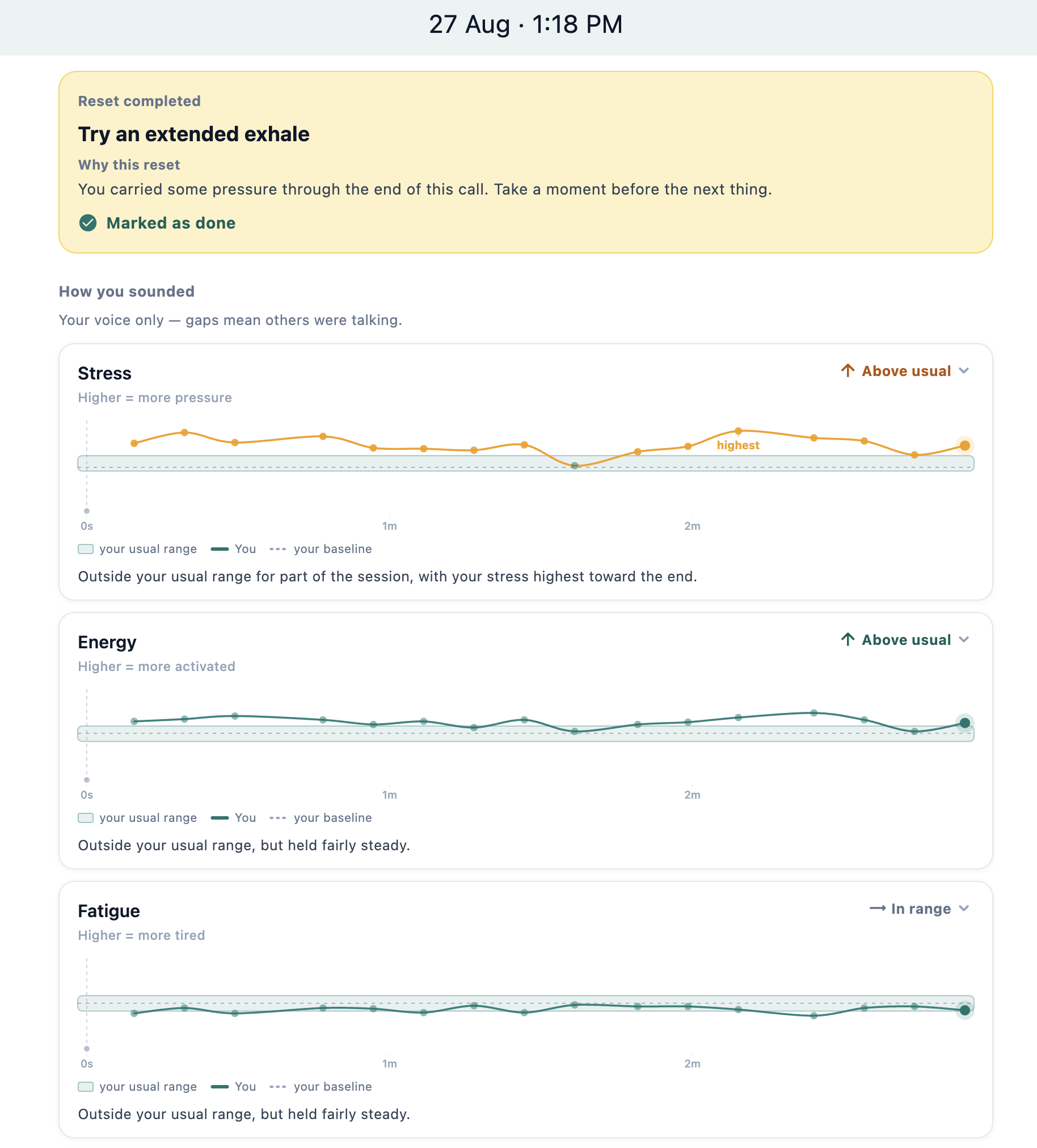
The manager sees whether the same change is showing up across the team.
This is an illustrative aggregate view. It uses the same markers and usual-range comparison as the rep’s view, but removes the individual readings.
12 reps contributing
Stress and vocal strain are showing up more often in late call blocks, while speech clarity is steady. Review the afternoon call load before assigning another talk-track drill.
A resignation creates costs that headcount does not show.
Accounts need coverage. The manager spends time hiring instead of coaching. A replacement can fill the seat before they replace the previous rep’s output.
Ontor cannot tell a manager which rep will leave. It can show when a team’s usual pattern has changed, giving the manager a reason to check workload, coaching, and support before the exit interview.
Test it against the numbers you already use.
Start with one SDR team. Establish its usual pattern, introduce the private resets, then compare the aggregate changes with late-day call consistency, attainment, absence, and turnover. We have not proved a retention lift yet. The pilot is how we find out whether this helps a manager act sooner.
Talk through the pilot