
The carrier canceled. Your next recovery call still has to sound calm.
The load just fell off. Carrier cancel. Last-minute. Your desk goes into scramble: find coverage, call the shipper, call the next carrier, keep the freight moving while you are still charged for the miss.
That is not an overnight 3AM interrupt. It is not the hangover between ordinary sales dials. It is not a daytime dial-block warm-up either. It is post-fallout voice. Calm acknowledgment first. Then recovery dials while energy, stress, and confidence may still sit outside your personal usual range.
Freight brokerage owners, agency operators, and sales-ops leaders already know the operational playbook. What still gets missed is how you sound on the next recovery call when the freakout has not fully left your voice.
Download Ontor - 14 days free, no card required
Calm acknowledgment is the recovery move. Freakout burns trust.
John A. Rogers (independent freight broker / multi-business owner) put the sequence in plain language on LinkedIn after a carrier canceled:
"I had a carrier cancel, and my reply was simple, 'OK, things happen. I'll fix it, thank you for letting me know.'"
The carrier had been ashamed to call. Brokers often berate carriers when things go wrong, so she did not want to pick up the phone. Rogers' point is operational, not soft:
"I understand, I don't get excited or pissed off, I just fix it. Once a carrier falls off ... I immediately go into recovery mode."
Commenters on that thread named the cost of the opposite habit. John Myers: brokers who freakout over every inconvenience are in the wrong field. Crying about it and writing an emotional freight guard is not going to get the load recovered any faster. Jimmy Durden: we have to be professional, pick ourselves up and move on. We do not want to stress and scramble, but this is the job. Daniela Garcia: creating an environment where carriers feel comfortable picking up the phone means we can solve problems faster.
The business consequence is clear enough without inventing metrics. Emotional freakout after fallout burns carrier trust and slows recovery. Carriers hide problems. The next shipper and carrier calls still have to happen under scramble stress. Composure is leverage on the recovery path, not a personality slogan.
What this article is not answering
Three published Ontor pieces already cover adjacent freight and phone moments:
- Overnight voice composure answers how you sound after a sleep interrupt at 2AM or 3AM.
- Hangover between sales calls answers unpaid emotional and admin recovery between ordinary dials when leaders treat those minutes as empty.
- Freight sales call-block readiness answers daytime readiness between dial blocks after exception stress on the floor.
This article answers a fourth question: after a carrier or load fallout, when recovery dials start from scramble stress, how do you notice composure, energy, and confidence have left your personal usual range before the next shipper or carrier hears it?
Same freight brokerage sales-leader beachhead. Different moment. Different ops move.
Scramble stress is still in the voice when the recovery dial starts
Rogers' sequence is the spine: calm acknowledgment, then immediate recovery mode. The hard part for many desks is the seconds and minutes between those two moves. The cancel lands. Adrenaline spikes. You still have to sound steady while you shop coverage, reset the shipper's expectation, and negotiate the next rate under time pressure.
A light corroboration from the carrier-sales side (not the lead): Aleks Bates notes that stating a rate with a shaky voice can lose the negotiation even when the number is justified. Cap that as secondary color for how audible uncertainty shows under rate pressure. Do not treat it as brokerage-owner proof. The primary buyer language here is Rogers' recovery-mode composure after a cancel.
TMS and CRM will show the fallout and the activity that follows. Call recordings will show what was said. They still leave a narrower gap: whether the person making the next recovery call is already outside their usual voice before the first new connect.
A private usual-range check before the next recovery dial
Ontor is a performance tool that reads how you sound, not what you said. While someone speaks, it compares voice signals to that person's own usual range. When a lasting shift shows up (for example stress, energy, confidence, vocal strain, or breathing), it can suggest a short reset. People can also compare before and after.
That matches the post-fallout window without turning it into medical advice, revenue theater, or a hire-fire instrument. Ontor's public product framing is personal-baseline self-insight: acoustic patterns versus your own rolling usual range, not a population score and not a diagnosis. For teams, leaders see aggregate patterns that can inform workload, coaching, and support. Individual sessions and readings stay with the person.
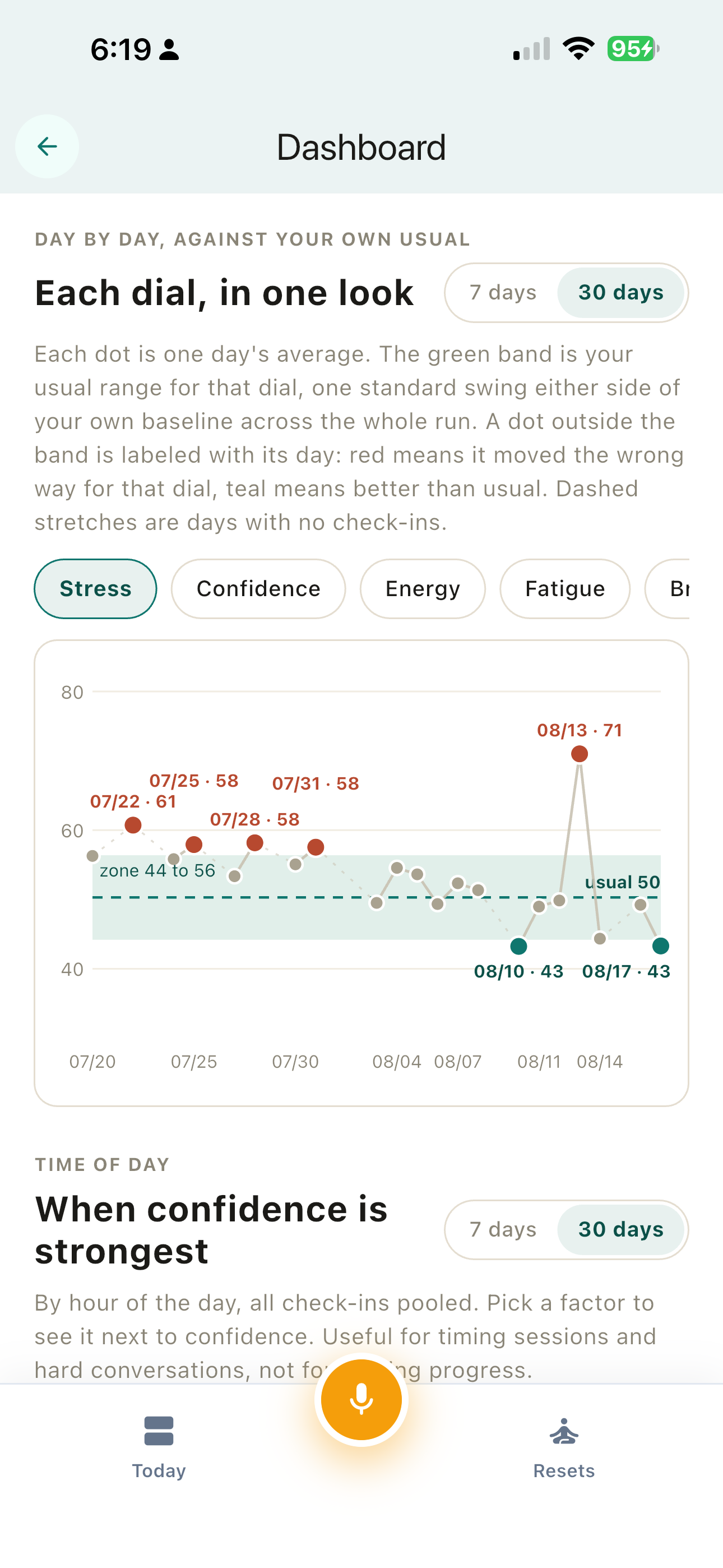
In my own Ontor session history, the post-fallout composure gap looks like this: after a high-stress stretch, stress and energy can sit outside my personal usual band while the next hard conversation still has to start. Dial boards and load boards would still look like "just fix it." The private usual-band drift is what the scramble stack does not surface before the shipper or next carrier hears the voice.
Here is stress across dials against my personal usual range, from my own Ontor dashboard and session history. Read it as the private scramble-stress view after a hard stretch, before the next recovery connect. It is not a diagnosis, and it is not outcome data from your brokerage floor:
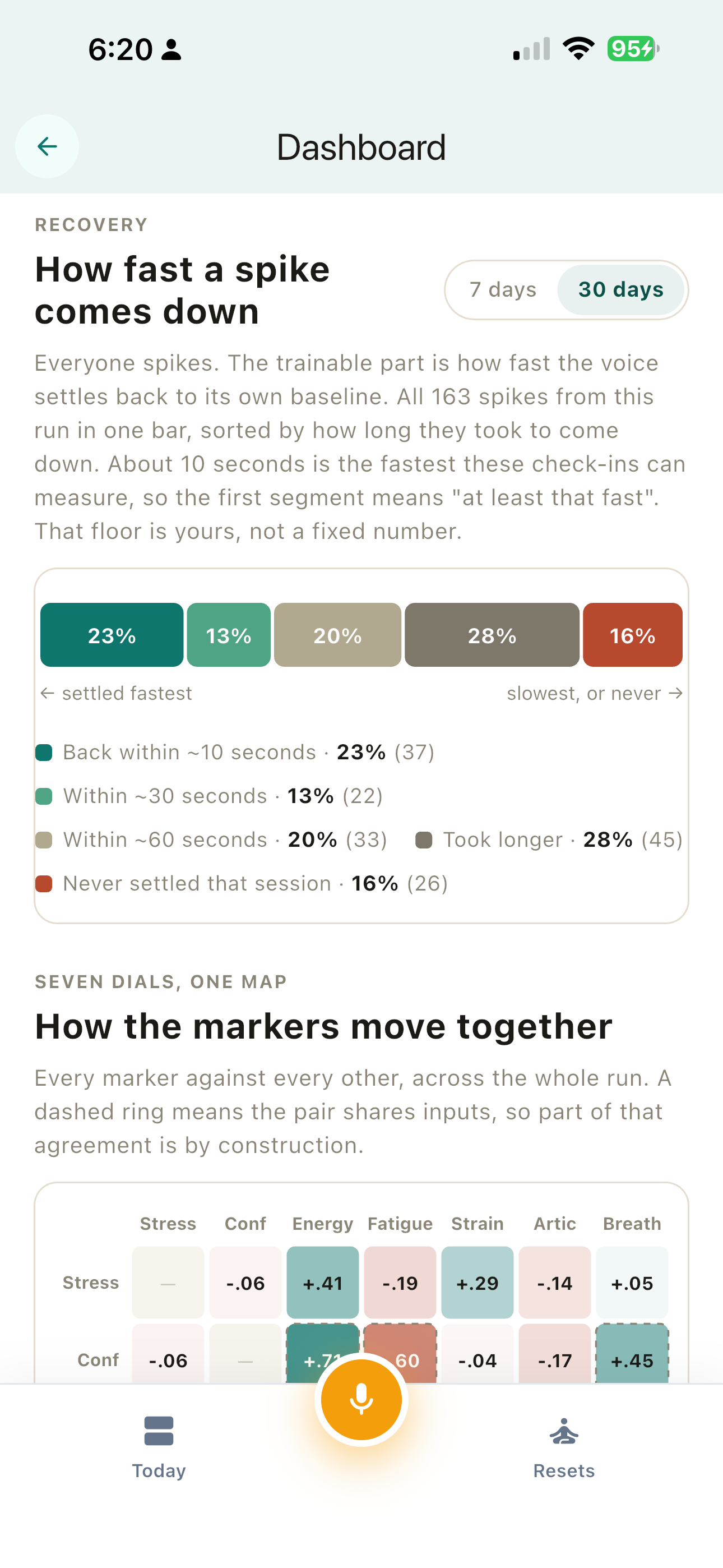
And here is how often stress spikes in that same Ontor history settled back toward my personal baseline, including stretches that never settled in-session. Useful as a private recovery check after fallout scramble before the next dial. It is not proof that a suggested reset caused recovery, and it is not clinical recovery science:
Download Ontor - 14 days free, no card required
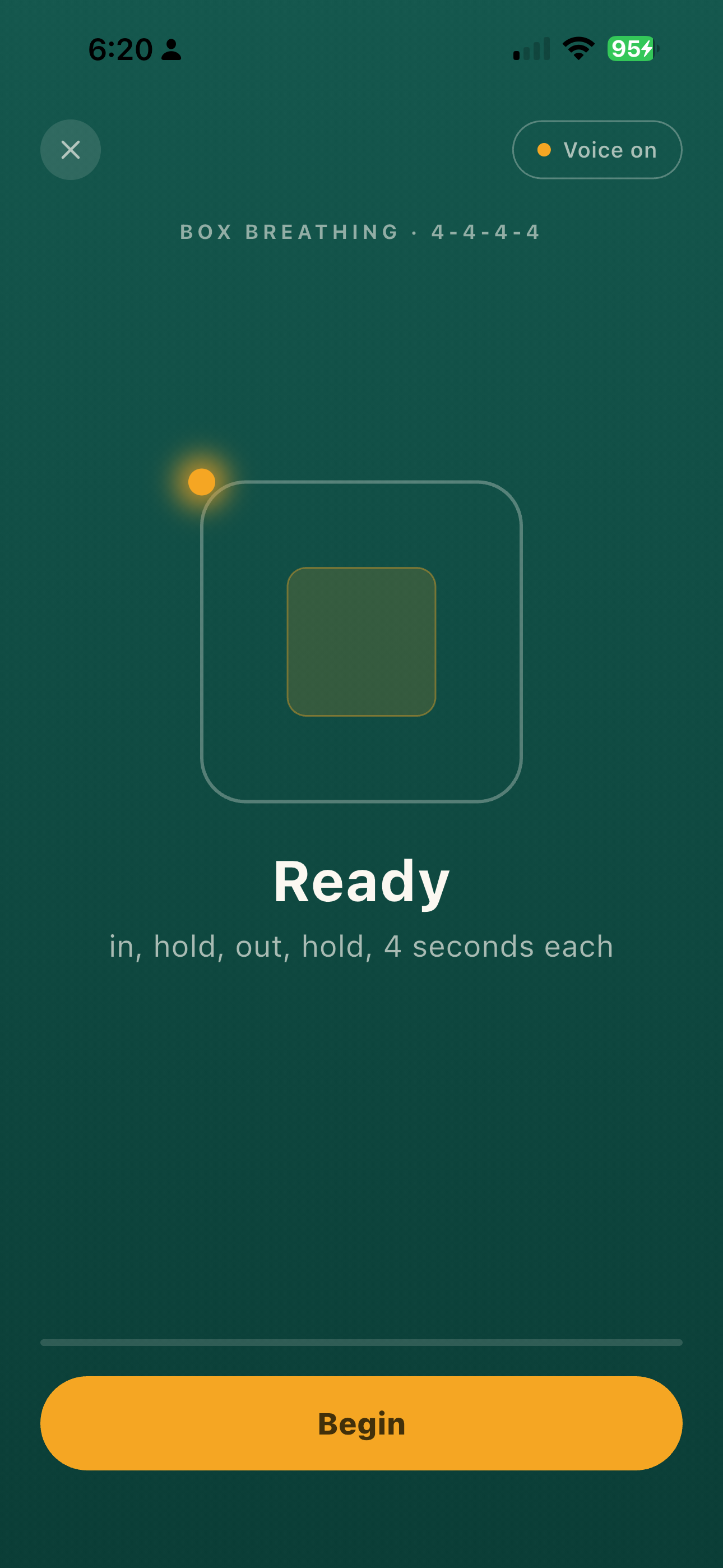
Short resets fit the same loop Rogers describes: acknowledge, then recover. When confidence or pressure drifts outside usual range after a cancel, Ontor can surface a brief private exercise before the next recovery call. Here is a box-breathing reset screen from my own product use. Cap any medical claim. The product point is a short private reset so the next shipper or carrier does not inherit the scramble register:
In exploratory work on that same personal Ontor history (one person, not a population study), high-stress episodes often did not show an observed return to my personal median within an hour. That is one reason a private usual-range check after fallout scramble matters. It is not evidence that a suggested reset caused recovery.
This is not a claim that voice markers diagnose panic, predict win rate, replace manager judgment, or guarantee recovered loads after a reset. The claim stays narrow: when a carrier cancel pushes how you sound away from your usual range, a private signal plus a short reset is a loop you can run before the next recovery dial.
What to try on the next fallout recovery block
Do not wait for a research committee if you are the person who still makes the recovery calls.
- Install Ontor on the machine you already use for shipper and carrier conversations.
- After the next cancel or load fallout, run the calm acknowledgment, then check whether stress, energy, or confidence sit outside your usual range before you dial.
- If a lasting shift shows up, take the short suggested reset when the desk allows it, then make the recovery calls.
- If you lead a pod, keep leaders on aggregate patterns only. Personal readings stay with the person.
Soft secondary path if you are buying for a brokerage sales or carrier-sales desk and want a measured team look later: Ontor for teams.
Do not promise recovered-load speed, retention, or revenue lift from a trial. Measure whether you can tell when scramble stress left your usual voice before the next connect.
Bottom line
Carriers will keep falling off. Desks will keep scrambling. The gap that remains is post-fallout voice composure: calm acknowledgment, then recovery dials that still have to sound like you while energy and stress may sit outside your personal baseline.
Try Ontor on the next recovery call block after a fallout. That is the tool next step, not only a research conversation.
Download Ontor - 14 days free, no card required
About the author
Sabber Ahamed is the founder of Ontor and an applied ML scientist (PhD in geophysics and signal processing) who builds on-device voice tools. Ontor compares how you sound to your own usual ranges and suggests short resets, without claiming clinical or revenue outcomes from marker changes.
References
- I had a carrier cancel, and my reply was simple - John A. Rogers (LinkedIn) (buyer_evidence, primary)
- Comment thread on John A. Rogers' post - John Myers, Jimmy Durden, Daniela Garcia (LinkedIn) (corroboration: freakout burns trust / recovery speed)
- How to lose a negotiation as a carrier 101 - Aleks Bates (LinkedIn) (weak secondary: shaky voice under rate pressure, do not lead)
- How Ontor works
- Ontor for teams
- Install Ontor
- About the founder - Ontor
- Freight overnight voice composure - Ontor (overnight sibling, different question)
- Hangover between sales calls - Ontor (between-call hangover sibling, different ICP moment)
- Freight sales call-block readiness - Ontor (daytime dial-block sibling, different question)