
Prospects can tell when you're not present. Typing while listening is not free.
You already know the search. Why do I sound distracted on sales calls. Stop taking notes during discovery. Prospects can tell I'm not present. Typing while on a call. If that is you, this piece is for individual call-heavy employees: SDRs, BDRs, and AEs who live in discovery and demo blocks. Mid-market sales leaders coaching discovery presence can read it as the same floor problem from the other side of the headset.
Prospects do not only notice a bad prior call. They notice when you are half in the CRM. Half-beat-late reactions and "not present" delivery are a how-you-sound / energy problem under split attention, not a note-taking tooling gap. Ontor compares short speech windows to your usual range and can suggest a short reset when presence or energy drifts mid-conversation.
This is not hangover between sales calls (minutes between connects). It is not collections break-window fatigue (pre/post break distraction on a collections floor). The object here is mid-call presence while you are still on the line: notes, CRM typing, and split attention that show up in how you sound before a transcript or note tool ever gets reviewed.
Download Ontor - 14 days free, no card required
An exec paid the compliment sellers chase: never take notes, fully present
Brian LaManna (AE on a live $300K+ deal) posted the buyer line that sellers search for. An exec on the call said:
"By the way Brian, I appreciate that you never take notes on our calls."
"I feel like you are fully present and listening to what I share with you. It just feels like a real conversation."
Brian's own mechanism, in his words:
"When you take notes, you hear what they say. When you're fully present, you understand what they mean."
"When you multitask, you miss things."
Lead with that. The buyer named presence as the product of not splitting attention into a notes field. Quitting live notes cold-turkey restored a real-conversation feel. Commenters will pitch AI note-takers so the rep can stay focused. Useful insulation for CRM hygiene. Not the same as catching when your voice and energy leave your usual range while you stay "on" the call.
Leaders already hear "not present" in the first 60 seconds
Justin Jay Johnson (sales leader / coach who reviews hundreds of call recordings) says the tell is not the question list. It is how the rep responds:
"I've reviewed hundreds of call recordings and I can tell within the first 60 seconds whether a rep is actually on that call or not. Not by their questions. By how they respond to what the buyer says."
"They're physically on the call but mentally they're somewhere else. Thinking about what they're going to say next. Worried about the deal that slipped yesterday. Running on two hours of bad sleep and three coffees. And it bleeds into everything."
After a short pre-call state reset, he bets the recording changes:
"Do it before your next big call and look at the recording after. I'd be willing to bet you sound different."
A peer comment lands the same presence test from the other seat:
"Presence is the one thing nobody trains for but it shows up in every single call that you can feel within seconds whether the person on the other end is actually with you or just waiting for their turn to speak."
Keep any breathwork brand names or medical framing out of this article. Justin's useful spine for Ontor is the audible tell and the "you sound different" after a short reset, not a wellness protocol.
Corroboration: half-beat slower when typing while listening
SalesPitch (AI note-taker category blog; vendor marketing, capped as corroboration only) states the mechanism sellers feel on discovery:
"Typing while listening is not free."
"A rep splitting attention between "what did they just say" and "how do I phrase this in the notes field" reacts a half-beat slower to what actually matters."
"Looking at a keyboard instead of a camera reads as distraction even when a rep is genuinely engaged."
"typing while listening splits attention in a way that shows on a prospect's side of the call, in slower reactions and questions that miss what was just said."
Cap as vendor corroboration. Do not treat their AI-notes pitch as the Ontor answer. Their half-beat / distraction language pairs with Brian's buyer compliment and Justin's 60-second "not present" read. The wedge for this piece stays how you sound when half-present, not which note tool owns the CRM field.
Light tertiary color only: first-week SDR freeze-at-pickup stories (mind blank, heart pounding, tone over script) show acute how-you-sound under nerves. They are not the spine here. This article is mid-call split attention and presence, not the startled opener.
What note tools, transcripts, and self-listen still miss
Typical stack for an IC on discovery:
- Live CRM / notepad typing during the call
- AI note-takers so you "don't have to type"
- Gong / Chorus / recording review after the fact
- Manager feedback that you "sounded distracted" or "weren't present"
- Script and discovery frameworks that assume attention is free
Useful. Incomplete for the presence problem. Note tools ask whether the fields got filled. Transcripts ask what was said. Post-call self-listen asks whether one recording sounded okay later.
None of them continuously ask: during this discovery block, did energy, clarity, strain, stress, or confidence leave your own usual range in short speech windows while you were still on the call, half in the CRM, reacting a half-beat late? Ontor does not detect typing. Ontor does not replace AI note-takers. It reads how you sound versus your personal usual range while you speak, and can offer a short reset when a lasting shift shows up mid-conversation.
Prospects feel that first. Leaders often meet it as "you weren't present," weak follow-ups, or a deal that felt transactional instead of like a real conversation.
How this differs from hangover and break-window pieces
Hangover between sales calls answers: when leaders treat minutes between connects as empty, what unpaid recovery is compounding by call 10?
Collections break-window fatigue answers: do collectors sound distracted around scheduled breaks while dial boards and QA still miss it?
This article answers a different question: while you are still on a discovery or demo call, does split attention (notes, CRM typing, next-line rehearsal) show up as half-present delivery that buyers and recording reviewers already name, and can a personal voice baseline catch that leave mid-conversation?
Same call-heavy world. Different object. Mid-call presence under split attention, not between-call hangover and not collections break-window distraction.
Download Ontor - 14 days free, no card required
What Ontor adds when you are still "on" the call (private first)
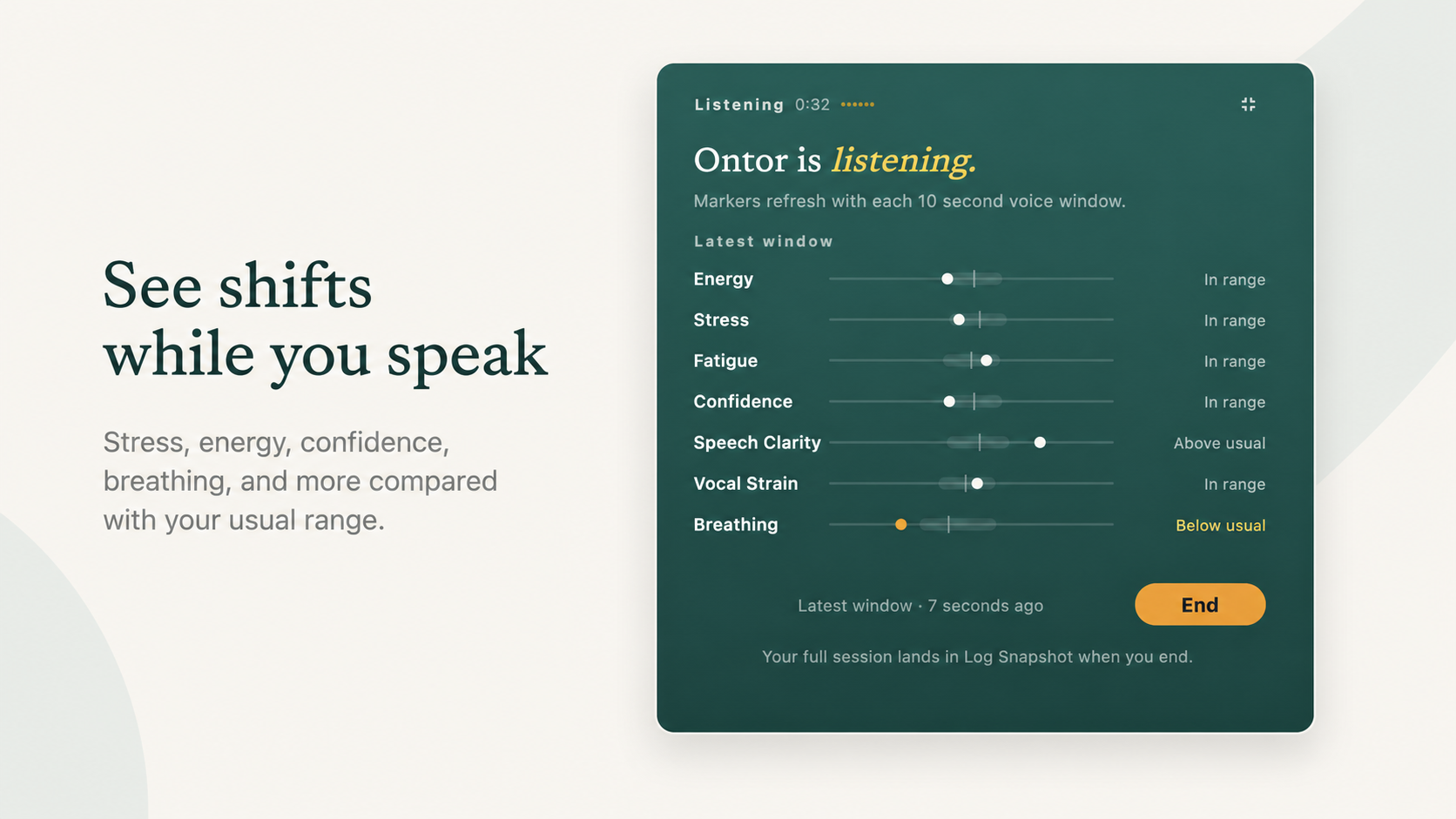
Ontor is a performance tool that reads how you sound, not what you said. While someone speaks, it compares voice signals to that person's own usual range. Markers refresh in short voice windows (on the order of about 10 seconds of speech). When a lasting shift shows up (for example energy, fatigue, stress, confidence, speech clarity, vocal strain, or breathing), it can suggest a short reset. People can also compare before and after.
Explicit boundaries for this topic:
- Ontor does not detect typing, CRM keystrokes, or eye contact with a keyboard.
- Ontor does not replace AI note-takers, Gong transcripts, or CRM hygiene tools.
- Ontor does not claim medical or clinical breathwork outcomes.
- The claim stays narrow: when presence drifts mid-conversation under split attention, a private usual-range signal plus an optional short reset is a loop you can run before the next half-beat-late response.
For teams, Ontor's public framing is aggregate patterns for workload, coaching, and support. Individual sessions and readings stay with the person. Sales leaders coaching discovery presence can watch cohort-level energy or strain drift. They do not get a personal scoreboard for hire or fire decisions.
In my own Ontor session history (founder exploratory data from my own product use, not your floor's outcome data), the half-present / split-attention pattern shows up the same way Brian's buyer and Justin's recordings name it. A speaking block can still look "fine" as raw activity while energy, clarity, strain, or stress has left my personal usual range in the short windows during speech. I am still "on" the call. Delivery is already drifting.
Here is the live listening view from my own Ontor product use: markers refresh with each ~10 second voice window and sit against my usual range. In this window speech clarity sits above usual while breathing sits below usual. That is closer to "my presence/energy left my band while I kept talking" than a filled notes field:
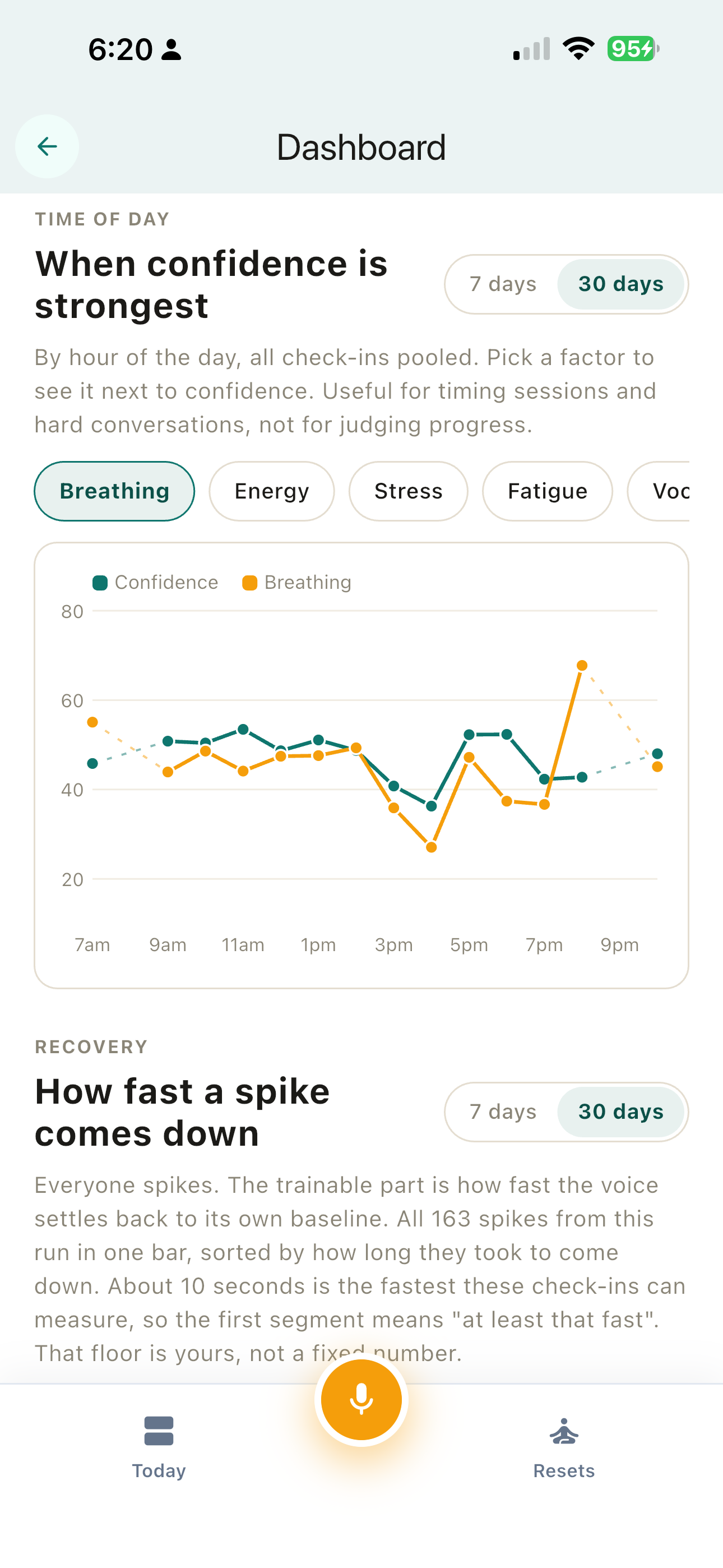
Here is confidence with breathing by hour from that same Ontor history. Confidence can sit fine early, then leave my personal usual later in a long speaking day. Read it as founder exploratory data on personal-baseline drift across a discovery-heavy day, not proof of deal outcomes and not evidence that Ontor saw me typing:
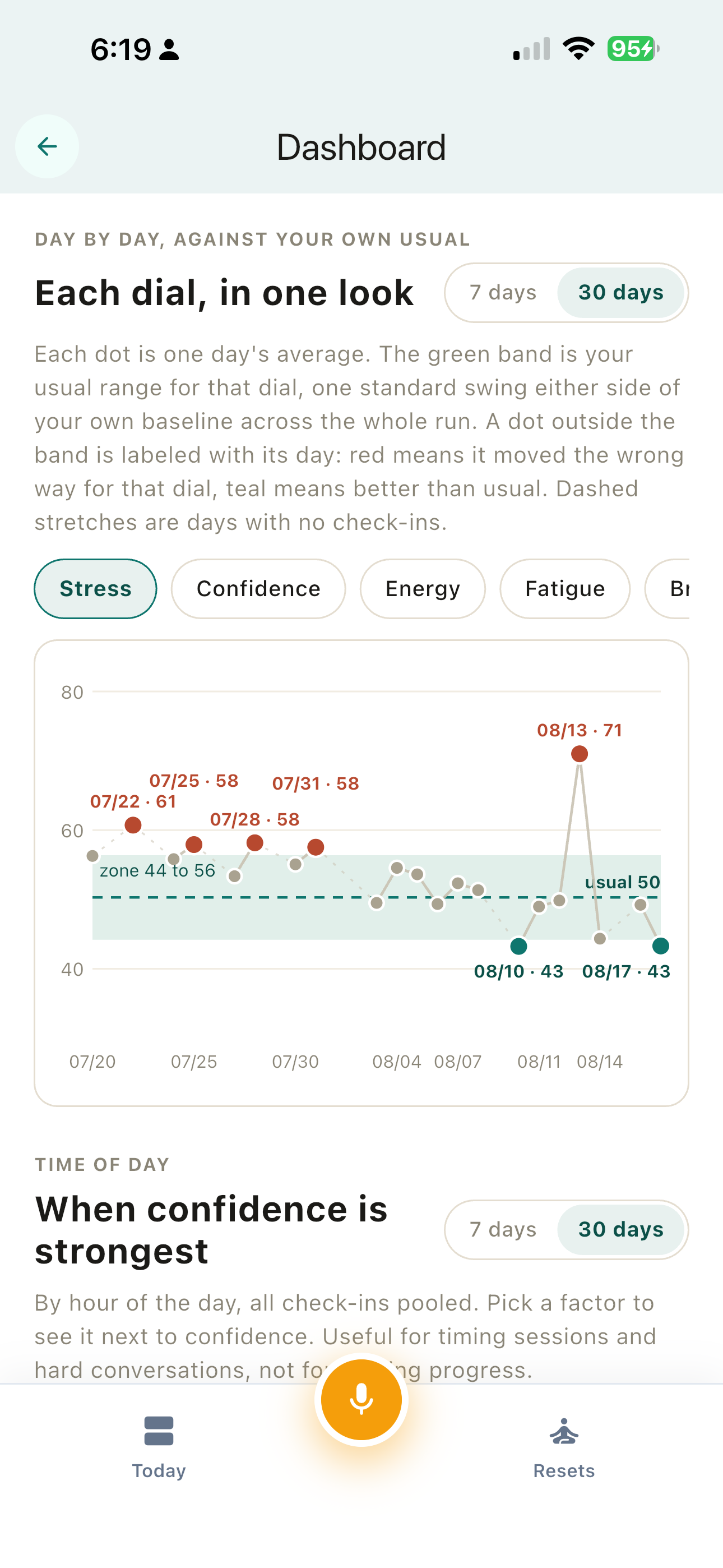
Here is stress day by day against my personal usual band (zone ~44 to 56, usual 50) from the same session history. Red points sit above my usual range. Useful as a private check for how often voice-state leaves the band across calls while a CRM can still look complete. It is not a hire-or-fire score and it is not proof that a suggested reset caused better presence:
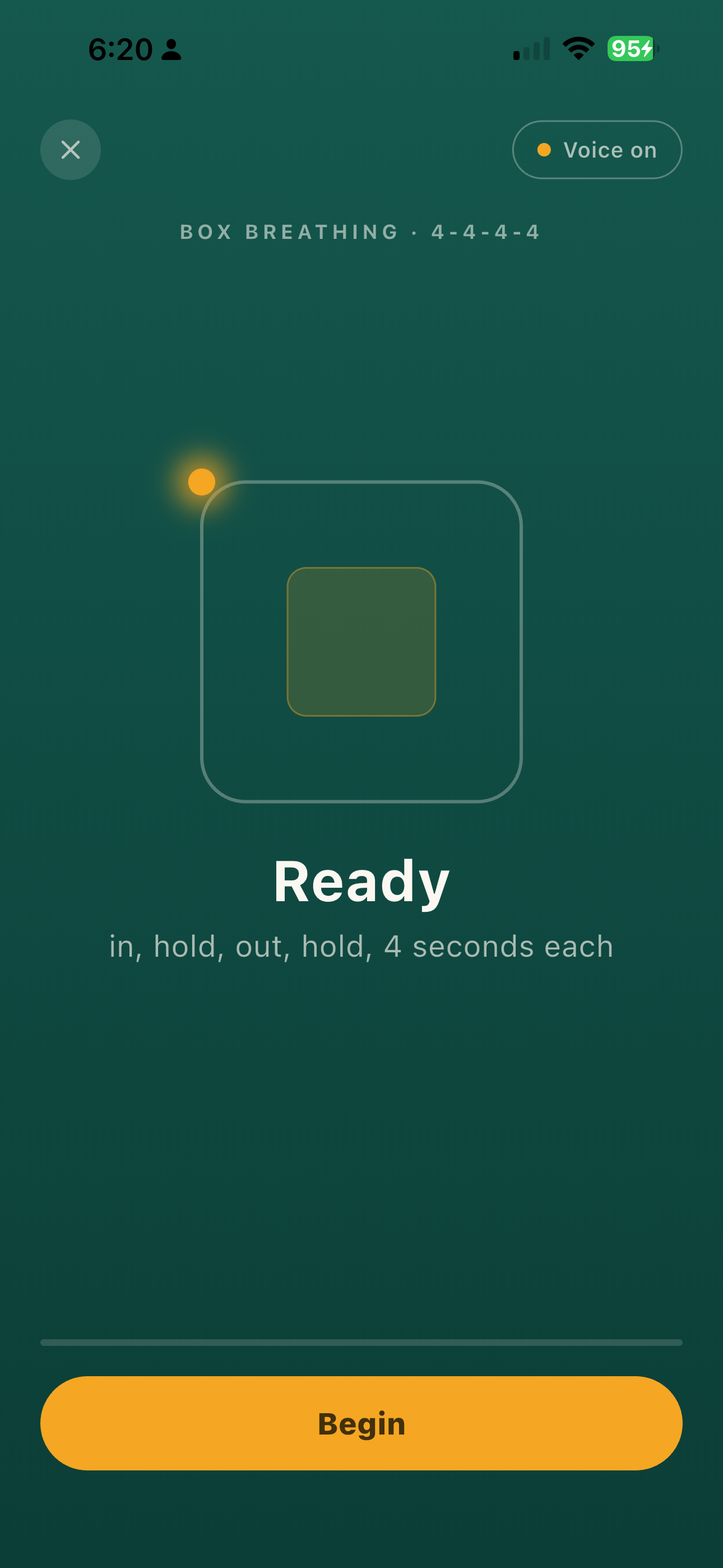
And here is the short reset the product offers when a lasting shift shows up: box breathing, 4-4-4-4. That is the tool form of the "you sound different" check Justin points at after a short state reset, available privately without a manager guessing from a recording sample. It is not a medical protocol and it is not a claim that one cycle restores full presence on the next discovery question:
This is not a claim that voice markers diagnose attention, prove cognitive improvement, predict revenue, or replace manager judgment. The claim stays narrow: when note tools and transcripts miss half-present delivery, a private signal plus a short reset is a loop people can run mid-conversation, while leaders watch cohort patterns only in aggregate.
What to try on your next discovery call
Do not wait for a research committee if you are an IC who still types while listening, or a leader who already hears "not present" in the first minute of recordings.
- Install Ontor on the machine you already use for discovery and demos.
- On the next discovery call, notice whether energy, clarity, strain, stress, confidence, or breathing sit outside your usual range in the short speech windows, especially when you catch yourself half in the CRM.
- If a lasting shift shows up, or if you can already tell you are reacting a half-beat late, take the short suggested reset between questions or after the call block. Then continue instead of stacking more half-present delivery.
- If you coach a pod, keep leaders on aggregate patterns only for presence / energy drift mid-discovery. Personal readings stay with the person. Treat Brian's "fully present / real conversation" buyer language and Justin's 60-second "actually on the call" tell as performance controls, not only soft skills. Pair with post-call self-listen the way Justin suggests. Do not treat Ontor as a typing detector or a note-taker replacement.
Soft secondary path if you lead mid-market discovery coaching and want a measured look later: Ontor for teams, or a research conversation / pilot on personal voice baselines versus mid-call presence drift.
Do not promise win-rate, retention, or revenue guarantees. Measure whether people can tell when half-present delivery left their usual voice before a prospect names it.
Bottom line
Prospects can tell when you are not present. Brian's exec buyer complimented never taking notes because it felt like a real conversation. Justin can hear "not present" in the first 60 seconds of a recording and bets you sound different after a short reset. SalesPitch (capped) names the half-beat cost of typing while listening. The gap that remains is personal usual-range energy, clarity, and strain in short speech windows, caught mid-call while you are still on the line, before the next distracted response.
Try Ontor on your next discovery call. Notice the short voice windows versus your usual range. Take the short reset when a lasting shift shows up. That is the tool next step, not only a pilot conversation.
Download Ontor - 14 days free, no card required
References
- Brian LaManna. LinkedIn post: exec on a $300K+ deal appreciated that he never takes notes; fully present; real conversation. https://www.linkedin.com/posts/brianlamanna_an-exec-in-a-300k-deal-gave-me-a-compliment-activity-7242906457917038593-gBTb
- Justin Jay Johnson. LinkedIn post: can tell within 60 seconds whether a rep is actually on the call; mentally elsewhere bleeds into responses; sound different after a short reset. https://www.linkedin.com/posts/justinjayjohnson_ive-reviewed-hundreds-of-call-recordings-activity-7449253696430837760-EpES
- SalesPitch. "How AI Note-Takers Changed the Discovery Call" (vendor corroboration only): typing while listening is not free; half-beat slower reactions. https://www.usesalespitch.com/en/how-ai-note-takers-changed-the-discovery-call
- Ontor. "How it works." https://ontor.ai/how-it-works/
- Ontor. "Ontor for teams." https://ontor.ai/for-teams/
- Ontor. "About the founder." https://ontor.ai/about/
- Ontor. "Install Ontor." https://ontor.ai/install/
- Ontor. "Leaders treat the minutes between calls as empty. The hangover isn't." https://ontor.ai/blog/hangover-between-sales-calls/ (sibling, between-call angle)
- Ontor. "Collectors sound distracted around breaks. Dial boards and QA scores still miss it." https://ontor.ai/blog/collections-break-window-fatigue/ (sibling, collections break-window)