
Collectors sound distracted around breaks. Dial boards and QA scores still miss it.
Collections and ARM ops leaders already see dials, QA scores, and "bad calls." What still slips past is quieter and schedule-tied: collectors audibly lose focus in a predictable band around breaks. Pre-break calls drop focus. Post-break, distraction lingers. Speech analytics can spot the micro-patterns. Occupancy boards usually cannot.
This is not a cool-down after a hostile disposition. It is not the first-10-seconds opening hello. It is not mid-shift demeanor silence or overcompensation, not absolute Empathy and Tone versus a morning baseline, not empathy calluses across months of hardship work, not early-tenure confidence collapse, and not a shaky hard-ask. This piece is break-window audible fatigue: pre-break focus drop plus post-break linger, plus mid-flow stumble that needs a breathe and reset, not more multitasking. Harsh coaching tone also echoes into the next dial.
Download Ontor - 14 days free, no card required
Paying ops leaders put the break band in plain language
Julie Thompson (Director of Operations, Lotane & Associates) and Angela Armstrong (EVP and GM, TSI Healthcare) taught real-time speech analytics coaching on an AccountsRecovery panel, summarized publicly by Mike Gibb. Timing, they show, tells a story:
"Collectors sound distracted around breaks."
"Pre-break calls drop focus."
"Post-break, distractions linger."
"Speech Analytics helps managers spot when fatigue and distraction hurts performance by reading these micro-patterns."
That is not "one bad call." It is a schedule fingerprint leaders miss when they only coach isolated mistakes. Dial volume can look healthy while the voice on break-adjacent connects already drifted.
TSI Healthcare RCM's own recap of the same AccountsRecovery speech-analytics training panel (Armstrong with Thompson and Scott Hamilton) adds the mid-flow coaching move:
"Collectors repeat, stumble, or lose flow. Teach them to breathe. Reset. Respond."
Kill the multitasking myth. Focus beats speed. When a collector scrambles mid-script, the answer is a short breathe-and-reset, not another overlay of prompts.
They also name the leadership echo:
"When feedback feels harsh, it echoes into the next call."
So the break window is not only agent fatigue. It is also how coaching tone lands on the next dial after a shoulder tap that felt like policing instead of "Need a hand?"
What dial boards, QA cards, and one-off listen-backs still miss
Typical stack:
- Schedule adherence and occupancy
- Dial / connect / recovery boards
- Absolute Empathy and Tone QA
- Live monitoring when a supervisor happens to be on that line
- Speech analytics / sentiment overlays already on the floor
Useful. Incomplete for Thompson and Armstrong's band. Occupancy says the seat was busy. QA scores one painful recording. Live monitoring catches what a coach overheard. None of them continuously asks: does this collector's energy, focus, breathing, or flow leave their own usual range in the short speech windows sitting in the pre-break drop and the post-break linger?
Borrowers hear that first. Leaders often meet it later as a "bad call," a missed close, or a compliance near-miss that looks like attitude.
Corroboration: mid-call breathe/reset is already taught as negotiation craft
Melony Frizzell, Senior Director of Training and Development at Revco Solutions, frames collections negotiation as science (compliance and process) plus art (how you get there). Tone and rapport are the art:
"The art is this is how you're going to do it. And so that's where the tone comes in. That's where the building rapport comes in."
For an angry, mouthing-off consumer she teaches a short mid-call composure reset: take a deep breath, acknowledge the frustration, then ask for a chance to help. That is the same family of move Armstrong and Thompson name for mid-flow stumble: breathe, reset, respond. It is not multitasking through the scramble, and it is not waiting for next week's QA listen-back.
Jenna Petro, VP of Operations at First Financial Resources (medical collections), separately trains that when a consumer turns combative the collector must stay calm so the consumer comes down and matches that tone, and that every call should start with a clean slate. Keep that as composure corroboration, not this article's lead. The unique gap here remains schedule-tied break-window fatigue plus stumble-to-reset coaching, not hostile-call hangover and not opening-hello alone.
How this differs from hostile cool-downs, first-10s hello, demeanor drift, and related pieces
Cool-downs after hostile calls answer: was this call coded too hot to continue immediately? Post-abuse recovery.
Tone in the first 10 seconds answers: does opening-window personal voice energy versus that collector's usual hello decide whether they stay?
Demeanor drift answers: if you already live-monitor, do you still miss mid-shift personal demeanor drift before conflict?
Empathy and Tone vs baseline answers: when absolute QA grades calm, do you still miss drift versus this collector's morning voice?
Empathy calluses answers: after dozens of similar hardship conversations under quota, has cumulative numbness set in?
Early-tenure confidence answers: is a new collector losing confidence across the first 60 days?
Hard-ask shaky voice answers: do consumers still hear the shake when the ask lands?
This article answers a different question: on US collections / medical ARM voice floors that already run speech analytics or live monitoring, do leaders still miss schedule-tied break-window audible fatigue (pre-break focus drop and post-break linger), and when collectors stumble mid-flow, do they coach breathe/reset instead of multitasking, while watching how harsh coaching echoes into the next dial?
Same collections beachhead. Different moment. Different ops move.
Download Ontor - 14 days free, no card required
What Ontor adds on the break window (private first)
Ontor is a performance tool that reads how you sound, not what you said. While someone speaks, it compares voice signals to that person's own usual range. Markers refresh in short voice windows (on the order of about 10 seconds of speech). When a lasting shift shows up (for example energy, fatigue, stress, confidence, speech clarity, or breathing), it can suggest a short reset. People can also compare before and after.
For teams, Ontor's public framing is aggregate patterns for workload, coaching, and support. Individual sessions and readings stay with the person. Leaders can see team-level context for when a pod's break-adjacent dials sit outside usual range more often. They do not get a personal scoreboard for hire or fire decisions.
That is the product difference from "coach the bad call" alone and from absolute Empathy and Tone cards. Absolute QA asks whether one recording passed a rubric. Speech analytics already on many floors can flag trends. Ontor asks whether this voice left its own usual band, privately, in the short windows that sit in the pre-break drop and the post-break linger, and whether a short breathe/reset is available before the next dial.
In my own Ontor session history, schedule-tied distraction shows up the same way Thompson and Armstrong named it for collectors. A block can still sound "fine" in the ordinary sense while breathing or energy has left my personal usual range in a predictable afternoon band. That private usual-band shift is the micro-pattern dial boards miss.
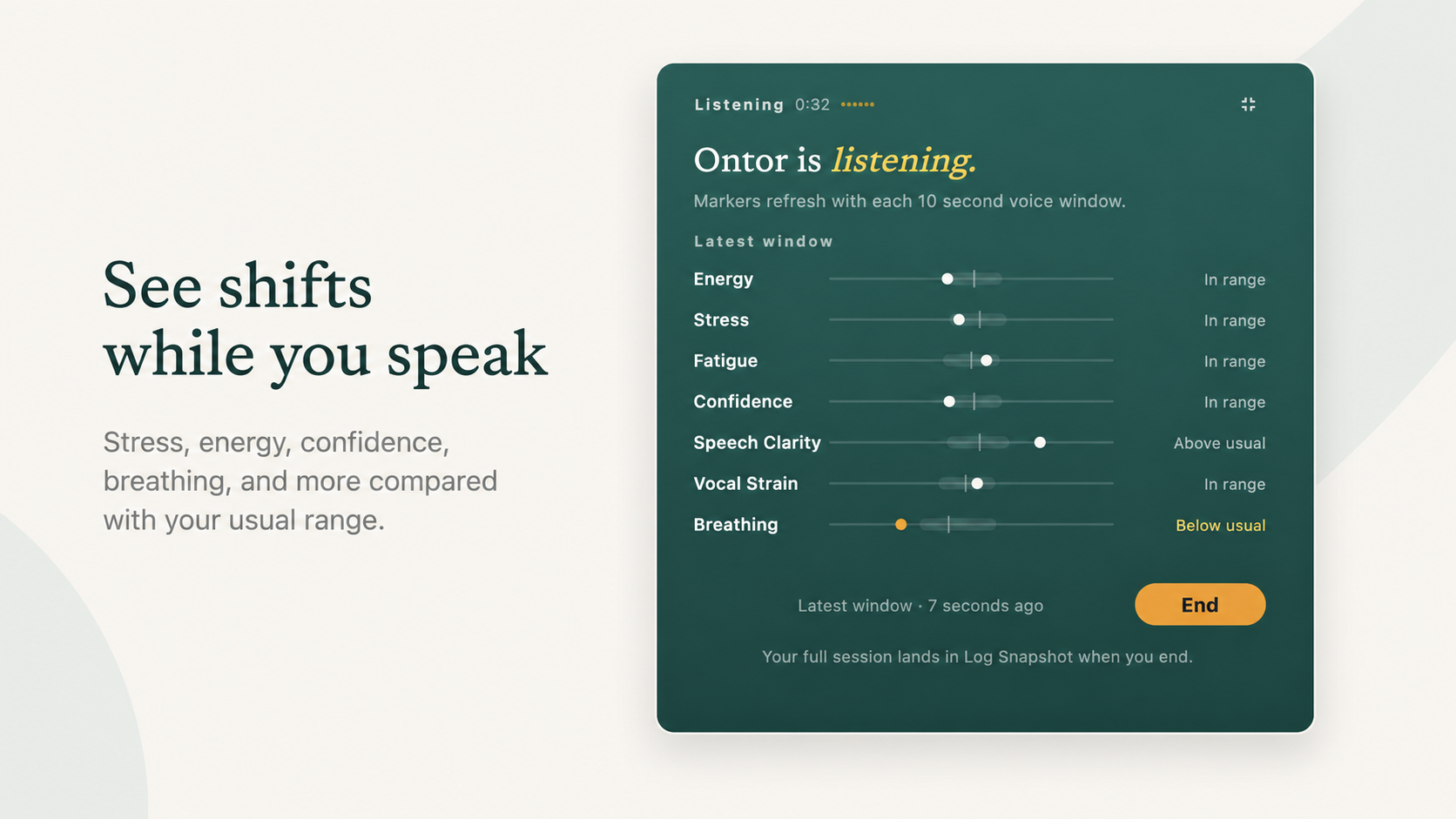
Here is the live listening view from my own Ontor product use: markers refresh with each ~10 second voice window and sit against my usual range. In this window speech clarity sits above usual while breathing sits below usual. Absolute Empathy and Tone would still ask only whether the line sounded calm enough. This is closer to the mid-flow stumble Armstrong and Thompson coach as breathe, reset, respond:
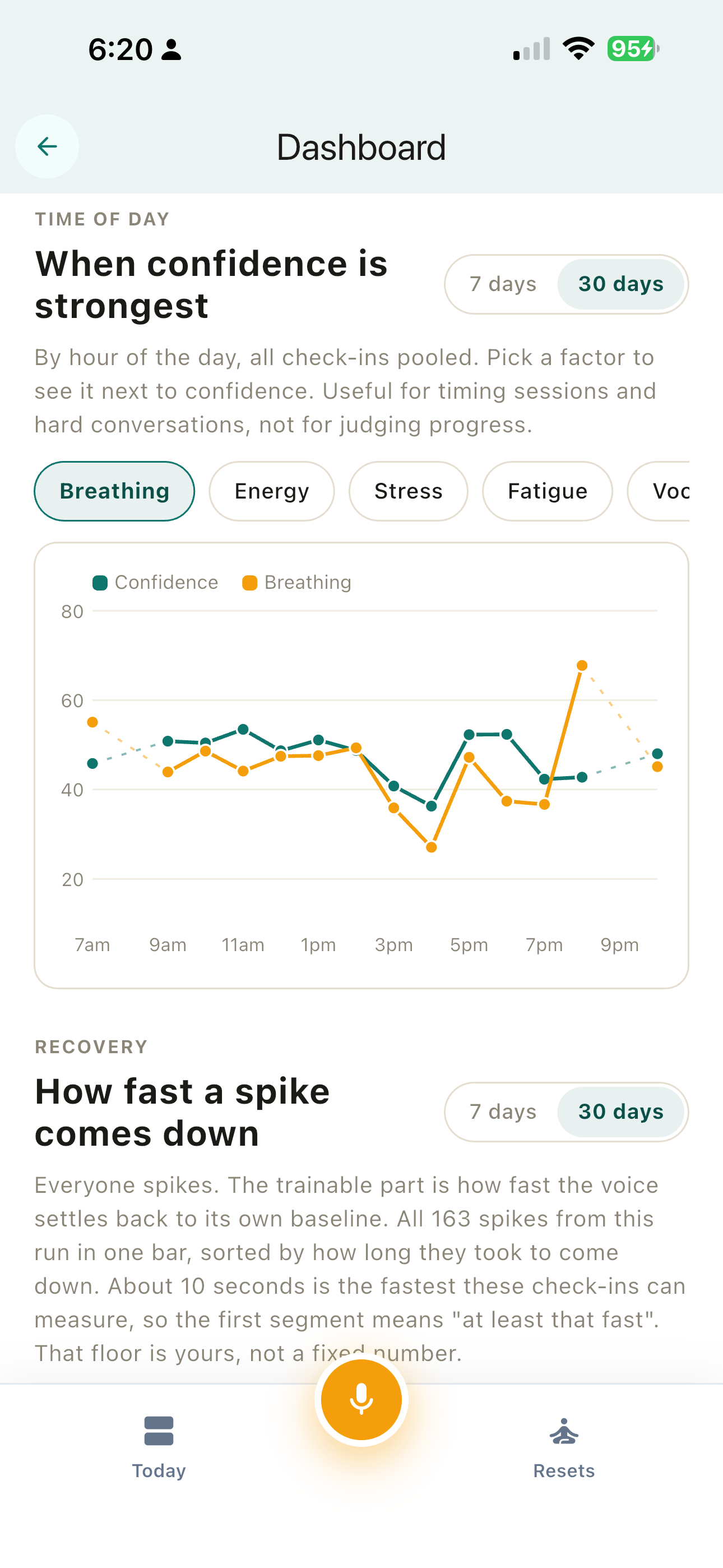
Here is confidence with breathing by hour from that same Ontor history. Breathing drops sharply through the afternoon and bottoms near 4 pm in this 30-day pool, then recovers later. Read it as founder exploratory data on schedule-tied voice drift versus my personal usual range, not collections floor outcome data. It is the private view of a break-adjacent band leaders miss when they only score isolated calls:
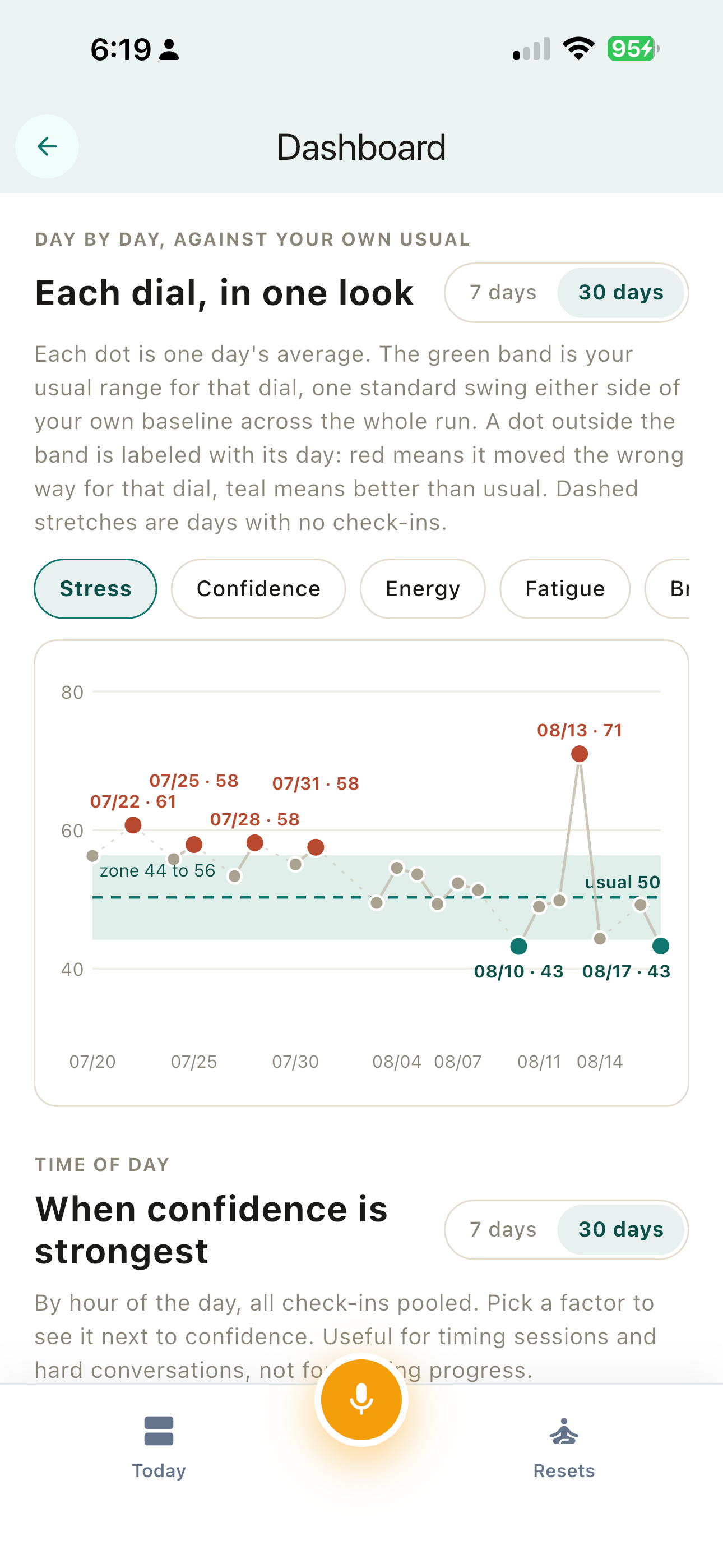
Here is stress day by day against my personal usual band (zone ~44 to 56, usual 50) from the same session history. Red points sit above my usual range. Useful as a private check for how often voice-state leaves the band across dials, including blocks that sit next to breaks. It is not a hire-or-fire score and it is not proof that a suggested reset caused recovery:
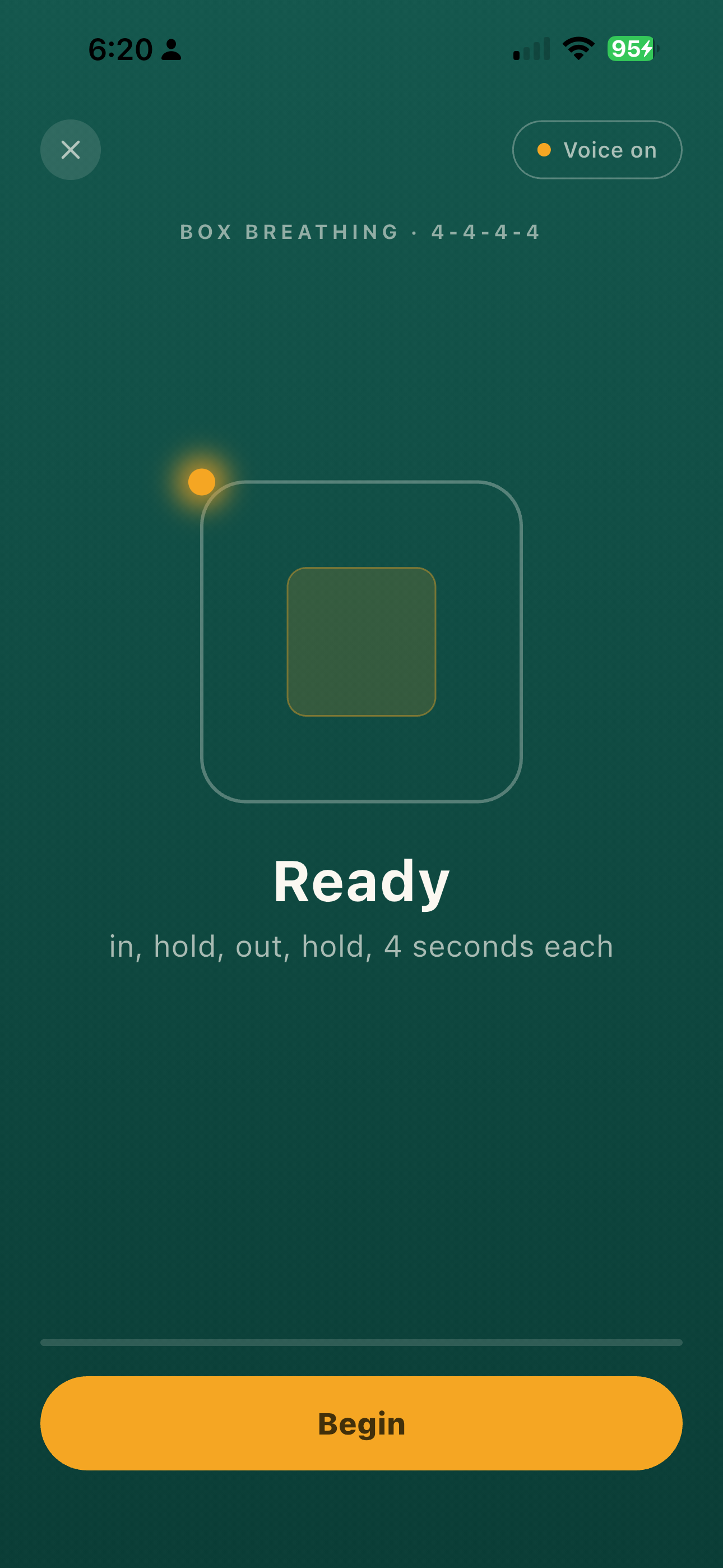
And here is the short reset the product offers when a lasting shift shows up: box breathing, 4-4-4-4. That is the tool form of "breathe. Reset. Respond," not a claim that one cycle fixes recovery rates:
This is not a claim that voice markers diagnose break fatigue clinically, predict payment rates, replace manager judgment, or guarantee better post-break performance after a reset. The claim stays narrow: when dial boards and absolute tone cards miss schedule-tied personal drift, a private signal plus a short reset is a loop people can run before the next break-adjacent dial, while leaders watch cohort patterns only in aggregate.
What to try on the next break-adjacent call block
Do not wait for a research committee if you run medical ARM or recovery voice floors with speech analytics or live monitoring already in place.
- Install Ontor on the machine collectors already use for outbound and inbound connects.
- On the next live block that sits in the 20 to 30 minutes before a scheduled break, and again in the first dials after return, notice whether energy, fatigue, stress, confidence, clarity, or breathing sit outside that person's usual range.
- If a lasting shift shows up, or if the collector repeats, stumbles, or loses flow mid-call, take the short suggested breathe/reset when wrap-up allows it. Then open the next contact instead of multitasking through the scramble.
- If you lead a pod, keep leaders on aggregate patterns only for break-adjacent drift. Personal readings stay with the person. Soften coaching tone on the floor; harsh feedback echoes into the next dial.
Soft secondary path if you are buying for a collections floor and want a measured look later: Ontor for teams, or a research conversation / pilot with collections ops and training leaders on break-window blocks.
Do not promise recovery-rate, AHT, or retention guarantees. Measure whether people can tell when the urge to push through a distracted pre-break or lingering post-break dial left their usual voice before the next connect.
Bottom line
Collectors sound distracted around breaks. Pre-break focus drops. Post-break distraction lingers. When collectors stumble mid-flow, teach them to breathe, reset, and respond, not to multitask harder. Harsh coaching still echoes into the next dial. The gap that remains is personal usual-range voice drift in that schedule band, caught before the next break-adjacent contact burns.
Try Ontor on the next pre-break / post-break call block. Notice the short voice windows versus that collector's usual range. Take the short breathe/reset when a lasting shift shows up. That is the tool next step, not only a pilot conversation.
Download Ontor - 14 days free, no card required
References
- Mike Gibb summarizing Julie Thompson and Angela Armstrong. "Ever listened to a call and thought - Was that just a bad call... or a bad collector?" LinkedIn post on real-time speech analytics coaching (AccountsRecovery panel). https://www.linkedin.com/posts/mikegibb_ever-listened-to-a-call-and-thought-was-activity-7390085152737165312-3Hlo
- TSI Healthcare RCM. "TSI leaders share speech analytics training strategies" (Angela Armstrong with Julie Thompson and Scott Hamilton; AccountsRecovery Speech Analytics Training). https://www.linkedin.com/posts/tsihealthcarercm_accountsrecovery-tsi-leadership-activity-7391277779788615682-mbDt
- Melony Frizzell / Kelly Parsons-O'Brien / Stacey Sexton / Greg Reffner. "The Art and Science of Negotiation" webinar transcript. AccountsRecovery.net, January 2026. https://www.accountsrecovery.net/wp-content/uploads/2026/01/The-Art-and-Science-of-Negotiation_Transcript.pdf
- Jenna Petro / Jim Beck / John Fuller. "The First 30 Seconds: A Look at What Predicts Successful Consumer Engagement" webinar transcript. AccountsRecovery.net, December 2025. https://www.accountsrecovery.net/wp-content/uploads/2025/12/The-First-30-Seconds_-A-Look-at-What-Predicts-Successful-Consumer-Engagement_Transcript-1.pdf
- Ontor. "How it works." https://ontor.ai/how-it-works/
- Ontor. "Ontor for teams." https://ontor.ai/for-teams/
- Ontor. "About the founder." https://ontor.ai/about/
- Ontor. "Install Ontor." https://ontor.ai/install/
- Ontor. "Collections leaders can see dials and recovery rates. They still miss readiness after a hostile call." https://ontor.ai/blog/collections-cool-down-between-hostile-calls/ (sibling, different question)
- Ontor. "Tone of voice in the first 10 seconds decides if they stay on the phone." https://ontor.ai/blog/collections-first-10s-tone/ (sibling, different question)
- Ontor. "You already live-monitor the floor. You still miss when a collector drifts off their own demeanor." https://ontor.ai/blog/collections-demeanor-drift/ (sibling, different question)