
When you're off your game you rush and over-explain. Years of practice don't remove it without a pre-call regulate.
You already know the search. Why do I over-explain on sales calls. Sound needy on a cold call. Rush when nervous on a sales call. Regulate before a call. If that is you, this piece is for individual call-heavy AEs and SDRs, plus the managers coaching them to stop sounding needy.
The audible tell is not "build more pipeline" as the first answer. When conviction is low, or you have not regulated before dial, pace and talk-ratio leave your usual range. You rush. You over-explain. Authority collapses in the voice before the content lands. Tenured peers still do it. Scarcity (only-shot / thin month) amplifies the same tell. Ontor is a private how-you-sound cue against your personal baseline, plus an optional short reset when pace, energy, or confidence drift sticks.
This is not SDR survival mode under pipeline pressure (month-end pipeline / investor pressure math while dials still look busy). It is not notes while talking / presence (mid-call CRM typing and half-present delivery). The object here is off-game competence and regulation: rush + over-talk when you are not settled, including before the hard call, and the pre-call reset that years of practice do not replace.
Download Ontor - 14 days free, no card required
Off your game: calm pace when you know it, rush and over-explain when you don't
Lauren Sharpe (new AE naming her own live-call tell) put the on/off switch in buyer language:
"When I know my stuff, it's obvious, you can feel it. My tone is calm, my pace slows down, and I lead the call. When I don't? You can definitely tell (at least I can). I rush, over-explain, and talk myself out of authority."
That is the spine. Low conviction on the topic shows up as rush + over-explain before a prospect ever argues the content. Script-correct calls still fail when pace and talk-ratio signal uncertainty.
Meghann Misiak (tenured seller peer commenting on Lauren's post) closed the "I'll grow out of it" loophole:
"This is so real... especially the part about RUSHING when you're off your game... over-talking, over-explaining, interrupting... even after YEARS of practice I still do this when I haven't done a good job of regulating before a call."
Years on the phones do not delete the pattern. Missing the short pre-call regulate still produces the same rush / over-talk / interrupt stack. Managers who only coach product knowledge or "sound more confident" miss the regulate step peers already invent privately.
Corroboration: not rushed or needy, not over-explaining, not treating this as the only shot
Ray Hasebroock (IC seller observing top teammates at Linq) named the same audible markers from the other seat:
"The reps who walked in knowing exactly what they'd do were the same ones who carried themselves calmly on the phones. Not rushed or needy. Not over-explaining. Simply steady."
"Their confidence wasn't in their script, it was in their presence over the zoom or phone."
And the scarcity tell that makes the rush worse:
"A confident rep knows there will always be another conversation. An unconfident rep thinks this conversation is their only shot."
Unconfident delivery, in his words, is visible instantly: pitch-slap, yank the rod on interest, sprint the process instead of pacing it. Lauren's off-game rush/over-explain and Ray's rushed/needy/over-explaining land on the same how-you-sound object. Scarcity (only-shot framing) amplifies it. The fix they circle is preparation and presence, not rewriting the opener alone.
Capped color: thin-month and first-hello neediness sound the same in the voice
Two vendor pieces name the same audible stack. Cap them as color. Do not let their pipeline-math CTAs become this article's answer.
Powerdial (Sheriff Shahen; outbound newsletter; vendor marketing) contrasts early-month vs final-stretch versions of the same rep:
"There's a version of you that shows up on a call in the first week of the month. Relaxed. Unhurried. Asks a question, then actually waits."
"And there's a version of you that shows up in the final stretch. Same script. Same product. Same voice. But the sentences run longer. You explain things nobody asked about."
"When pipeline is thin, you hesitate. You sound needy. You over-explain."
Joe Schneider / Automatic Appointments (appointment-setting vendor; capped) names the first-hello cues:
"When you NEED a specific prospect to say yes, they hear it in your voice within three seconds - in your rushed opener, your over-explaining, your "whenever works for you.""
Use those lines only as vernacular corroboration for neediness / rush / over-explain. Their answer is upstream coverage. Ontor's wedge here stays private baseline + short pre-call or mid-block reset when pace/energy/confidence leave your usual range, including when the trigger is low conviction, not only a thin month. Do not reuse vendor Gong/HBR win-rate stats.
What scripts, self-listen, and "be more confident" still miss
Typical stack for an IC who already knows they sound needy when off their game:
- Product training so competence fills conviction gaps
- "Slow down / speak with confidence" coaching from managers
- Pre-call rituals peers invent privately (Meghann's regulate)
- Post-call recording review after the rush already happened
- Pipeline coverage advice when scarcity is the amplifier
Useful. Incomplete for the how-you-sound leave. Product knowledge does not tell you, in the moment, that pace and talk-ratio left your personal usual range. A manager saying "stop sounding needy" does not give you a personal baseline. Self-listen after the fact catches one recording, not lasting shifts across short speech windows before the next hard dial.
None of those continuously ask: before this call, or in the first minutes on it, did pace, energy, confidence, strain, or stress leave your own usual range in short voice windows while you rushed and over-explained? Ontor does not replace product training. Ontor does not claim that building pipeline alone is wrong. It reads how you sound versus your personal usual range while you speak, and can offer a short reset when a lasting shift shows up, including as a pre-call regulate tool step.
Prospects feel the authority collapse first. Managers often meet it as "you sounded desperate" or "you talked over them" without a shared signal the IC can check privately before dial.
How this differs from survival-mode and notes-presence pieces
SDR survival mode under pipeline pressure answers: when pipeline or investor pressure spikes, do reps enter survival mode (rush, pitch, protect) while dial boards still look busy?
Notes while talking / presence answers: while you are still on a discovery call, does CRM typing / split attention show up as half-present delivery buyers already name?
This article answers a different question: when you are off your game (low conviction, unregulated, or treating the connect as the only shot), does rush + over-explain collapse authority in the voice, do years of practice still require a pre-call regulate, and can a personal voice baseline catch that leave before the next needy opener?
Same call-heavy world. Different object. Off-game competence/regulation and pre-call reset, not month-end survival-mode math and not mid-call notes presence.
Download Ontor - 14 days free, no card required
What Ontor adds before the hard call (private first)
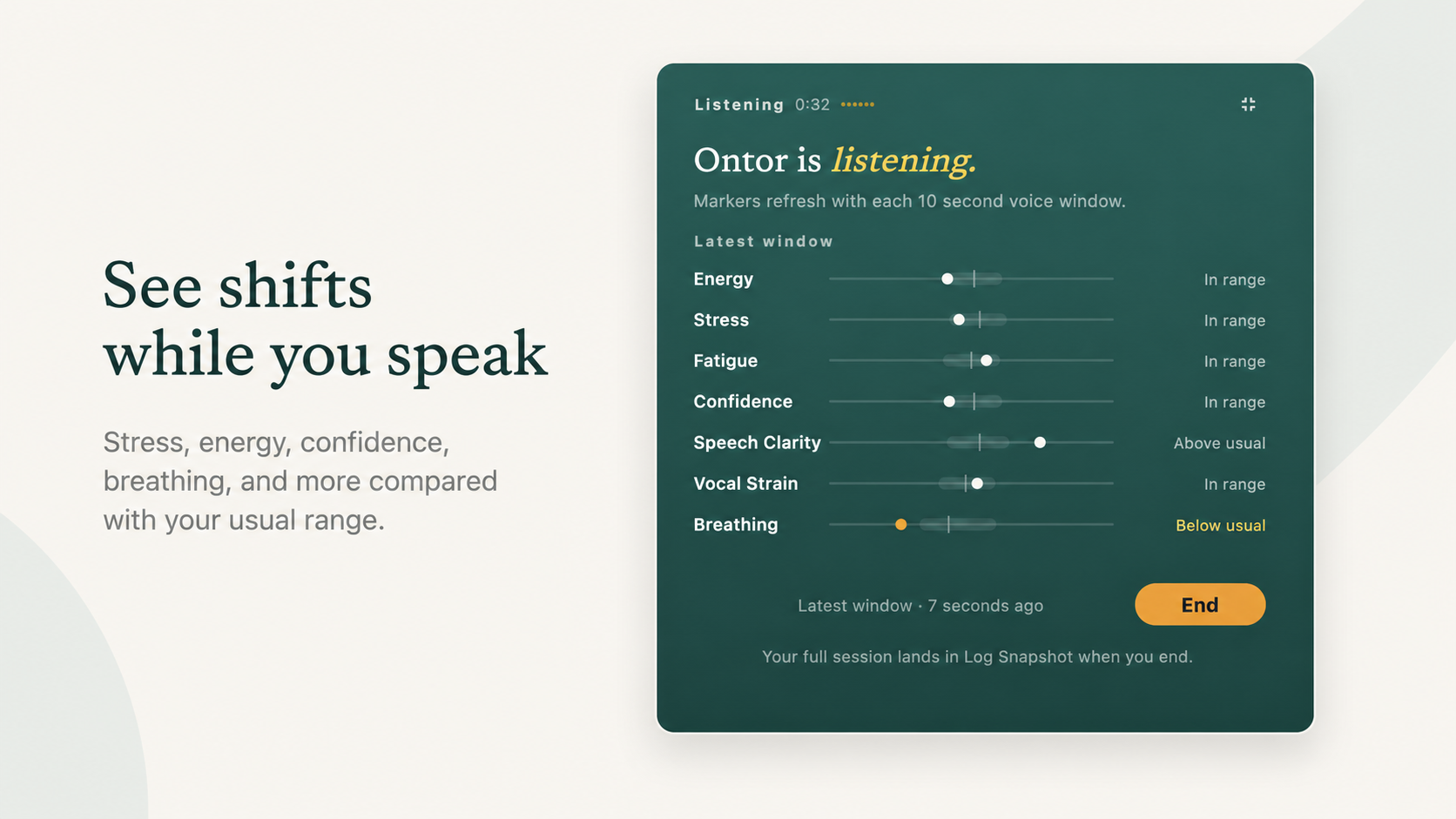
Ontor is a performance tool that reads how you sound, not what you said. While someone speaks, it compares voice signals to that person's own usual range. Markers refresh in short voice windows (on the order of about 10 seconds of speech). When a lasting shift shows up (for example energy, fatigue, stress, confidence, speech clarity, vocal strain, or breathing), it can suggest a short reset. People can also compare before and after.
Explicit boundaries for this topic:
- Ontor does not replace product training, discovery frameworks, or pipeline coverage work.
- Ontor does not claim medical or clinical regulation outcomes.
- Ontor does not claim that marker changes prove better close rates, quota attainment, or cognitive improvement.
- The claim stays narrow: when off-game rush and over-explain leave your personal usual range, a private baseline cue plus an optional short reset is a loop you can run before the next dial or when the shift persists mid-call.
For teams, Ontor's public framing is aggregate patterns for workload, coaching, and support. Individual sessions and readings stay with the person. Managers coaching "stop sounding needy" can watch cohort-level energy or confidence drift. They do not get a personal scoreboard for hire or fire decisions. Soft secondary path: Ontor for teams.
In my own Ontor session history (founder exploratory data from my own product use, not your floor's outcome data), the off-game pattern shows up the same way Lauren and Meghann name it. Before a hard speaking block, or when my conviction on the next topic is low, pace, energy, or confidence can leave my personal usual range in the short windows. I am still "ready" on paper. Delivery is already drifting toward rush and over-talk before the first line lands. That is the regulate gap Meghann still hits after years of practice, visible as personal-baseline leave rather than a script miss.
Here is the live listening view from my own Ontor product use: markers refresh with each ~10 second voice window and sit against my usual range. Read it as a private check for whether energy, confidence, strain, or breathing left my band when I would otherwise rush into the next hard call:
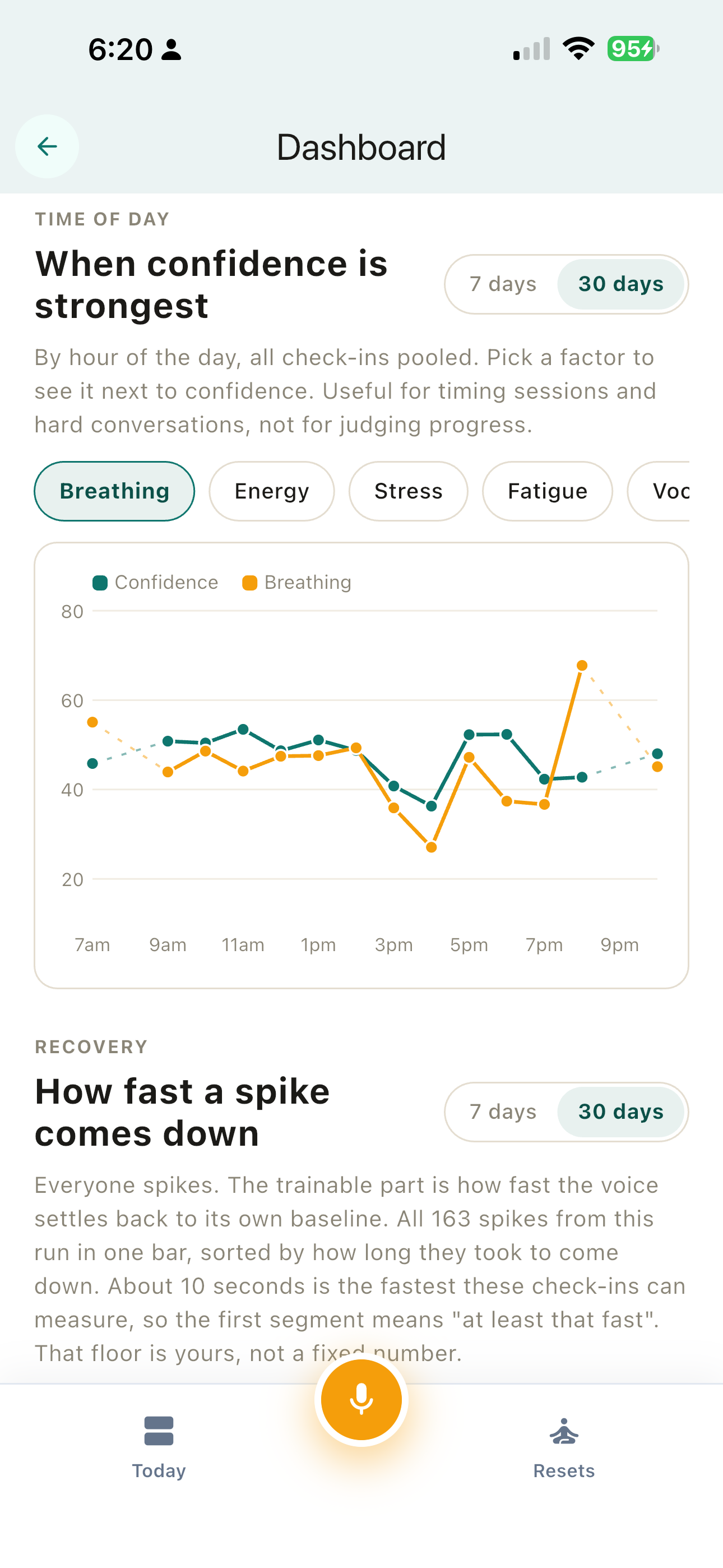
Here is confidence with breathing by hour from that same Ontor history. Confidence can sit fine early, then leave my personal usual later when the day gets harder. Read it as founder exploratory data on personal-baseline drift across a call-heavy day, not proof of quota outcomes and not a claim that Ontor measured "neediness" as a label:
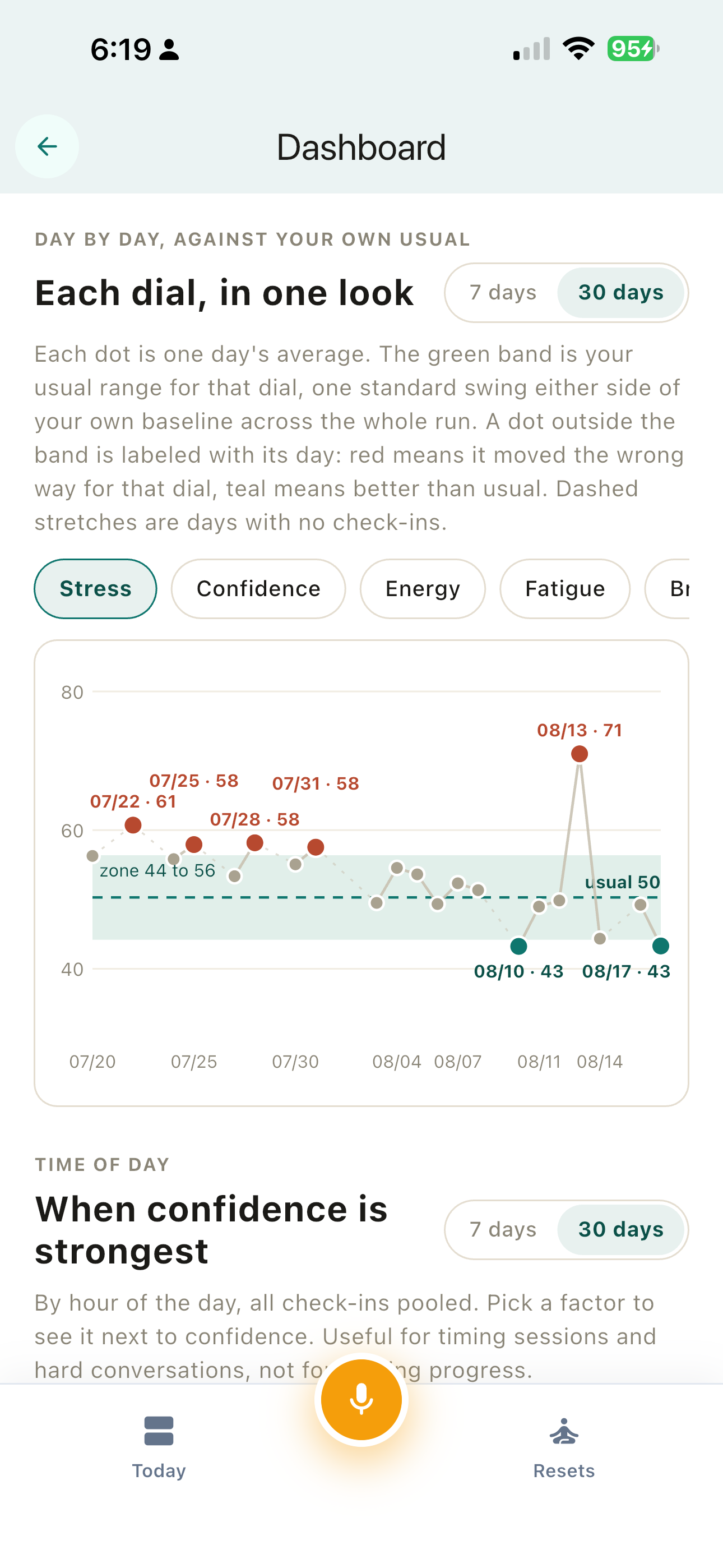
Here is stress day by day against my personal usual band (zone ~44 to 56, usual 50) from the same session history. Red points sit above my usual range. Useful as a private check for how often voice-state leaves the band across calls when scarcity or low conviction would push rush and over-explain. It is not a hire-or-fire score and it is not proof that a suggested reset caused calmer authority:
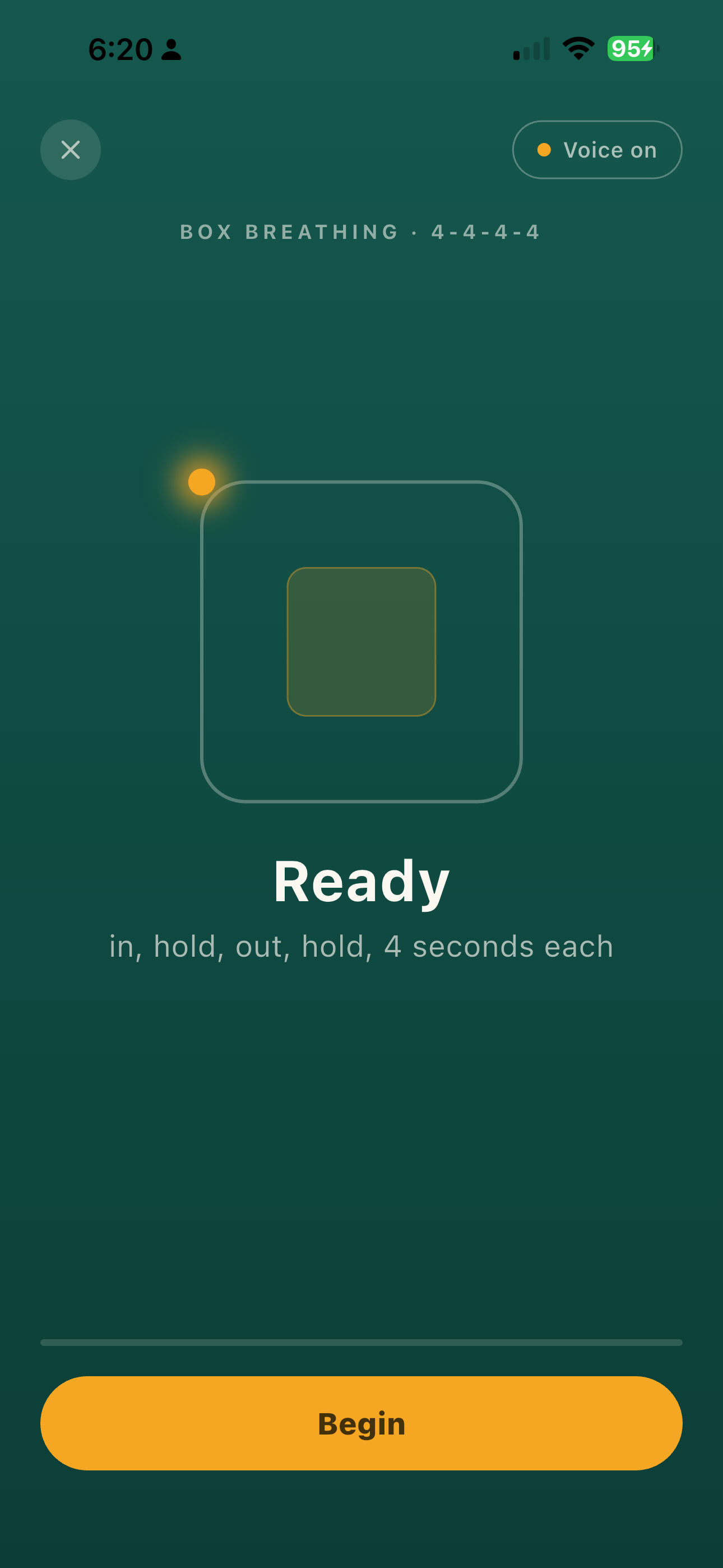
And here is the short reset the product offers when a lasting shift shows up: box breathing, 4-4-4-4. That is the tool form of Meghann's "regulating before a call," available privately without a manager guessing from a recording sample. It is not a medical protocol and it is not a claim that one cycle restores full authority on the next opener:
This is not a claim that voice markers diagnose confidence, prove cognitive improvement, predict revenue, or replace manager judgment. The claim stays narrow: when scripts and "be more confident" miss the off-game rush/over-explain leave, a private signal plus a short reset is a loop people can run before the next dial, while leaders watch cohort patterns only in aggregate.
What to try before your next hard call
Do not wait for a research committee if you are an IC who already hears yourself rush and over-explain when conviction is low, or a manager coaching neediness who keeps hearing the same tell from tenured people.
- Install Ontor on the machine you already use for cold calls, discovery, and demos.
- Before the next hard call (or in the first minutes on it), notice whether pace, energy, confidence, strain, stress, or breathing sit outside your usual range in the short speech windows, especially when you can already feel the only-shot tightness Lauren and Ray describe.
- If a lasting shift shows up, or if you know you have not regulated yet, take the short suggested reset before you dial or between dials. Then continue instead of stacking more rushed over-explain into the opener.
- If you coach a pod, keep leaders on aggregate patterns only for energy / confidence drift under scarcity or low-conviction blocks. Personal readings stay with the person. Treat Lauren's rush/over-explain and Meghann's years-later regulate as performance controls, not only soft skills. Pair with a quick self-listen after a hard block. Do not treat Ontor as a pipeline tool or a script coach.
Soft secondary path if you lead mid-market coaching on neediness and want a measured look later: Ontor for teams, or a research conversation / pilot on personal voice baselines versus off-game rush and over-explain.
Do not promise win-rate, retention, or revenue guarantees. Measure whether people can tell when pace and confidence left their usual voice before a prospect names the needy opener.
Bottom line
When you are off your game you rush and over-explain. Lauren named the calm-pace vs authority-collapse switch. Meghann confirmed years of practice still require a pre-call regulate. Ray named not rushed, not needy, not over-explaining, and the only-shot scarcity amplifier. Thin-month and first-hello vendor pieces (capped) use the same neediness vernacular. The gap that remains is personal usual-range pace, energy, and confidence in short speech windows, caught before the hard call or when the shift persists, before the next rushed over-explain.
Try Ontor before your next hard call. Notice the short voice windows versus your usual range. Take the short reset when a lasting shift shows up. That is the pre-call regulate tool step, not only a pep talk about confidence.
Download Ontor - 14 days free, no card required
References
- Lauren Sharpe. LinkedIn post: when I know my stuff tone is calm and pace slows; when I don't I rush, over-explain, and talk myself out of authority. Meghann Misiak comment: even after years of practice still rushes/over-talks when she has not regulated before a call. https://www.linkedin.com/posts/lauren-sharpe_day-2-of-life-as-a-new-ae-lets-chat-confidence-activity-7391985848428421120-4VSl
- Ray Hasebroock. LinkedIn post: top reps not rushed or needy, not over-explaining; unconfident reps treat the conversation as their only shot. https://www.linkedin.com/posts/ray-hasebroock-a27239227_day-1-confidence-on-the-calls-most-reps-activity-7396689254774579200-jN-Y
- Sheriff Shahen / Powerdial. "Your prospects can hear your quota" (vendor corroboration only): early-month vs final-stretch; thin pipeline → hesitate, sound needy, over-explain. https://powerdial.beehiiv.com/p/your-prospects-can-hear-your-quota
- Joe Schneider / Automatic Appointments. "Why Your Prospect Can Smell Desperation From Your First Hello" (vendor corroboration only; no vendor Gong/HBR stats reused): rushed opener, over-explaining in first seconds. https://automaticappointments.com/resources/productive-indifference-sales-psychology
- Ontor. "How it works." https://ontor.ai/how-it-works/
- Ontor. "Ontor for teams." https://ontor.ai/for-teams/
- Ontor. "About the founder." https://ontor.ai/about/
- Ontor. "Install Ontor." https://ontor.ai/install/
- Ontor. "Under pipeline pressure, SDRs enter survival mode..." https://ontor.ai/blog/sdr-survival-mode-under-pipeline-pressure/ (sibling, pipeline-pressure angle)
- Ontor. "Prospects can tell when you're not present. Typing while listening is not free." https://ontor.ai/blog/notes-while-talking-presence/ (sibling, mid-call notes presence)