
After you quote the rate, the quiet is not a rejection. Filling it usually is.
You just put a number on the table. The line goes quiet. Three seconds. Five. Maybe ten.
Your impulse is to fill the void. Often that means cutting the rate before the shipper has even finished processing. That panic-concession confirms the suspicion the opening rate was inflated, compresses margin, and makes you sound needy rather than composed.
Silence after a rate is often processing (budget, service, execution risk), not rejection. The voice and state in that 3-10 second gap decide whether your next words guide or beg.
This is for freight brokerage owners, VPs, and Directors of Sales who coach carrier and agency sellers through live shipper rate negotiations. It is not live tonality under general resistance. It is not carrier-cancel scramble recovery. It is not overnight interrupt composure. It is not the hangover between ordinary dials.
Download Ontor - 14 days free, no card required
The awkward silence after a rate is a data gap, not a shipper trap
Harvey Roberts (Owner, BKE Logistics) named the moment on LinkedIn:
"That awkward silence after a rate proposal isn't a negotiation tactic - it's a data gap."
And the habit that burns trust:
"The moment is universal: a rate is quoted, and the line goes quiet. The broker's impulse is to fill that void, often by immediately offering a concession."
"When a broker breaks the silence with a lower price, they aren't winning a negotiation; they are confirming the shipper's suspicion that the initial rate was inflated, eroding trust from the very first interaction."
His strategic play is composure, then guidance:
"The strategic play is not to speak, but to guide. Let the silence breathe, then reframe the conversation."
The business consequence is plain without inventing metrics. Premature concessions compress margins. Shippers learn that waiting is rewarded. The broker starts sounding like a vendor who needs the load, not a partner who can hold operational context.
Floor corroboration, not the lead: Ty Harvey (freight agent) posted a single-day scoreboard of 80 cold dials with "24 awkward silences" in the mix, then planned a physical reset before chasing yeses the next day. Useful only as employee-level proof that silence volume is real on freight dials. Do not treat it as owner coaching.
What this article is not answering
Four published Ontor pieces already cover adjacent voice moments:
- Prospects hear when the voice tightens answers live tonality under resistance once a prospect is already live (mid-market phone teams). Not specifically the post-rate quiet on a freight shipper negotiation.
- Freight post-fallout recovery answers scramble composure after a carrier cancel.
- Freight overnight voice composure answers how you sound after a sleep interrupt.
- Hangover between sales calls answers unpaid emotional and admin recovery between ordinary dials.
This article answers a different question: after you quote the rate, when the line goes quiet for a few seconds, how do you notice the urge to rush, fill, or concede, take a short reset, and ask a context question instead of dropping price?
Same freight brokerage sales-leader beachhead. Different moment. Different ops move. Do not center first-ten-seconds loadtraining tone or between-call hangover. The spine here is the post-rate composure window.
Let the silence breathe, then ask a context question
Roberts' sequence is the spine: notice the quiet as processing, let it breathe, then reframe with service and risk questions instead of a panic cut. The hard part is the body and voice in those seconds. Pace wants to speed up. Softeners creep in. The concession leaves your mouth before you have asked what else the shipper is weighing.
A light adjacent note only (do not center): Freight 360 Episode 308 (Ben Kowalski / Nate Cross) talks about anxiety and presence drowning out listening on freight sales dials, and even suggests a mirror above the phone to check mood and energy. Cap that as general presence color. The lead remains Roberts' post-rate silence coaching.
Load boards and CRM will show the quote. Call recordings will show what was said. They still leave a narrower gap: whether stress, confidence, or vocal strain drifted outside your personal usual range in the quiet after the number, before you filled it.
A private usual-range check in the post-rate composure window
Ontor is a performance tool that reads how you sound, not what you said. While someone speaks, it compares voice signals to that person's own usual range. When a lasting shift shows up (for example stress, confidence, vocal strain, energy, or breathing), it can suggest a short reset. People can also compare before and after.
That matches the post-rate window without turning it into medical advice, margin theater, or a hire-fire instrument. Ontor's public product framing is personal-baseline self-insight: acoustic patterns versus your own rolling usual range, not a population score and not a diagnosis. For teams, leaders see aggregate patterns that can inform workload, coaching, and support. Individual sessions and readings stay with the person.
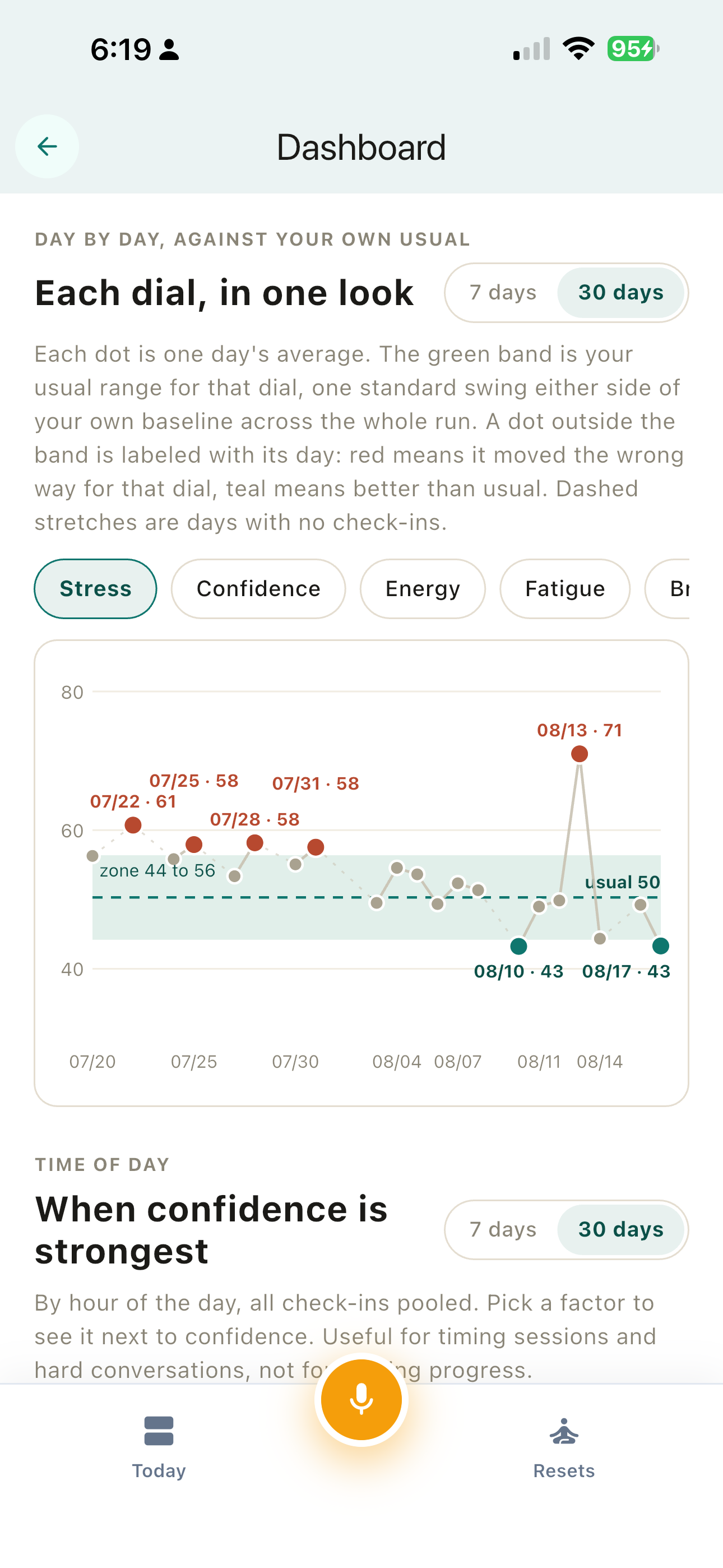
In my own Ontor session history, the post-rate composure gap looks like this: after I put a hard number on a live conversation, stress and confidence can sit outside my personal usual band in the next few seconds while my impulse is still to fill the quiet. Dial boards and quote logs would still look like a clean proposal. The private usual-band drift is what the rate desk does not surface before the shipper hears the next words.
Here is stress across dials against my personal usual range, from my own Ontor dashboard and session history. Read it as the private view of how often stress leaves the band on hard stretches, including the kind of window where a rate just landed and the line is quiet. It is not a diagnosis, and it is not outcome data from your brokerage floor:
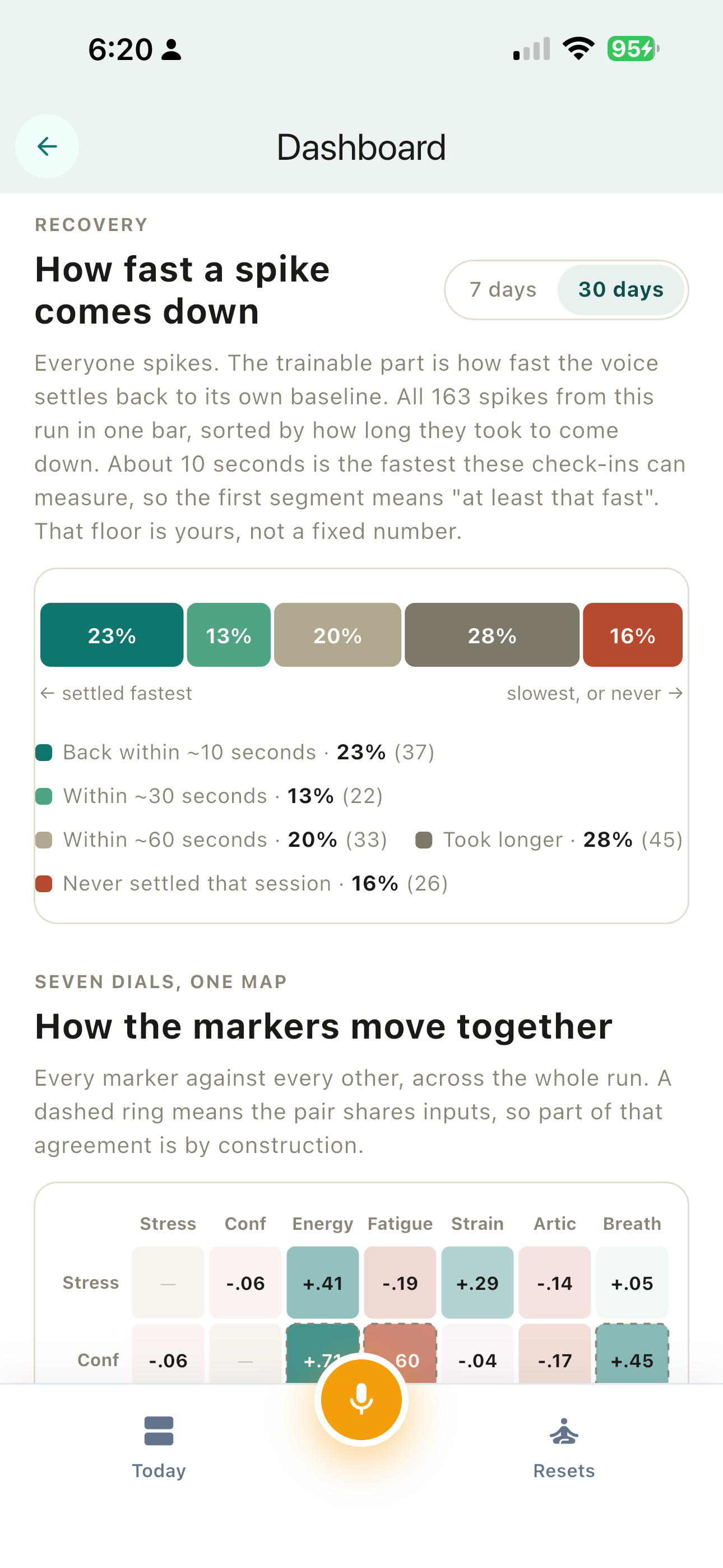
And here is how often stress spikes in that same Ontor history settled back toward my personal baseline, including stretches that never settled in-session. Useful as a private recovery check in the composure window after you quote, before you rush a concession. It is not proof that a suggested reset caused recovery, and it is not clinical recovery science:
Download Ontor - 14 days free, no card required
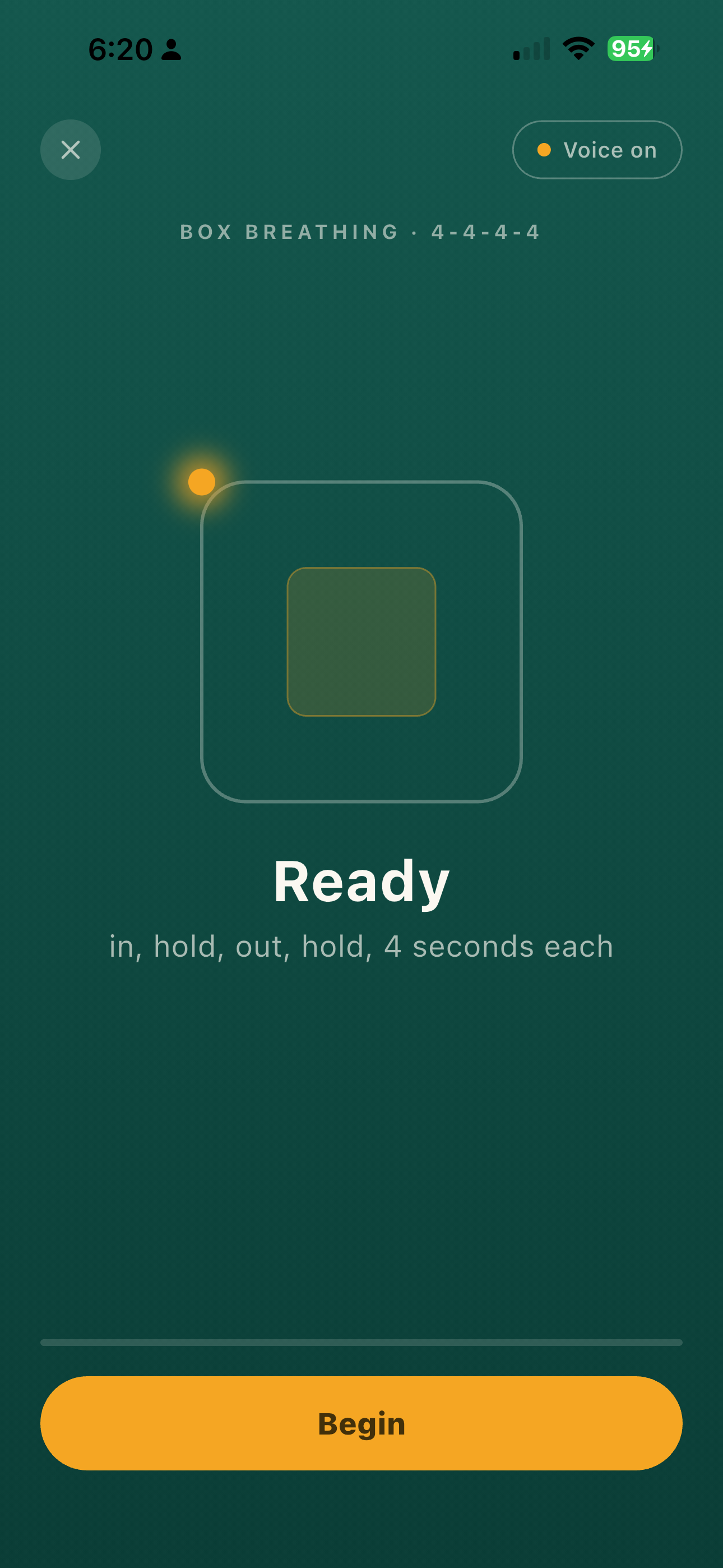
Short resets fit Roberts' sequence: notice the quiet, breathe, then guide. When confidence drops or pressure rises outside usual range right after a quote, Ontor can surface a brief private exercise before your next sentence. Here is a box-breathing reset screen from my own product use. Cap any medical claim. The product point is a short private reset so the shipper hears a context question, not a panicked cut:
In exploratory work on that same personal Ontor history (one person, not a population study), high-stress episodes often did not show an observed return to my personal median within an hour. That is one reason a private usual-range check in the seconds after a rate matters. It is not evidence that a suggested reset caused recovery.
This is not a claim that voice markers diagnose panic, predict close rate, replace manager judgment, or guarantee held margin after a reset. The claim stays narrow: when the quiet after a quote pushes how you sound away from your usual range, a private signal plus a short reset is a loop you can run before you fill the silence with a lower price.
What to try on the next live rate-negotiation call
Do not wait for a research committee if you are the person who still quotes live.
- Install Ontor on the machine you already use for shipper rate calls.
- On the next live negotiation, notice the quiet after you quote. Check whether stress, confidence, or vocal strain sit outside your usual range before you speak again.
- If a lasting shift shows up, take the short suggested reset when the desk allows it, then ask a context question (service outcomes, other factors weighed, execution risk) instead of dropping price.
- If you lead a pod, keep leaders on aggregate patterns only. Personal readings stay with the person.
Soft secondary path if you are buying for a freight sales team and want a measured look on live rate calls later: Ontor for teams, or a research conversation / pilot with a brokerage sales desk.
Do not promise held margin, win rate, or revenue lift from a trial. Measure whether you can tell when the urge to fill the quiet left your usual voice before the next sentence.
Bottom line
Rates will keep landing. Lines will keep going quiet. The gap that remains is post-rate composure: treat those 3-10 seconds as a composure window, not a rejection, then guide with context instead of begging with a cut.
Try Ontor on the next live rate-negotiation call. Notice the quiet after you quote. That is the tool next step, not only a pilot conversation.
Download Ontor - 14 days free, no card required
About the author
Sabber Ahamed is the founder of Ontor and an applied ML scientist (PhD in geophysics and signal processing) who builds on-device voice tools. Ontor compares how you sound to your own usual ranges and suggests short resets, without claiming clinical or revenue outcomes from marker changes.
References
- That awkward silence after a rate proposal isn't a negotiation tactic - Harvey Roberts (LinkedIn) (buyer_evidence, primary; Owner, BKE Logistics)
- Stats today - 80 cold dials... 24 awkward silences - Ty Harvey (LinkedIn) (employee_anecdote, floor corroboration only)
- Improving Your Sales Skills as a Freight Broker | Episode 308 - Freight 360 (adjacent presence/anxiety only; do not center)
- How Ontor works
- Ontor for teams
- Install Ontor
- About the founder - Ontor
- Prospects hear when the voice tightens - Ontor (live tonality sibling, different question)
- Freight post-fallout recovery - Ontor (carrier-cancel sibling, different question)
- Freight overnight voice composure - Ontor (overnight sibling, different question)
- Hangover between sales calls - Ontor (between-call hangover sibling, different moment)