
When anxiety shows up as tonality. Managers hear the voice, miss the spiral (and crush the baseline)
Sitting sales leaders already hear it on listen-ins. A rep is "off." Tonality is thin. Behavior looks tight. The instinct is to give tone notes: warmer, slower, more confident. That framing can be exactly wrong. Anxiety on the call is often the audible edge of a confidence spiral. Feedback that only grades the voice can add fuel. The next dial sounds worse, not better.
This piece is for VP / Head / Director of Sales and SDR managers running roughly 20-200 voice seats, plus the managers who coach how people sound. The object is coaching safety on the spiral: managers hear anxiety as tonality, miss the spiral underneath, and crush the personal baseline with wrong-frame feedback. It is not call-mode pitch-voice, not hangover between sales calls, not prospects hear voice tighten, and not coaches: anxious or robotic under the same pressure.
Download Ontor - 14 days free, no card required
Stinson: anxiety shows up as tonality, and wrong-frame feedback adds fuel
Matt Stinson (sales leader / CRO at Starbridge; coaches direct reports) put the manager problem in plain floor language:
"I'm currently helping one of my reps who's struggling with the mental sport that is sales. It's manifested in their calls re: tonality and behavior."
That is the surface managers already hear. Tonality. Behavior. The deeper mechanism he names is a spiral, not a separate "voice personality" hole:
"Anxiety in sales can cause a downward spiral. When you lose confidence in yourself because of feedback → you worry about your standing in the org → becomes this self-fulfilling narrative that you suck."
And the coaching risk that makes this article's spine different from more tonality training:
"In a delicate scenario like this, feedback in the wrong frame can add fuel to the fire."
Stinson's alternative frame is high-expectations belief (Adam Grant style), not softer standards:
"I'm giving you these comments because I have very high expectations and I know that you can reach them."
Treat that as buyer evidence from a sitting sales leader, not as Ontor measuring your pod. The ops takeaway is narrow: call tonality can be the audible symptom of a confidence spiral. Tone-only notes without psychological safety can deepen the spiral managers are trying to fix. The next dial inherits the crush.
McKenzie: conviction and hesitation are audible before the words; "I need this" energy kills openers
Chris McKenzie (VP of Sales, Sales8; ex-Zoom top BDR / inside sales leader) corroborates why managers hear state in the voice even when the script is fine:
"Two reps. Same script. Very different outcomes. The difference isn't the script. It's the value carried in the voice."
"Before they process your offer, they judge 3 things instantly: 1/ Do you sound sure? 2/ Do you sound calm? 3/ Do you sound like you belong on this call?"
"Conviction is audible. So is hesitation."
"Because in outbound, your voice does the selling long before your words get a chance."
Comment-thread corroboration on that post lands the same filter: buyers evaluate the state behind the script first. Certainty and calm register before the brain analyzes the message.
In a related post, McKenzie names the pressure energy that turns openers into early hang-ups:
"You're not getting cut off because your opener is bad. You're getting cut off because your tone tells them "this is going to waste my time.""
"I've heard reps say the exact same line - one gets 30 seconds, the other gets "not interested" in 3. The difference? Not the script. The frame they enter the call with."
""I need this to work" energy… Prospects can hear it instantly. You stretch words. You over-explain. You try to sound nice. That signals pressure → pressure triggers rejection."
"No control over pacing… Fast talking = nervous. No pauses = scripted. Constant talking = trying to convince."
Pair that with Stinson carefully. McKenzie shows why buyers and managers hear conviction, hesitation, and pressure in the voice. Stinson shows what happens when a manager answers that audible leave with tone feedback in the wrong frame: confidence drops, standing anxiety rises, the "I suck" narrative hardens, and the next dial sounds worse. Same mid-market phone world. This article's object is the manager spiral loop, not another "be more confident" tip.
Distinct from call-mode, hangover, live tighten, and anxious-or-robotic
Published Ontor pieces already cover nearby voice moments. Overlap on "voice versus your own usual range" is real. The spine here is different.
- Call-mode pitch-voice answers: forced professional phone costume off your usual sound. Not manager wrong-frame feedback that fuels a confidence spiral.
- Hangover between sales calls answers: unpaid recovery between connects that activity boards call empty. Not live tone notes that crush baseline.
- Prospects hear when the voice tightens answers: live resistance tonality while talk-time boards still look fine. Not the coaching-safety spiral after feedback.
- Coaches: anxious or robotic under the same pressure answers: one pressured cascade with two audible failure modes for the coaches channel. Not the sitting sales manager who hears tonality and adds fuel with the wrong frame.
Also avoid collapsing this into silence-fill, off-game over-explain, evaluation freeze, or thin-tight everyday baseline. Those are different triggers. Unique object here: manager hears anxiety as tonality → wrong-frame feedback → confidence spiral → next dial worse.
Same beachhead. Different coaching object. Protect the personal baseline while you still coach delivery.
What dialer boards and tone scorecards still miss
Typical mid-market stack for phone-heavy pods:
- Dialer metrics (dials, connects, talk time, disposition)
- Listen-ins that catch "off" tonality and behavior
- Conversation intelligence on words and talk tracks
- Script and opener coaching when hang-ups spike
- High-expectations or softer pep-talk frames after a rough listen
Useful. Incomplete for the spiral. Talk time will tell you the connect lasted. A tone note will tell the rep they sounded unsure. Neither shows whether confidence, stress, energy, clarity, strain, or breathing left that person's own usual range in short speech windows, or whether the last feedback cycle already crushed the baseline they need for the next dial.
Managers who only coach "sound more sure / calm / like you belong" (McKenzie's three-part filter, heard as tone) can still miss Stinson's loop: feedback without a safe high-expectations frame becomes standing anxiety, then a self-fulfilling "I suck" narrative, then worse delivery. Prospects then hear the "I need this to work" pressure McKenzie names. The board still counts the dial.
What Ontor adds for the spiral (rep privacy first)
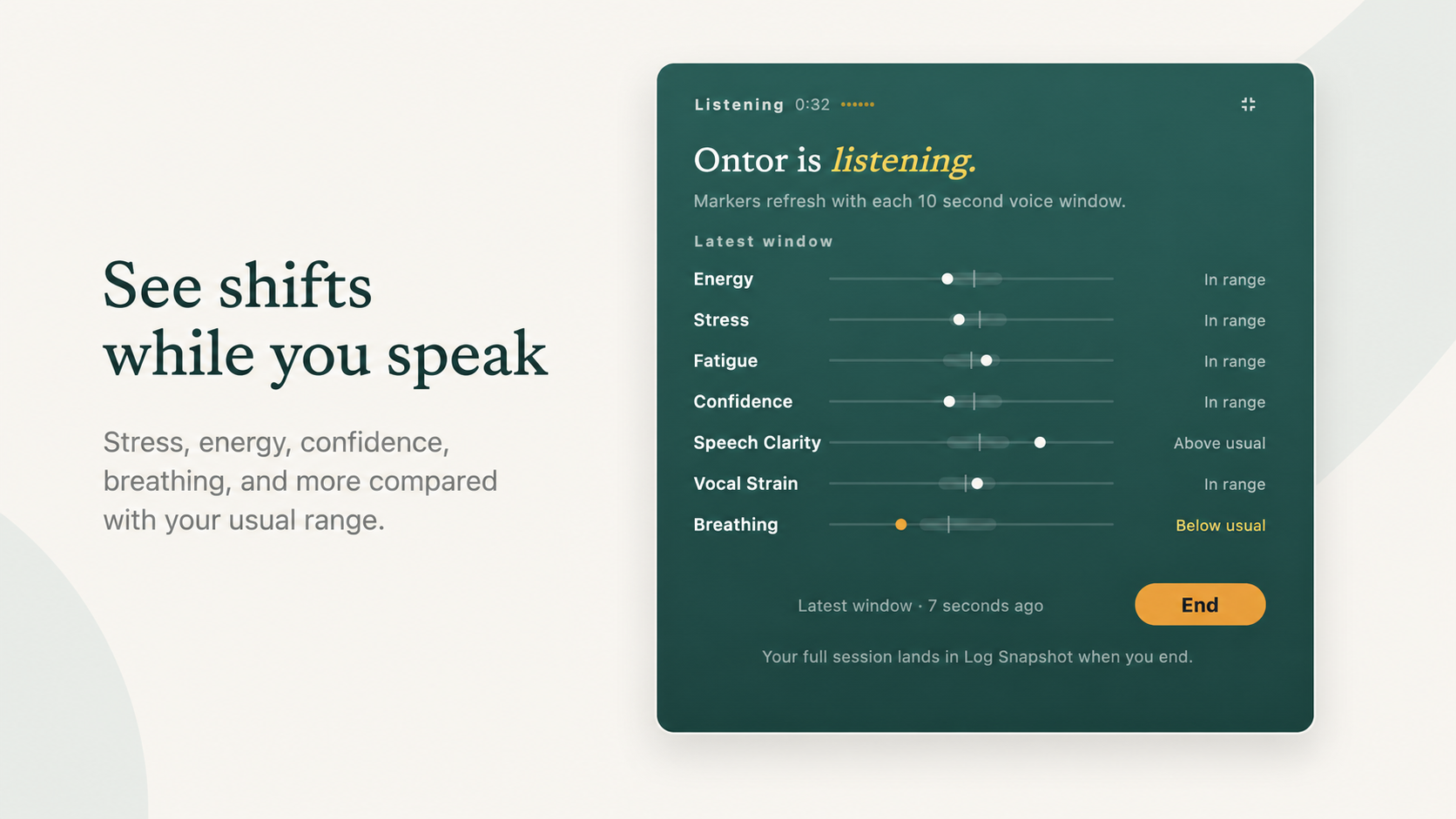
Ontor is a performance tool that reads how you sound, not what you said. While someone speaks, it compares voice signals with that person's own usual range. Markers refresh in short voice windows (on the order of about 10 seconds of speech). It does not react to every unusual second. It looks for a lasting shift. Signals on the public product page include energy, stress, fatigue, confidence, speech clarity, vocal strain, and breathing. Each one is how the voice sounds versus your own usual range, not a population grade. When a lasting shift shows up, Ontor can suggest a short reset. You can compare before and after.
Boundaries, said plainly:
- Ontor does not replace Stinson-style high-expectations framing, KD-style tonality craft, or McKenzie-style opener coaching.
- Ontor does not diagnose anxiety, treat medical conditions, or turn buyer phrases about internal state into clinical labels.
- Ontor does not claim that marker changes prove quota lift, retention, or cognitive improvement.
- Ontor is not a hire/fire scoreboard. Individual sessions and readings stay with the person. For teams, public framing is aggregate patterns for workload, coaching, and support.
The claim stays narrow: when managers hear anxiety as tonality and risk fueling a spiral with wrong-frame feedback, a private personal-baseline cue plus a short optional reset gives the rep a way to see whether confidence, stress, or pace left their usual range before the next dial, while leaders watch cohort patterns only in aggregate. Soft secondary path if you buy for a pod later: Ontor for teams.
Download Ontor - 14 days free, no card required
What shows up in my own Ontor history (manager spiral / anxiety-as-tonality / baseline crush)
I am Sabber Ahamed, founder of Ontor. I use the product on my own speaking and call-heavy days. In my own Ontor session history (founder exploratory data from my own product use, not your floor's outcome data), the spiral Stinson names shows up as personal-baseline leave, not as a separate "voice personality" problem. After a hard stretch, or when I can feel standing pressure about how I just sounded, confidence, stress, or energy can sit outside my usual band in the short speech windows. I am still "on script" on paper. Delivery is already drifting toward the thinner, tighter leave managers hear as tonality. That is the baseline crush this article is about: audible anxiety-as-tonality against my own usual range, before the next dial inherits it.
Here is the live listening view from my own Ontor product use: markers refresh with each ~10 second voice window and sit against my usual range. Read it as a private check for whether confidence, stress, energy, strain, or breathing left my band when a manager would otherwise hear only "off tonality" and reach for tone notes:
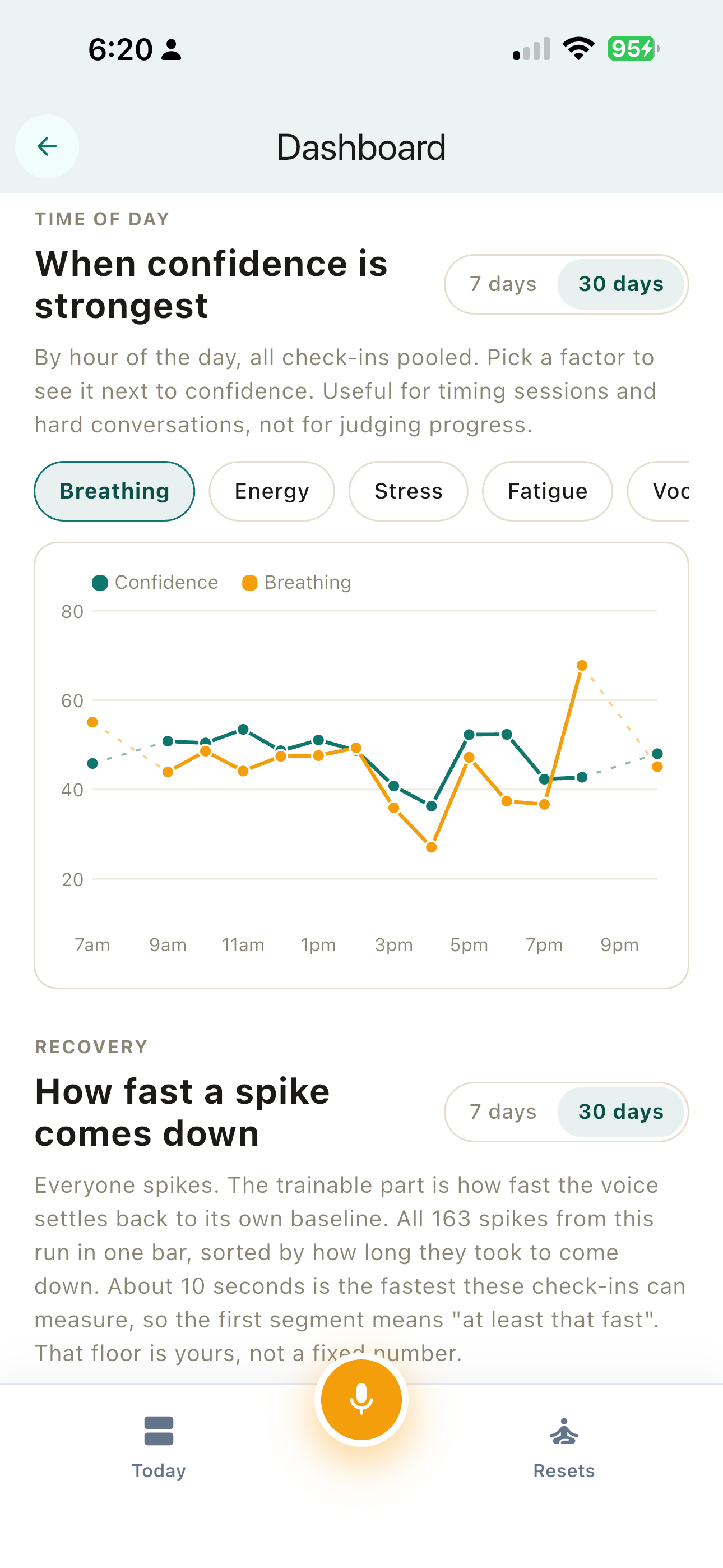
Here is confidence with breathing by hour from that same Ontor history. Confidence can look fine early, then leave my personal usual later when pressure about standing or delivery stacks. Read it as founder exploratory data on personal-baseline drift across a call-heavy day, not proof of quota outcomes and not a claim that Ontor diagnosed anxiety:
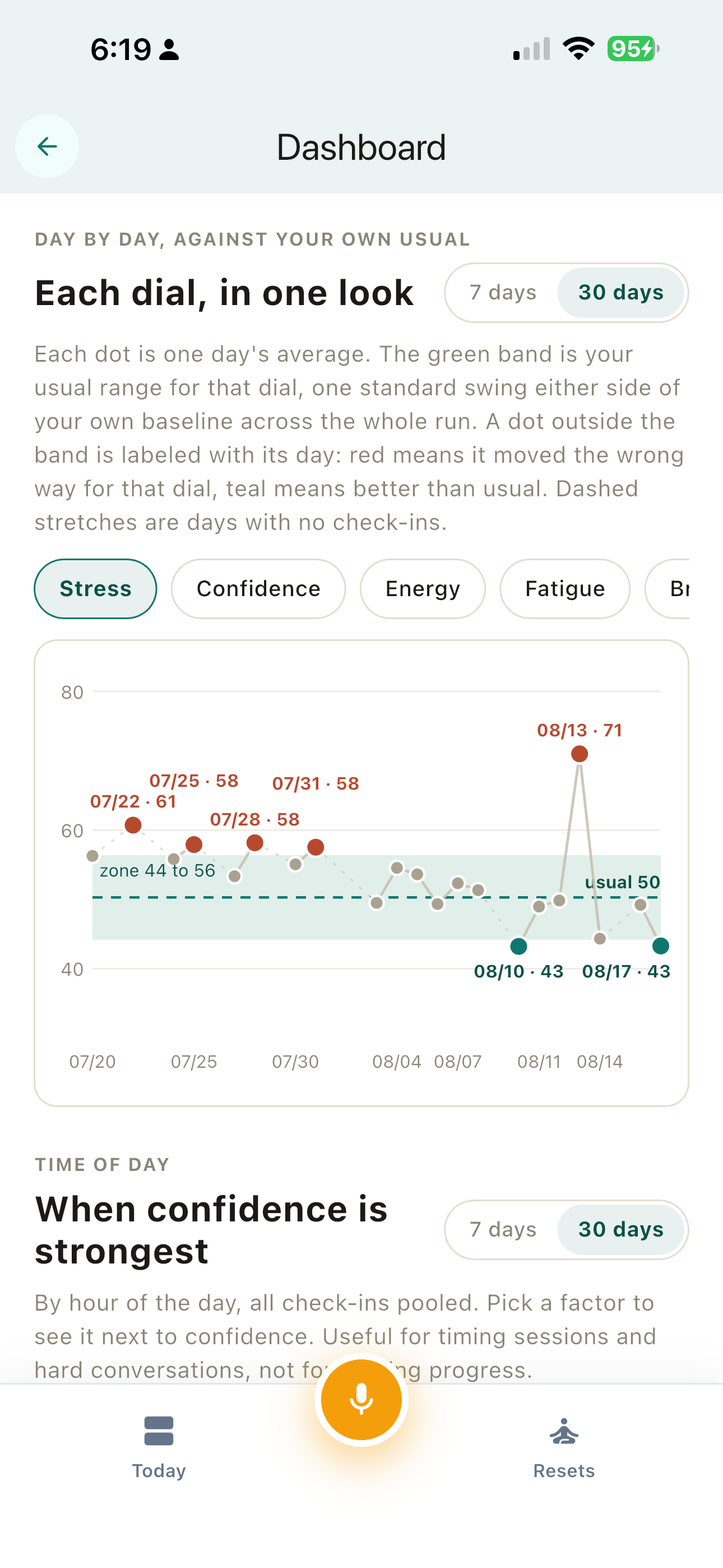
Here is stress day by day against my personal usual band (zone ~44 to 56, usual 50) from the same session history. Red points sit above my usual range. Useful as a private check for how often voice-state leaves the band across calls when the next dial would inherit a spiral. It is not a hire-or-fire score and it is not proof that a suggested reset caused calmer delivery:
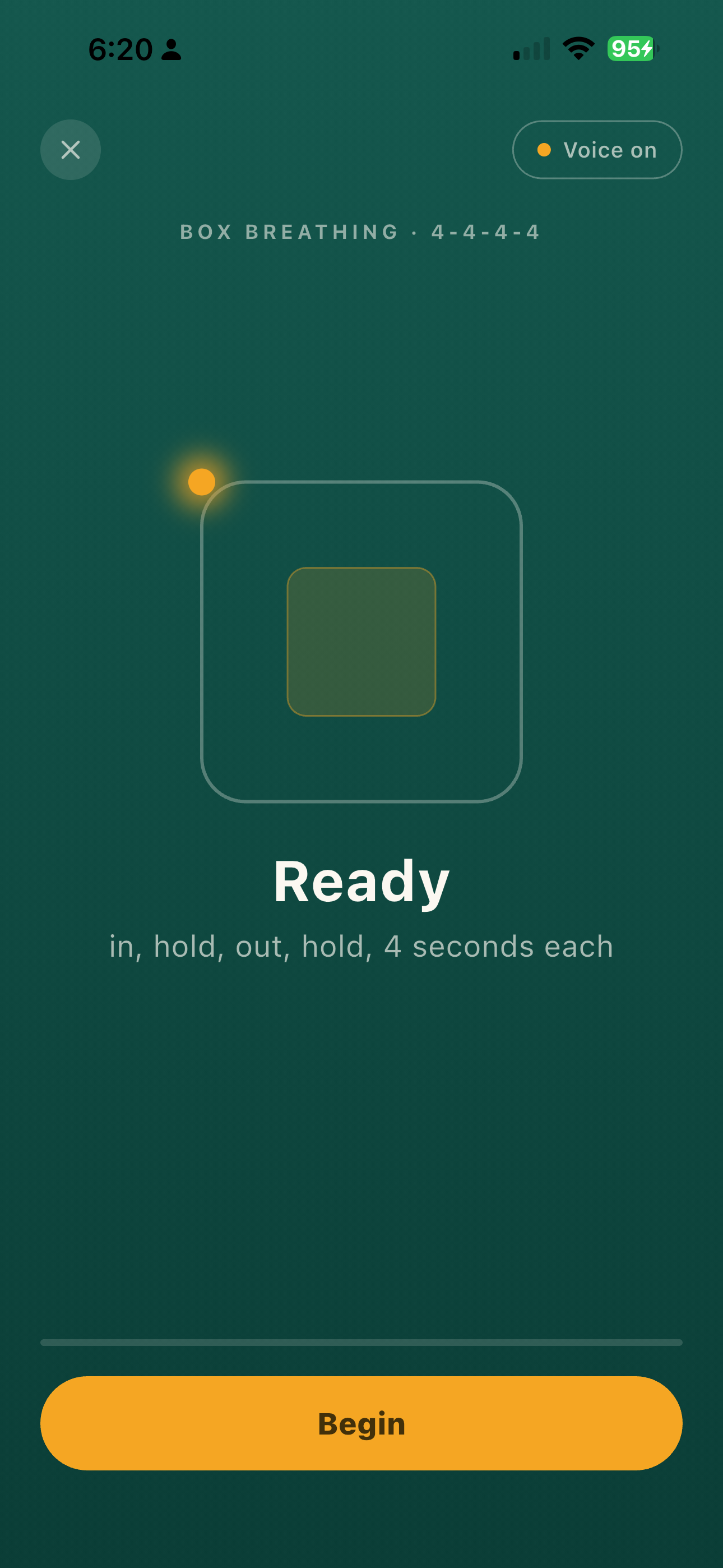
And here is the short reset the product offers when a lasting shift shows up: box breathing, 4-4-4-4. That is the tool form of protecting the baseline before the next dial, available privately when confidence or stress leave your band after a hard listen or a rough call. It is not a medical protocol and it is not a claim that one cycle repairs standing anxiety:
In exploratory work on that same personal Ontor history (one person, not a population study), high-stress stretches often did not show an observed return to my personal median within an hour. That is one reason a private usual-range check matters for Stinson's spiral: the next dial can start from a crushed baseline even when the script is fine. It is not evidence that a suggested reset caused recovery, improved coaching outcomes, or protected revenue.
What to try on your next live dial (or next listen-in)
Do not wait for a research committee if you already hear anxiety as tonality on listen-ins, or if you are the rep who gets tone notes and then dreads the next dial.
- Install Ontor on the machine you already use for cold calls, discovery, and demos.
- On the next live dial (or right after a hard listen-in), notice whether confidence, stress, energy, clarity, strain, or breathing sit outside your usual range in the short speech windows, especially when you can feel standing pressure or "I need this to work" energy forming.
- If a lasting shift shows up, take the short suggested reset before the next dial so the spiral does not stack into the opener. Then continue.
- If you manage a pod, keep leaders on aggregate patterns only for energy / confidence drift under coaching pressure. Personal readings stay with the person. Pair Stinson's high-expectations frame with a private baseline check. Do not treat Ontor as a tone scoreboard or a staffing tool.
Concrete try-on-next-call step: after the next listen-in where tonality sounds "off," ask the rep (or yourself) to check personal usual-range confidence and stress in short voice windows before another tone note, then take one short reset before the next dial.
Soft secondary path if you lead mid-market coaching and want a measured look later: Ontor for teams.
Do not promise win-rate, retention, or revenue guarantees. Measure whether people can tell when confidence left their usual voice before the next dial inherits the spiral.
Bottom line
When anxiety shows up as tonality, managers hear the voice and miss the spiral. Stinson named the downward loop and the fuel wrong-frame feedback adds. McKenzie named audible conviction, hesitation, and "I need this to work" pressure that buyers hear before words. Dialer boards and tone scorecards still miss personal usual-range leave in short speech windows. Ontor adds a private baseline plus short resets and before/after, with rep privacy first, so the next dial does not inherit a crushed baseline.
Try Ontor on your next live dial. Notice the short voice windows versus your usual range after a hard listen or a rough call. Take the short reset when a lasting shift shows up. Protect the baseline before you stack another tone note.
Download Ontor - 14 days free, no card required
Sabber Ahamed is the founder of Ontor and an applied ML scientist (PhD in geophysics and signal processing) who builds on-device voice tools. He has shipped production signal and ML systems across radiology AI, healthcare, and manufacturing. Ontor compares how you sound to your own usual ranges and suggests short resets, without claiming clinical or revenue outcomes from marker changes. LinkedIn · About
References
- Matt Stinson - LinkedIn: helping a rep whose anxiety shows up in tonality and behavior; downward spiral; wrong-frame feedback adds fuel (buyer evidence; sales leader / CRO Starbridge)
- Chris McKenzie - LinkedIn: two reps, same script; conviction and hesitation are audible; sure / calm / belong (buyer evidence; VP Sales, Sales8)
- Chris McKenzie - LinkedIn: "I need this to work" energy; same line, different hang-up timing; pressure in tone (buyer evidence; VP Sales, Sales8)
- How Ontor works
- Ontor for teams
- About the founder - Ontor
- Install Ontor
- Call-mode pitch-voice (sibling)
- Hangover between sales calls (sibling)
- Prospects hear voice tighten (sibling)
- Coaches: anxious or robotic under the same pressure (sibling)