
The placement fell through. Your next client call still has to sound ready.
The big tuna was on the line. Leadership candidate. Top repeat client. Offer clock running. Then the request for one more day gets denied, the offer expires, and the fee evaporates in seconds.
That is not a midday reset after a 3.5 to 4 hour phone morning. It is not call reluctance on a rare live connect. It is not a freight carrier cancel on a load board. It is post-fallout staffing voice: the fallen placement or brutal rejection moment, then the next client or candidate conversation that still has to sound ready.
Managing Partners, VPs of Sales, Directors of BD, and agency owners already preach the reset. Remove the emotion. Do the mental reset. Sharpen the strategy. Show up ready for the next opportunity. What most ATS boards and call recordings still cannot answer is narrower: before that next high-stakes dial, did tone, energy, and composure actually come back toward that person's usual range, or is yesterday's fallout still riding in the voice?
Download Ontor - 14 days free, no card required
Leaders already name the reset. The missing piece is the readiness signal.
Ian Kerr, Managing Partner and Founder at Bancroft Staffing Partners, put the fallen-placement sequence in public language after a near-closed A-caliber leadership search blew up:
"Took a big L last week… One of those big tuna placements, you've hooked it on the line, reeling it in, already thinking about the sashimi… then POOF! Gone in seconds."
"The offer expired. Deal blown. Time lost."
His differentiator is not avoiding losses. It is bounce-back speed:
"The key isn't avoiding losses, it's taking accountability with how quickly you learn, reset, and bounce back to win the next one."
And the ritual itself is operational, not motivational fluff:
"My reset process is simple: 1. Remove all emotions, always. 2. Reset mentally - Do an activity I love with positive people I love. 3. Sharpen my game, polish my strategy. 4. Show up the next day, ready to win the next opportunity."
That is buyer language from a paying Managing Partner who still runs search. Elite vs average, in his framing, is how you respond when the plan goes south and how fast you reset for the next win.
Useful. Still incomplete for the next call. A walk, a dinner with people you like, and a polished strategy do not store whether stress, energy, confidence, or vocal strain still sit outside personal baseline when the next client or candidate hears you.
Rejection calls leave residue the dial board cannot see
A light corroboration from the desk floor (not the lead): Tim Spindlove, Manager of Recruitment Training and Onboarding at DMC Recruitment Group (ex-Director of Recruitment, Randstad Engineering), names the rejection call as harder than cold outreach or ghosting:
"For me, it's the rejection call."
"That call is brutal."
"Because I know what that candidate has emotionally invested. Because I believed in them. Because I asked them to trust me."
"Because we're not just managing resumes. We're managing people."
Cap that as emotional-load corroboration after heavy investment. It is not Managing Partner proof and it does not claim audible composure is lost. It does name residue that can sit in the body after a hard people conversation, right before the next BD or candidate touch still has to happen.
What this article is not answering
Four published Ontor pieces already cover adjacent staffing and freight moments:
- Staffing midday reset verification answers whether a designed midday break after ~3.5 to 4 hours of phone restored readiness before the afternoon block.
- Staffing live-connect discomfort answers call reluctance and audible discomfort when a rare live connect finally lands.
- Staffing sales call-block readiness answers readiness when delivery interrupts protected BD blocks.
- Freight post-fallout recovery answers scramble-stress composure after a carrier cancel on a freight desk. Different vertical. Different fallout object.
This article answers a fifth question: after a fallen placement or brutal rejection, when leaders already run Kerr's reset ritual, how do you notice tone, energy, and composure have left your personal usual range before the next client or candidate call inherits the residue?
Same staffing recruiting sales-leader beachhead. Different trigger. Different ops object.
Activity dashboards show the miss. They do not show whether composure came back.
Typical staffing / search sales stack after a fallout:
- ATS/CRM shows the stage collapse, notes, and the next outreach scheduled
- Call recordings show what was said on the rejection call or the apology to the client
- Fill rates and fee forecasts land later
- Leaders coach "reset and show up ready"
Missing for this failure mode: a private read of how someone sounds versus their own usual range on the first high-stakes conversation after the miss. A completed reset ritual will not tell you voice still sat outside baseline. A next-day calendar block labeled "ready" will not tell you whether yesterday's fallout is still audible.
A private usual-range check before the next opportunity call
Ontor is a performance tool that reads how you sound, not what you said. While someone speaks, it compares voice signals to that person's own usual range. When a lasting shift shows up (for example stress, energy, confidence, vocal strain, or breathing), it can suggest a short reset. People can also compare before and after.
That fits Kerr's reset ritual without turning it into medical advice, revenue theater, or a ranking instrument. Ontor's public product framing is personal-baseline self-insight: acoustic patterns versus your own rolling usual range, not a population score and not a diagnosis. For teams, leaders see aggregate patterns that can inform workload, coaching, and support. Individual sessions and readings stay with the person.
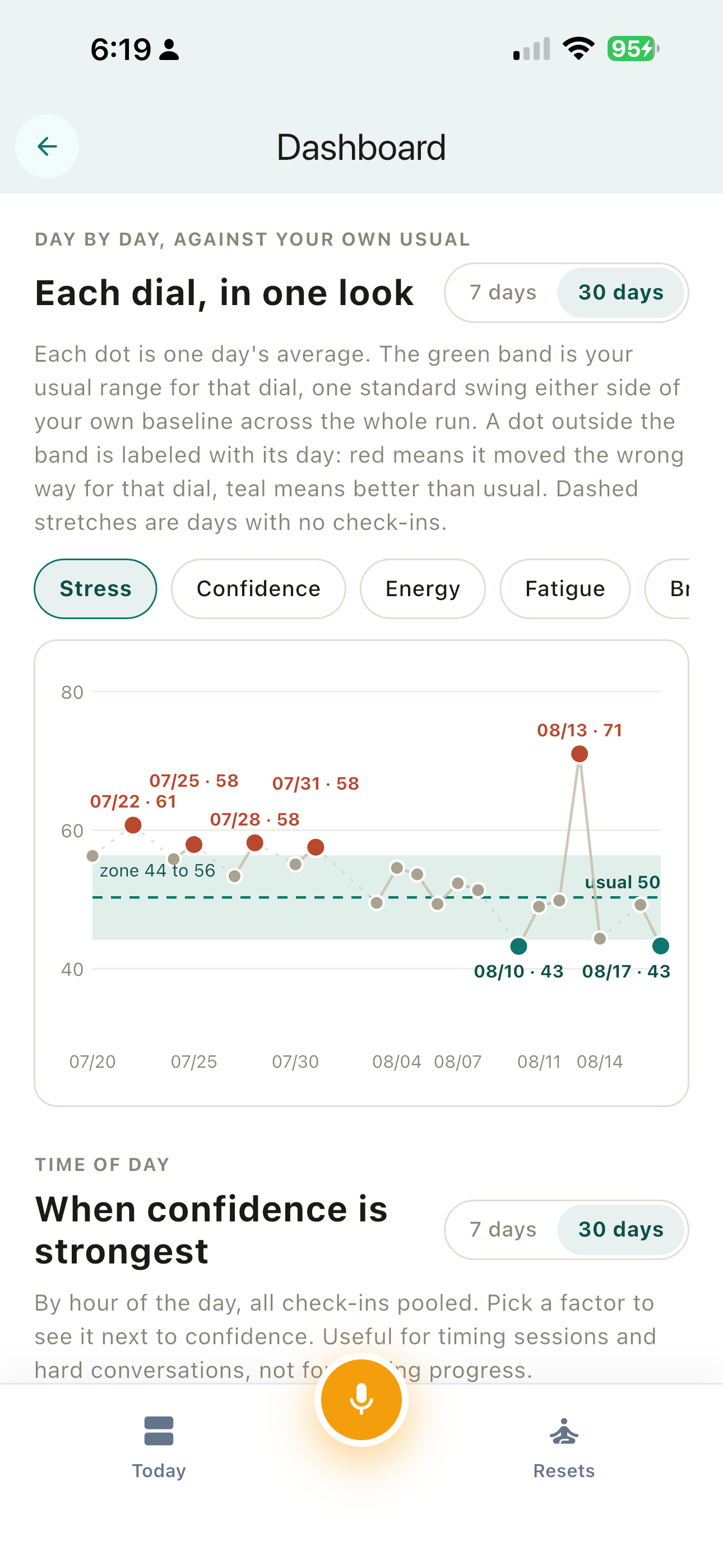
In my own Ontor session history, the post-fallout composure gap looks like this: after a hard stretch that felt like a miss, stress and energy can sit outside my personal usual band while the next high-stakes conversation still has to start. Activity boards would still look like "show up ready." The private usual-band drift is what the reset ritual does not surface before the next client or candidate hears the voice.
Here is stress across dials against my personal usual range, from my own Ontor dashboard and session history. Read it as the private post-fallout composure view after a hard miss, before the next opportunity connect. It is not a diagnosis, and it is not outcome data from your staffing floor:
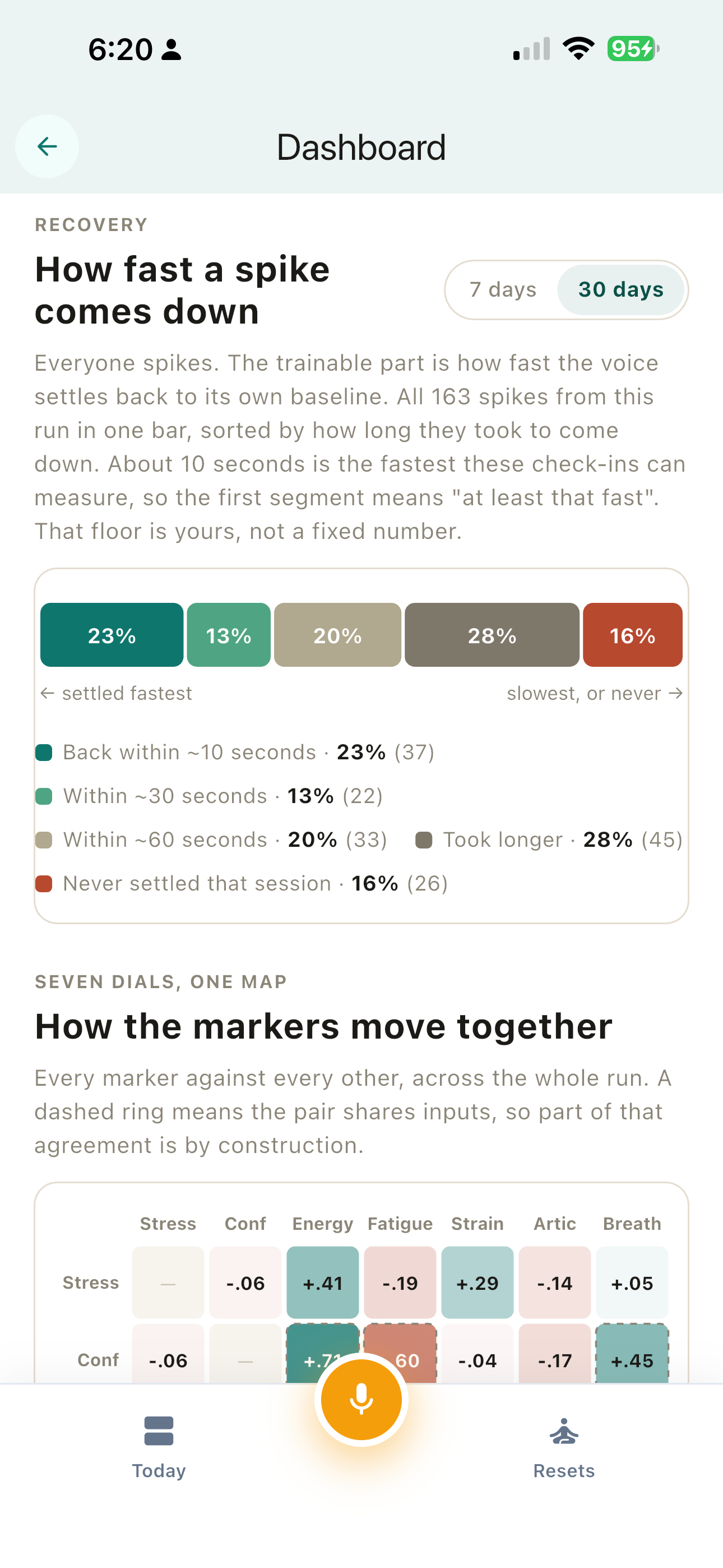
And here is how often stress spikes in that same Ontor history settled back toward my personal baseline, including stretches that never settled in-session. Useful as a private recovery check after fallout or rejection before the next dial. It is not proof that a suggested reset caused recovery, and it is not clinical recovery science:
Download Ontor - 14 days free, no card required
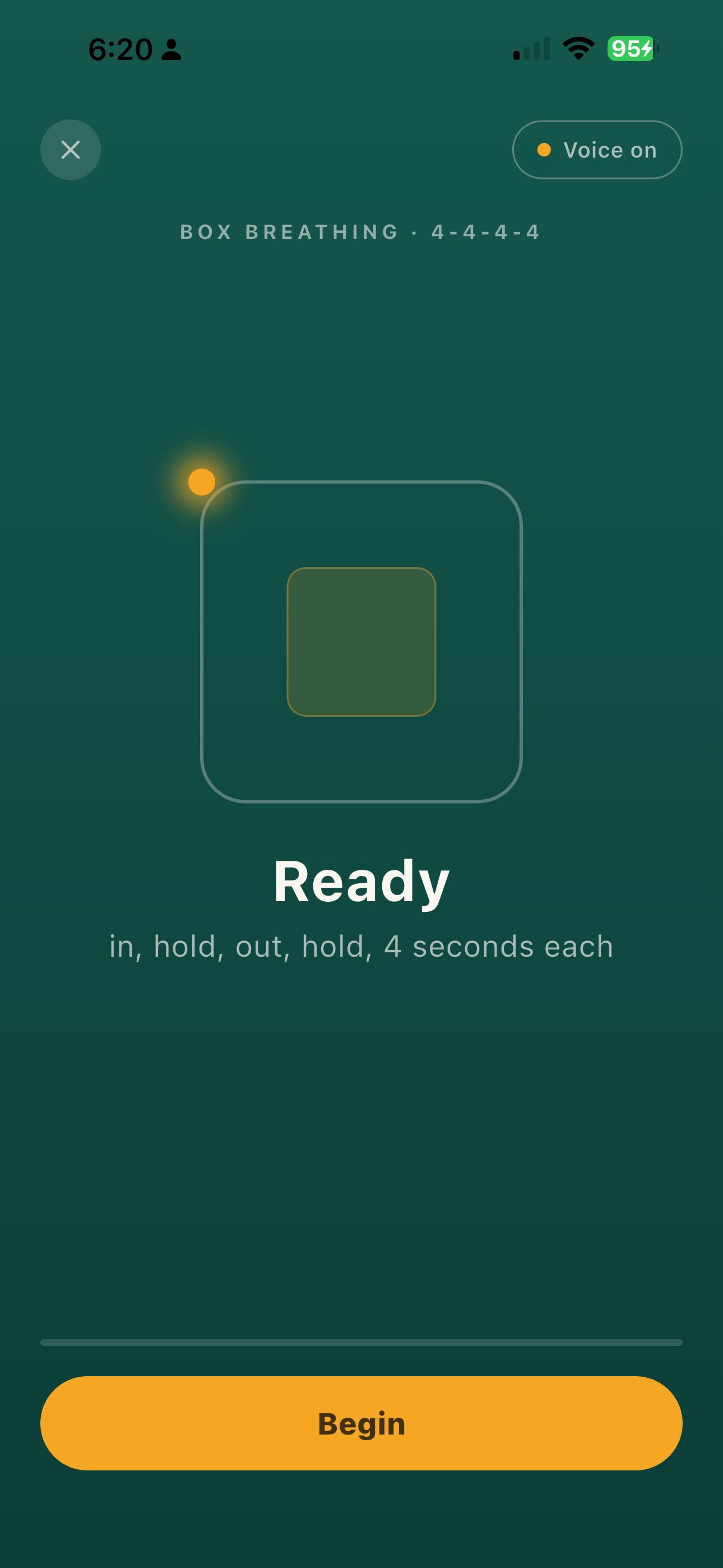
Short resets fit the same loop Kerr describes: remove emotion, reset mentally, then show up for the next opportunity. When confidence or pressure drifts outside usual range after a fallen placement or rejection call, Ontor can surface a brief private exercise before the next client or candidate conversation. Here is a box-breathing reset screen from my own product use. Cap any medical claim. The product point is a short private reset so the next opportunity call does not inherit yesterday's fallout register:
In exploratory work on that same personal Ontor history (one person, not a population study), high-stress episodes often did not show an observed return to my personal median within an hour. That is one reason a private usual-range check after fallout matters. It is not evidence that a suggested reset caused recovery.
This is not a claim that voice markers diagnose distress, predict placements, replace manager judgment, or guarantee the next win after a reset. The claim stays narrow: when a fallen placement or rejection pushes how you sound away from your usual range, a private signal plus a short reset is a loop you can run before the next opportunity call.
What to try on the next fallout or rejection window
Do not wait for a research committee if you are the person who still makes the next client and candidate calls.
- Install Ontor on the machine you already use for BD and recruiting conversations.
- After the next fallen placement or brutal rejection call, run the reset ritual you already preach, then check whether stress, energy, or confidence sit outside your usual range before you dial the next opportunity.
- If a lasting shift shows up, take the short suggested reset when the desk allows it, then make the next client or candidate call.
- If you lead a pod, keep leaders on aggregate patterns only. Personal readings stay with the person.
Soft secondary path if you are buying for a staffing sales or BD desk and want a measured team look later: Ontor for teams, or a research conversation / 14-day pilot with sales leaders' own BD desks.
Do not promise placement speed, fee recovery, or revenue lift from a trial. Measure whether you can tell when post-fallout residue left your usual voice before the next connect.
Bottom line
Placements will keep falling through. Rejection calls will keep landing. Leaders will keep preaching reset. The gap that remains is post-fallout composure: whether tone, energy, and confidence actually came back toward personal baseline before the next high-stakes client or candidate conversation.
Try Ontor on the next client or candidate call after a fallout or rejection. That is the tool next step, not only a research conversation.
Download Ontor - 14 days free, no card required
About the author
Sabber Ahamed is the founder of Ontor and an applied ML scientist (PhD in geophysics and signal processing) who builds on-device voice tools. Ontor compares how you sound to your own usual ranges and suggests short resets, without claiming clinical or revenue outcomes from marker changes.
References
- Took a big L last week… (fallen leadership placement / reset process) - Ian Kerr (LinkedIn) (buyer_evidence, primary)
- Want to know the hardest part of recruitment? (rejection call) - Tim Spindlove (LinkedIn) (employee_anecdote, corroboration)
- About Bancroft Staffing Partners (role corroboration)
- How Ontor works (product)
- Ontor for teams (product)
- Install Ontor (product)
- About the founder - Ontor (author)
- Staffing midday reset verification - Ontor (differentiation)
- Staffing live-connect discomfort - Ontor (differentiation)
- Staffing sales call-block readiness - Ontor (differentiation)
- Freight post-fallout recovery - Ontor (differentiation, freight vertical)