
The first dial of the day is the hardest. Dial boards never show morning cold-start.
Tyler Gangestad (VP of Sales, FreightWise) will tell you the hardest part of cold calling is starting.
"The first dial of the day is the hardest."
That is not a pep talk. It is the morning problem freight brokerage sales leaders already feel on the floor: new reps freeze or redirect when pushback hits unfamiliar ground, and the first live dial of the day often lands while voice and state are still not in call mode.
You can see dials, talk tracks, and CRM activity. You still cannot see whether stress, fatigue, confidence, energy, or breathing sit outside a person's usual range before dial one.
This is for freight brokerage owners, VPs, Directors, and Heads of Sales who own morning prospecting blocks. Secondary for carrier and agency floor reps who take that first dial. It is not between-block readiness after exception stress. It is not the first 10 seconds when phones blow up after a freight fire. It is not post-cancel recovery, post-rate quiet, overnight interrupt composure, or the hangover between ordinary dials.
Download Ontor - 14 days free, no card required
Starting is the gap boards do not store
FreightWise is a tech-enabled freight brokerage and TMS provider. Gangestad described the pattern on newer reps: they knew the product and the market, but when a prospect pushed back in a direction they were not comfortable with, they redirected, talked about something they did know, and left the hard question on the table.
That soft start has a morning shape. Momentum is not there yet. The first dial carries more weight than dial twenty, when the block already has rhythm. Leaders want a pre-block warmup so live dials are not cold-start. Activity boards still count attempts. They do not tell you the voice is still cold.
Rodney Bordeaux (Sales Director, FreightWise) put the readiness desire in buyer language around walking into live conversations with confidence up and gaps named. Cap any vendor volume claim. The useful buyer spine is starting, confidence before live dials, and not burning the first connect while the instrument is still waking up.
A light adjacent note only: Gangestad's free-throw metaphor (warm up before the live session) names the same object. Cap the product that published the case study. This article does not sell scripts or roleplay. The Ontor-shaped gap is noticing that morning voice and state are still outside usual range before dial one, then taking a short private reset you own.
What this article is not answering
Published Ontor pieces already cover adjacent voice moments:
- Freight sales call-block readiness answers readiness between call blocks after exception stress. Not the morning first dial of the day.
- Freight fires, first 10 seconds answers leader composure when phones blow up after a freight fire.
- Freight post-fallout recovery answers composure on the next recovery dial after a carrier cancel.
- Hangover between sales calls answers unpaid emotional and admin recovery between ordinary mid-market dials.
- Freight overnight voice composure answers how you sound after a sleep interrupt.
- First connect shouldn't be warmup answers individual call-heavy workers burning early morning pickups as warmup reps. Different beachhead and spine.
This article answers a different question: before the first dial of the morning on a freight sales floor, how do you notice whether voice and state are still outside personal usual range, take a short private reset, and start the live block already in call mode instead of cold?
Same freight brokerage sales-leader beachhead. Different moment. Different ops move. Between-block readiness is already covered. This is morning cold-start before dial one.
Cold-start is audible. Ready is audible too.
The morning failure mode is familiar. Pace is stiff. Softeners land early. Unfamiliar pushback gets redirected because the body has not caught up to the talk track yet. Dial boards still look fine. The first live human hears the cold start.
CRM and exception queues will show the day's work. Call recordings will show what was said. They still leave a narrower gap: whether stress, fatigue, confidence, energy, or breathing drifted outside a personal usual range in the short speech window before dial one, when the voice is not yet in call mode.
A private usual-range check before dial one
Ontor is a performance tool that reads how you sound, not what you said. While someone speaks, it compares voice signals to that person's own usual range. When a lasting shift shows up (for example stress, fatigue, confidence, energy, or breathing), it can suggest a short reset. People can also compare before and after.
That matches morning first-dial cold-start without turning it into medical advice, ROI theater, hire-fire instrumentation, or a roleplay product pitch. Ontor's public product framing is personal-baseline self-insight: acoustic patterns versus your own rolling usual range, not a population score and not a diagnosis. For teams, leaders see aggregate patterns that can inform workload, coaching, and support. Individual sessions and readings stay with the person.
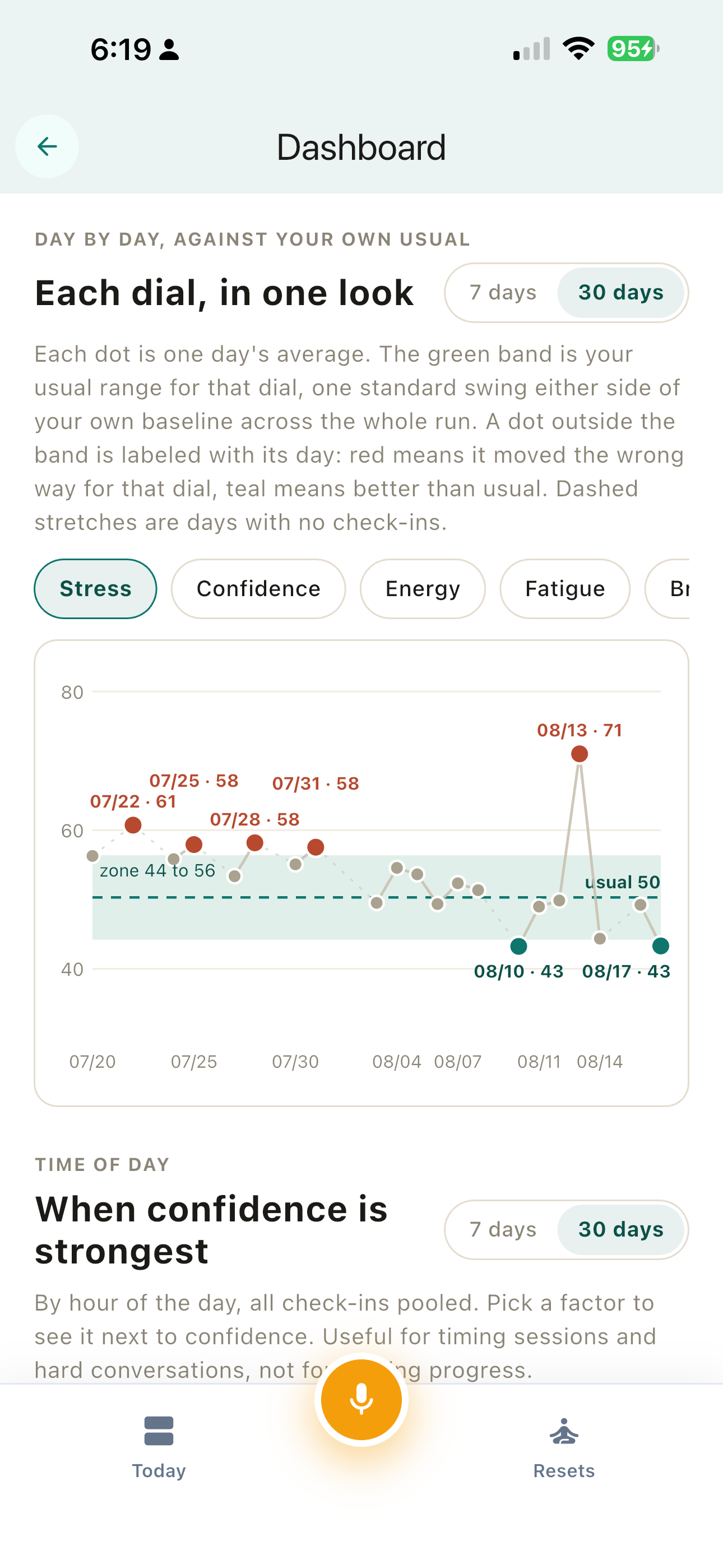
In my own Ontor session history, morning first-speech cold-start looks like this: before the first hard dial of the day, stress, confidence, energy, or breathing can sit outside my personal usual band while the dialer is already open and the block has not started. That private usual-band drift is what boards do not surface before dial one, and what buddy warmups are guessing at by ear.
Here is stress across dials against my personal usual range, from my own Ontor dashboard and session history. Read it as the private morning cold-start view of how often stress leaves the band on early stretches, including the kind of first-speech window before dial one on a freight prospecting block. It is not a diagnosis, and it is not outcome data from your brokerage floor:
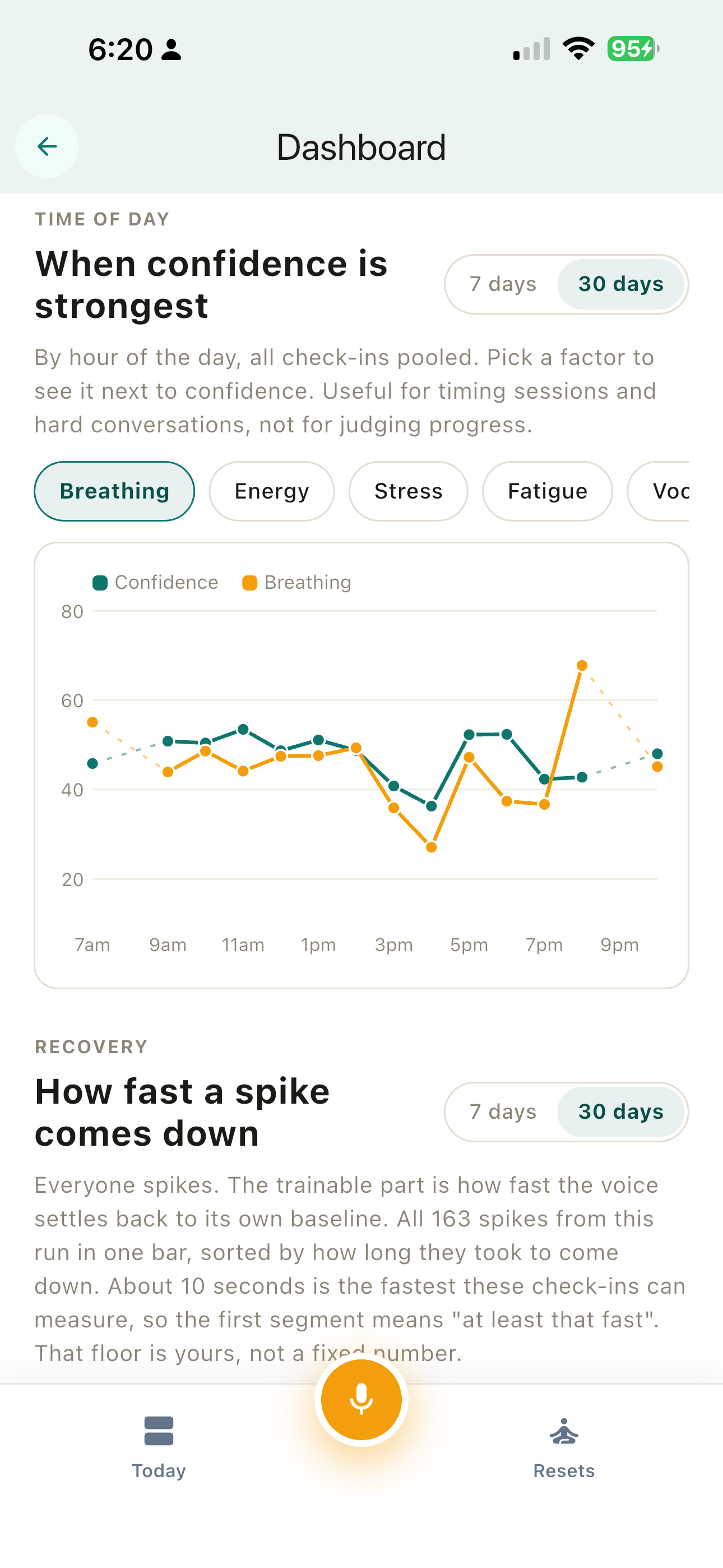
And here is confidence with breathing from that same Ontor history. Useful as a private readiness check in the short speech window before the first live dial, when your voice still has to sound like it belongs on a freight sales floor. It is not proof that a suggested reset caused recovery, and it is not clinical recovery science:
Download Ontor - 14 days free, no card required
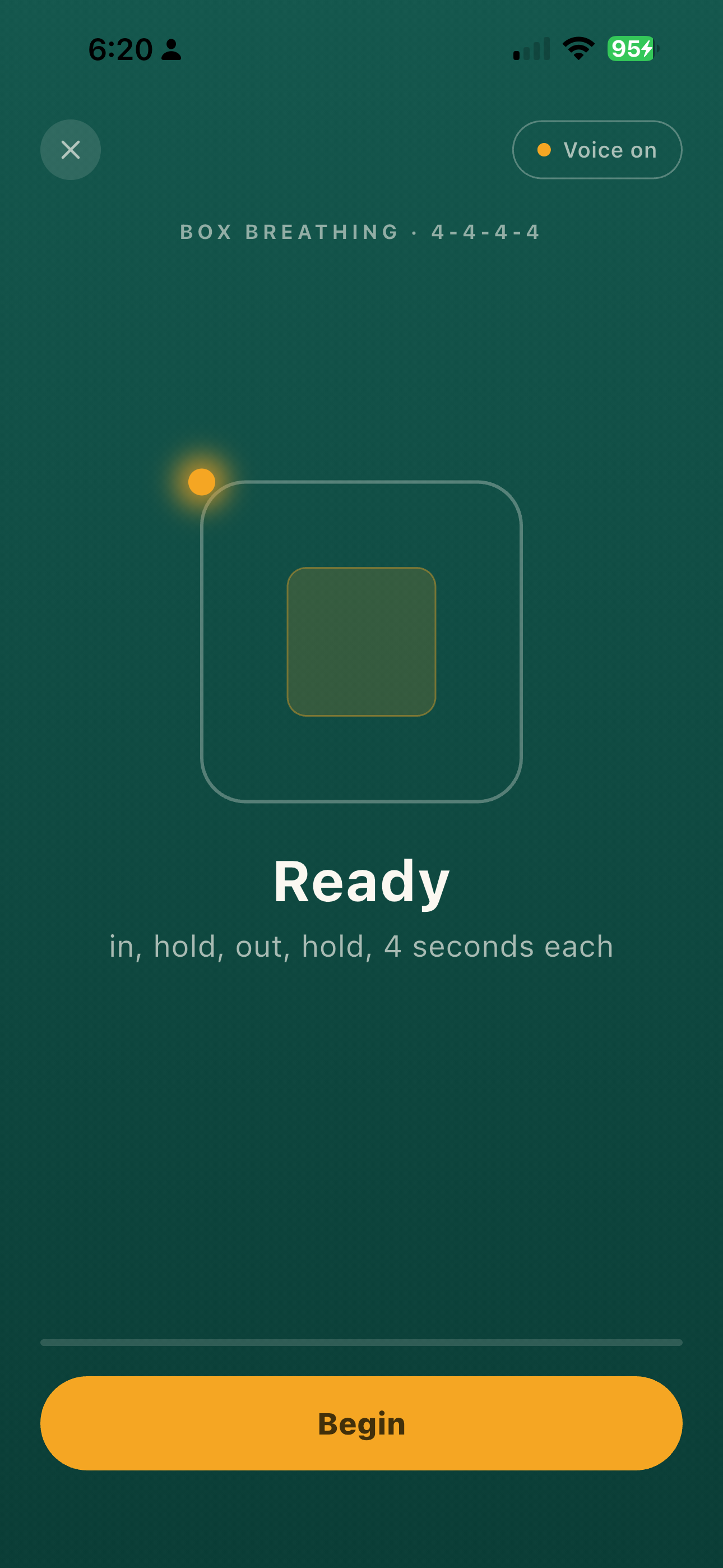
Short resets fit the morning sequence: notice you are still cold, take a brief private loop, then dial. When stress or energy leave usual range before dial one, Ontor can surface a short exercise you own before the first live pickup. Here is a box-breathing reset screen from my own product use. Cap any medical claim. The product point is a short private reset so the first dial is not the warmup:
In exploratory work on that same personal Ontor history (one person, not a population study), high-stress episodes often did not show an observed return to my personal median within an hour. That is one reason a private usual-range check before the first dial of the day matters. It is not evidence that a suggested reset caused recovery.
This is not a claim that voice markers diagnose cold-call anxiety, predict dial volume, replace manager judgment, or guarantee better discovery meetings after a reset. The claim stays narrow: when morning voice and state leave your usual range before dial one, a private signal plus a short reset is a loop you can run before the live block starts cold.
What to try before tomorrow's first dial
Do not wait for a research committee if you own the morning prospecting block.
- Install Ontor on the machine you already use for freight cold dials.
- Before tomorrow's first dial of the day, speak a short natural sample. Check whether stress, fatigue, confidence, energy, or breathing sit outside your usual range while you are still not in call mode.
- If a lasting shift shows up, take the short suggested reset, then start the live block.
- If you lead a pod, keep leaders on aggregate patterns only. Personal readings stay with the person.
Soft secondary path if you are buying for a freight sales team and want a measured look on morning prospecting blocks later: Ontor for teams, or a research conversation / pilot with a brokerage sales desk.
Do not promise dial volume, discovery meetings, or revenue lift from a trial. Measure whether you can tell when morning cold-start left your usual voice before dial one.
Bottom line
Dials will keep starting at the top of the morning block. Boards will keep counting them. The gap that remains is morning cold-start: the first dial of the day is the hardest, and the floor hears it when voice and state are still outside usual range.
Try Ontor before tomorrow's first dial. Notice the short speech window before dial one. That is the tool next step, not only a pilot conversation.
Download Ontor - 14 days free, no card required
About the author
Sabber Ahamed is the founder of Ontor and an applied ML scientist (PhD in geophysics and signal processing) who builds on-device voice tools. Ontor compares how you sound to your own usual ranges and suggests short resets, without claiming clinical or revenue outcomes from marker changes.
References
- The pre-call warmup that got FreightWise's team making 25% more calls - Chambr (buyer quotes: Tyler Gangestad, VP Sales, FreightWise; Rodney Bordeaux, Sales Director, FreightWise) (buyer_evidence; vendor ROI claim ignored; roleplay product pitch stripped)
- How Ontor works
- Ontor for teams
- Install Ontor
- About the founder - Ontor
- Freight sales call-block readiness - Ontor
- Freight fires, first 10 seconds - Ontor
- Freight post-fallout recovery - Ontor
- Hangover between sales calls - Ontor
- Freight overnight voice composure - Ontor
- First connect shouldn't be warmup - Ontor