
When the phones blow up after a freight fire, the first 10 seconds decide the floor.
A load goes sideways. Then the phones light up.
Customers, carriers, agents. Everyone wants answers in the same minute. The fire itself is loud. What spreads next is quieter and more expensive: the leader matches the panic, gets loud, absorbs the chaos, and the floor copies that energy before anyone has a clear plan.
You already know freight fires happen. Dashboards show load status, exception queues, and who is on the phone. They do not show whether the first 10 seconds of voice and energy on the floor matched the blow-up or stayed steady.
This is for freight brokerage owners, VPs, Directors, and Heads of Sales who still set the tone when the desk erupts. Secondary for carrier and agency floor reps who hear that tone live. It is not the next recovery dial after a carrier cancel. It is not post-rate quiet. It is not overnight interrupt composure. It is not the hangover between ordinary dials.
Download Ontor - 14 days free, no card required
The fire is not the test. The first 10 seconds are.
Colby Baskin (Founder and CEO, Cowtown Logistics) named the moment on LinkedIn:
"When everything catches fire… who do you become?"
He described early brokerage years when customers blew up the phones the second something went sideways:
"Or customers blowing up our phones the second something went sideways."
And what matching that energy did to the room:
"And when it did? I thought every single thing was my fault. So I reacted. I got loud. I matched everyone's panic. And I created the crazy cycle that pushes good people away."
His reframe is sharp for any sales leader who still picks up when the floor is hot:
"It's not the workload that breaks you, it's how you respond to it."
"When the noise rises → I get calm. When stress hits → I stop matching it. When fires show up → I direct them instead of absorbing them."
"Because the real test isn't the fire. It's who you become in those first 10 seconds."
"Freight doesn't need heroes. It needs steady operators."
Comment corroboration stays light: peers noted that the first 10-second mindset often defines culture, and those seconds often decide whether a team feels supported or abandoned. Cap that as culture color. Lead with Baskin's own spine.
The business consequence does not need invented metrics. Matched panic amplifies customer and carrier chaos. Good people leave rooms that feel unsafe. Culture becomes hero firefighting instead of steady ops. Margin and trust language fits as problem framing here. Ontor does not claim to produce those outcomes.
What this article is not answering
Five published Ontor pieces already cover adjacent voice moments:
- Freight post-fallout recovery answers composure on the next recovery dial after a carrier cancel. Not the leader's first 10 seconds when phones blow up.
- Hangover between sales calls answers unpaid emotional and admin recovery between ordinary mid-market dials.
- Staffing post-fallout composure answers staffing placement fallout. Different industry.
- Freight post-rate silence answers the quiet after you quote a rate.
- Freight overnight voice composure answers how you sound after a sleep interrupt.
This article answers a different question: when customers blow up the phones after a freight fire, how do you notice whether stress, energy, confidence, or breathing left your personal usual range in those first ~10 seconds, take a short private reset, and set a steady floor instead of matching the panic?
Same freight brokerage sales-leader beachhead. Different moment. Different ops move. Do not re-center prior carrier-cancel fallout coaching. The spine here is leader first-10s composure under phone blow-ups.
Matching the noise is audible. Steady is audible too.
Baskin's sequence is the spine: noise rises, stop matching it, direct the fire instead of absorbing it, show up with mental clarity for agents, customers, and employees. The hard part is the body and voice in those first seconds. Pace wants to climb. Volume wants to match the caller. Softeners and blame land before anyone has a clear next step.
A light adjacent note only (do not center): Freight 360 Episode 301 (Nate Cross / Ben Kowalski) talks about how tone, inflection, volume, and energy come through the phone, and how people hear whether someone is genuine. Cap that as audible-presence color. The lead remains Baskin's first-10s leader composure under phone blow-ups.
Load boards and exception queues will show the fire. Call recordings will show what was said. They still leave a narrower gap: whether stress, fatigue, confidence, energy, or breathing drifted outside your personal usual range in the short speech window when the phones first lit up.
A private usual-range check in the first-10s crisis window
Ontor is a performance tool that reads how you sound, not what you said. While someone speaks, it compares voice signals to that person's own usual range. When a lasting shift shows up (for example stress, fatigue, confidence, energy, or breathing), it can suggest a short reset. People can also compare before and after.
That matches the first-10s crisis-call window without turning it into medical advice, ROI theater, or a hire-fire instrument. Ontor's public product framing is personal-baseline self-insight: acoustic patterns versus your own rolling usual range, not a population score and not a diagnosis. For teams, leaders see aggregate patterns that can inform workload, coaching, and support. Individual sessions and readings stay with the person.
In my own Ontor session history, the first-10s crisis composure gap looks like this: when a hard ops or customer blow-up hits and the next words have to land steady, stress, confidence, energy, and breathing can sit outside my personal usual band in a short speech window while my impulse is still to match the noise. Exception boards would still look like a clean escalation. The private usual-band drift is what the floor does not surface before the next person hears the tone.
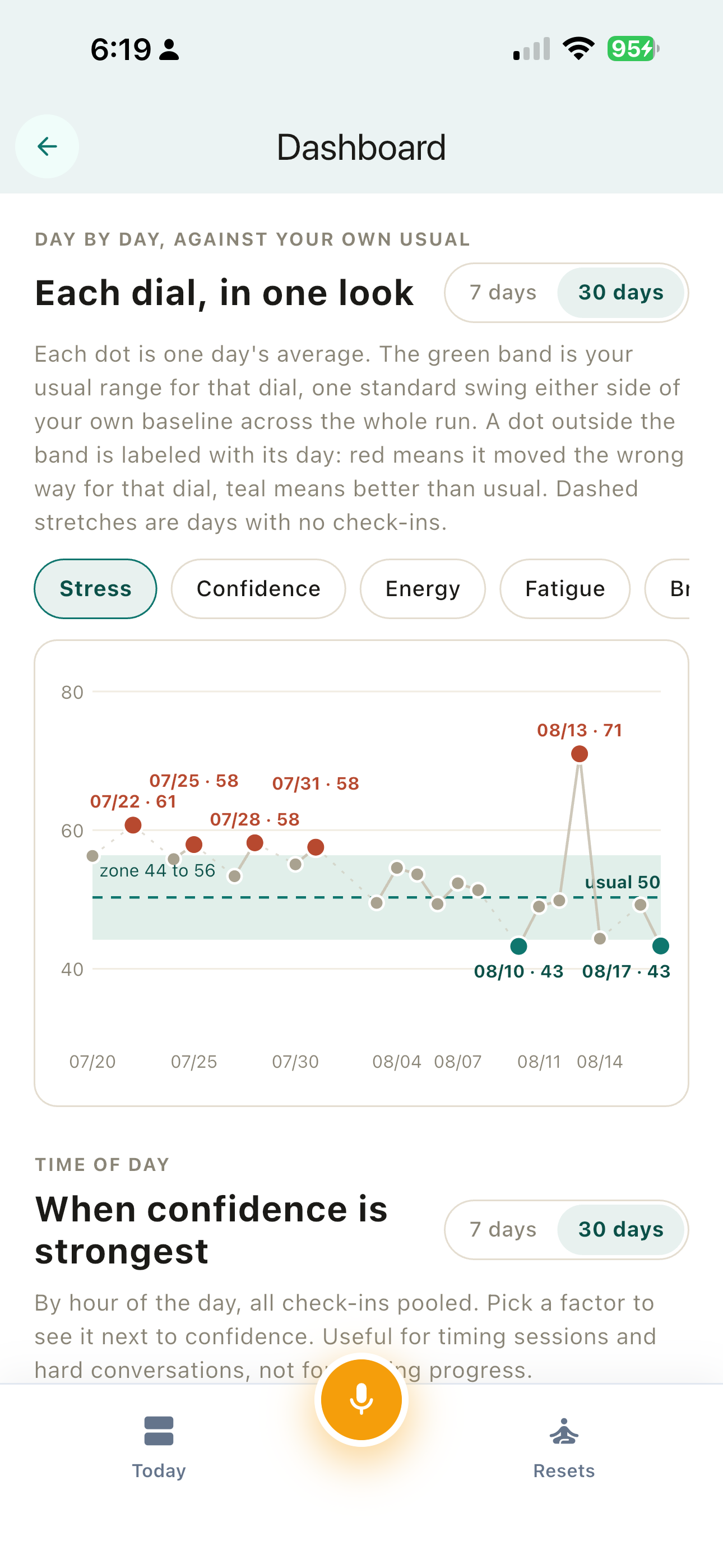
Here is stress across dials against my personal usual range, from my own Ontor dashboard and session history. Read it as the private view of how often stress leaves the band on hard stretches, including the kind of first-10s window when phones blow up after a freight fire. It is not a diagnosis, and it is not outcome data from your brokerage floor:
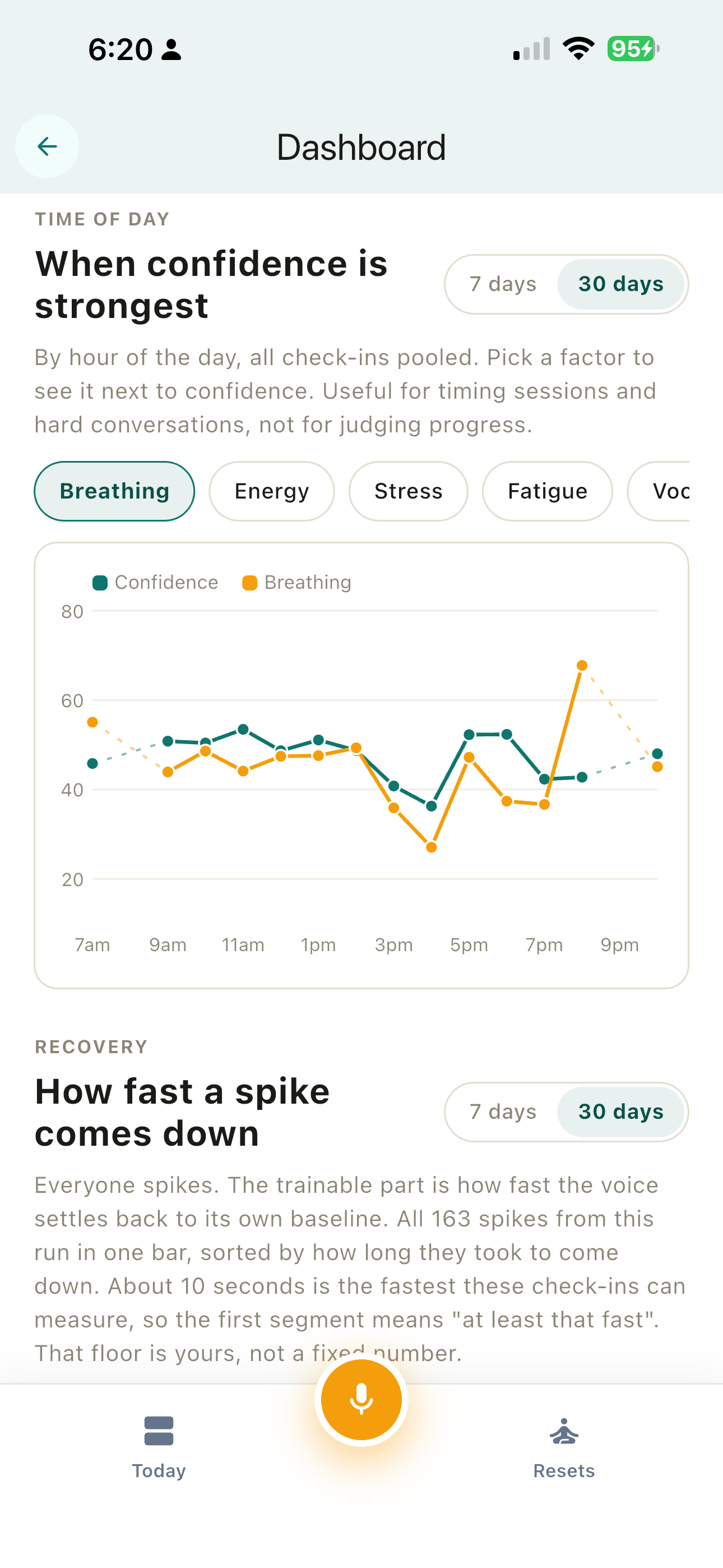
And here is confidence with breathing from that same Ontor history. Useful as a private composure check in the short speech window when customers are lighting up the phones and your voice still has to set the floor. It is not proof that a suggested reset caused recovery, and it is not clinical recovery science:
Download Ontor - 14 days free, no card required
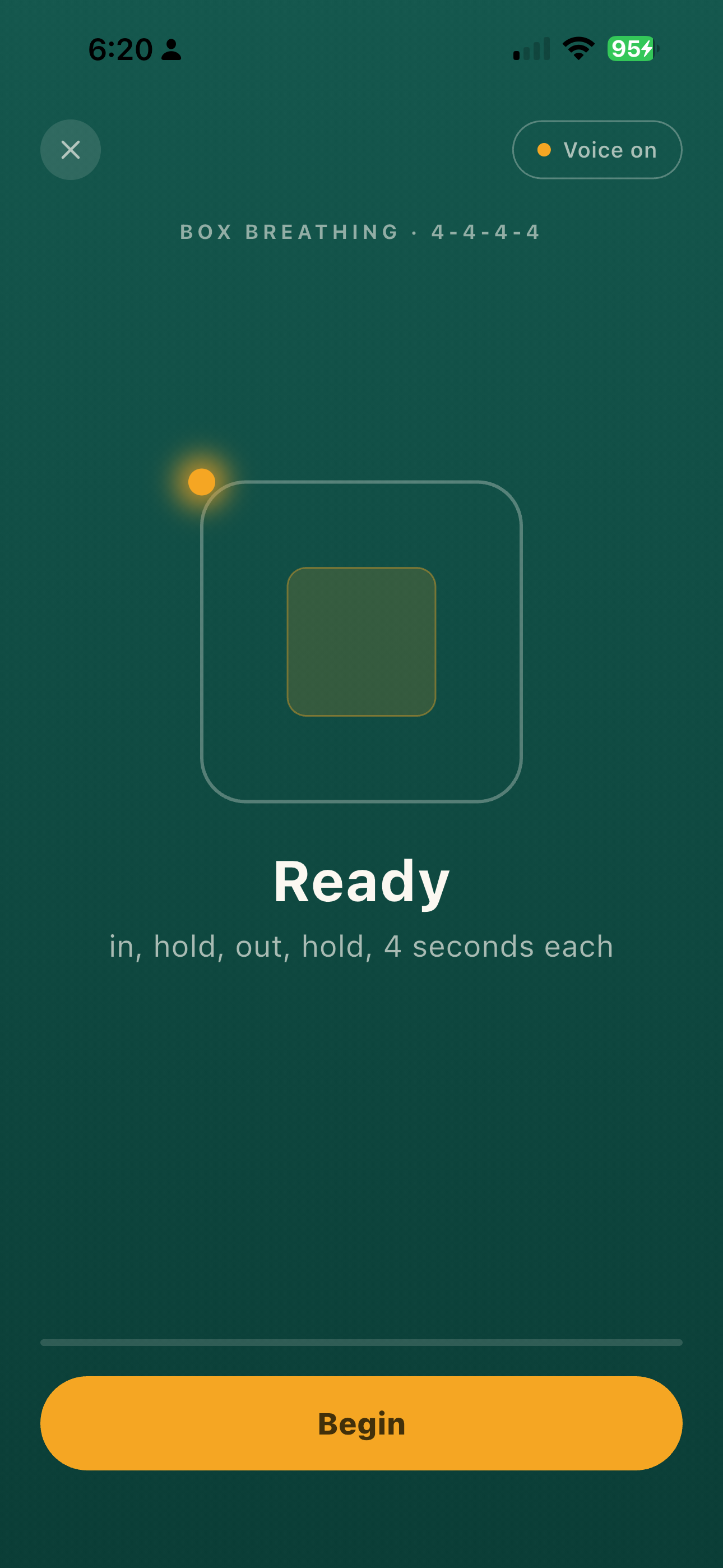
Short resets fit Baskin's sequence: notice the rise, stop matching it, then direct. When stress or energy leave usual range in those first seconds, Ontor can surface a brief private exercise before your next sentence on the floor. Here is a box-breathing reset screen from my own product use. Cap any medical claim. The product point is a short private reset so the floor hears steady direction, not matched panic:
In exploratory work on that same personal Ontor history (one person, not a population study), high-stress episodes often did not show an observed return to my personal median within an hour. That is one reason a private usual-range check in the first ~10 seconds of a phone blow-up matters. It is not evidence that a suggested reset caused recovery.
This is not a claim that voice markers diagnose panic contagion, predict retention, replace manager judgment, or guarantee calmer customers after a reset. The claim stays narrow: when the phones blow up and how you sound leaves your usual range in those first seconds, a private signal plus a short reset is a loop you can run before the floor copies matched panic.
What to try on the next live crisis or ops call block
Do not wait for a research committee if you are the person who still picks up when the phones blow up.
- Install Ontor on the machine you already use for crisis and ops calls.
- On the next live block when customers light up the phones after a freight fire, notice the first ~10 seconds. Check whether stress, fatigue, confidence, energy, or breathing sit outside your usual range before you set the floor tone.
- If a lasting shift shows up, take the short suggested reset when the desk allows it, then direct the next step instead of matching the caller's volume.
- If you lead a pod, keep leaders on aggregate patterns only. Personal readings stay with the person.
Soft secondary path if you are buying for a freight sales team and want a measured look on live crisis or ops call blocks later: Ontor for teams, or a research conversation / pilot with a brokerage sales desk.
Do not promise retention, margin, or revenue lift from a trial. Measure whether you can tell when the urge to match the noise left your usual voice before the next sentence.
Bottom line
Fires will keep showing up. Phones will keep blowing up. The gap that remains is first-10s leader composure: who you become in those seconds matters more than the fire, and the floor hears it.
Try Ontor on the next live crisis or ops call block when the phones blow up. Notice the first 10 seconds. That is the tool next step, not only a pilot conversation.
Download Ontor - 14 days free, no card required
About the author
Sabber Ahamed is the founder of Ontor and an applied ML scientist (PhD in geophysics and signal processing) who builds on-device voice tools. Ontor compares how you sound to your own usual ranges and suggests short resets, without claiming clinical or revenue outcomes from marker changes.
References
- Freight Fires - When everything catches fire… who do you become? - Colby Baskin (LinkedIn) (buyer_evidence, primary; Founder and CEO, Cowtown Logistics)
- Why Most Freight Sales Reps Fail | Episode 301 - Freight 360 (adjacent audible tone/energy only; do not center)
- How Ontor works
- Ontor for teams
- Install Ontor
- About the founder - Ontor
- Freight post-fallout recovery - Ontor (carrier-cancel sibling, different question)
- Hangover between sales calls - Ontor (between-call hangover sibling, different moment)
- Staffing post-fallout composure - Ontor (staffing sibling, different industry)
- Freight post-rate silence - Ontor (post-rate quiet sibling, different question)
- Freight overnight voice composure - Ontor (overnight sibling, different question)