
Coaches train the voice. The Voice Mask still cracks when they name the price.
Sales, executive, and voice coaches already train tone, presence, and technique. Clients rehearse well. They teach well. Then the commercial moment arrives: name the price, take a challenge, or hear "sell me something." Something in the voice shifts. Listeners hear protection before words. The seller often cannot hear it while it is happening.
Tracy Goodwin (Captivate the Room; Psychology of the Voice®; Voice Masks®) productizes that situational crack. Protective vocal layers (proving, professional, people-pleaser, "on") hold in practice and teaching, then activate under visibility, selling, introduction, or challenge. Voice Masks® and Psychology of the Voice® are Tracy's frameworks. Ontor does not own them. Ontor's wedge is narrower and product-shaped: when the protective or performance band leaves a person's personal usual range mid-ask, a between-session instrument can notice the leave and offer a short optional reset. Not a medical diagnosis. Not a claim that marker changes prove revenue.
This is for coaches who already sell voice, presence, and sales-communication work into call-heavy sellers, and for the sellers those coaches serve. It is not anxious OR robotic as two outputs of one pressured cascade. It is not polished voice that locks under evaluation. It is not skull-conduction can't-hear-your-own-voice under pressure. It is not stage voice that dies on the first live interruption. It is not thin/tight that became the everyday baseline. It is not practice holds, live dials don't as a transfer-gap category alone. It is not call-mode pitch costume. It is not between-session coaching blind spot alone. It is not measuring nervous-system regulation as a category. It is not block-length robot stamina. The wedge here is the price/ask-specific protective mask that holds in practice, then cracks mid-ask.
Download Ontor - 14 days free, no card required
The teaching voice holds. The ask voice masks up.
On Captivate the Room's Advantage page, Tracy names what visibility does to the voice before content lands:
"When the camera turns on, most people unconsciously tighten, rush, soften, or perform."
And what protection sounds like to listeners:
"Protection sounds like: Over-explaining; Rushing to be understood; Sounding 'on'; Pulling back to avoid judgment. These are not communication mistakes. They're nervous system responses."
Attribute that nervous-system language carefully. It is Tracy's buyer phrasing for protective responses. Ontor does not claim to measure the nervous system medically, diagnose dysregulation, or treat anything. The product-shaped gap is simpler: notice when pitch, energy, pace, strain, or "on" performance leave your personal usual range in short speech windows, especially when the commercial ask arrives between coaching appointments.
On the Clare Wood podcast (Why your voice masks are costing you sales), Tracy makes the sell/price trigger explicit. Teaching can stay composed. Naming the price is where the imprint shows:
"Oh, now I've gotta tell you the price. Okay. It's $497. Okay, who's ready for a free lunch?"
And the fastest way she gets people masked up:
"Here's the fastest way for me to get people masked up. Sell me something or introduce yourself."
Challenge flips the same switch into professional cover:
"I'm talking to you… and now you start to challenge me… So now I'm gonna be very professional… because I am a professional, and I'm gonna cover up that I don't know."
Self-hearing fails on both sides of that crack:
"People cannot hear within themselves, but the subconscious of our listeners can hear those nuances."
That is the coaches-channel problem in one cut: clients leave protected sounds on the table during the ask, and they cannot audit those sounds live. Technique from the session does not automatically travel into unsupervised sell moments. Cap Tracy's marketing ROI percentages. Do not recycle income-lift claims. The usable spine is situational: mask holds in practice and teaching, then cracks on price, challenge, or "sell me something."
Corroboration: pressure tighten and performed presence go flat
Clinton Jordan (VocalEdge / Sofa to the Stage) packages leaders whose voice tightens under pressure and no longer matches felt leadership energy. From the VocalEdge programme page:
"Their heart races, their voice tightens, and they doubt themselves under pressure."
"They sound different than they feel, and their voice doesn't match their leadership energy."
"Their delivery feels flat, rehearsed, or disconnected, even when the message matters."
That is corroboration for pressure-tighten and authenticity under stakes, not a second spine. Cohort Zoom work still leaves unsupervised commercial asks blind between sessions.
Christina Dufour (Speak to Lead / Leadership Presence & Communications Mastery) names the performed-presence version of the same leave:
"The moment they start performing, you feel it. Something goes flat."
"Most of what gets taught about executive presence is about the outside. How you sound. How you fill a room."
"We still work on all of it, voice, body language… But when those skills are built on a grounded, regulated state they stop feeling like techniques and start feeling like you."
Again: attribute coach regulation language carefully. Ontor's wedge is not medical regulation measurement. It is noticing when the performance/"on" band has replaced personal usual range mid-conversation, including mid-ask.
Fatigue-only corroboration (not the spine): Rachel Pietsch (Now You're Talking) packages occupational voice fatigue for sellers and telemarketers who cannot last the distance. Jenni Steck (voice/SLP coaching) names end-of-day tired voice under meeting and call load. Useful for day-length strain. Not the price-ask Voice Mask crack.
Distinct from the nearby Ontor cuts
| Published Ontor cut | Moment | What this article is not rewriting |
|---|---|---|
| Anxious or robotic, same pressure | One pressured cascade, two audible modes | Not dual-mode misdiagnosis; price/ask protective mask |
| Polished voice locks under evaluation | Panel/board evaluation freeze | Not evaluation-only lock; commercial ask crack |
| Coaches can't hear own voice under pressure | Skull-conduction / self-hearing gap | Not self-hearing category alone; mask on sell/price |
| Stage voice dies under live interruption | Prepared stage voice collapses on interruption | Not interruption collapse; price/challenge mask |
| Thin tight voice became everyday baseline | Chronic thin/tight became everyday normal | Not chronic baseline replacement; situational ask mask |
| Practice holds, live dials don't | Practice-to-live transfer gap as category | Not transfer category alone; ask-specific protective shift |
| Call-mode pitch voice | Forced professional phone costume | Not leading with call-mode costume; mask on naming price |
| Coaching between sessions | Between-session blind spot as category | Not blind-spot category alone; Voice Mask mid-ask |
| Measure nervous-system regulation | Category problem of measuring regulation | Not NS measure category; personal usual-range leave mid-ask |
| Block-length robot voice | Cumulative fade into robot by lunch | Not stamina-only robot; situational protection on the ask |
Same coaches channel. Different question: when the Voice Mask holds in practice and teaching, then cracks the moment they name the price, take a challenge, or "sell me something."
Download Ontor - 14 days free, no card required
What Ontor can add between coaching sessions
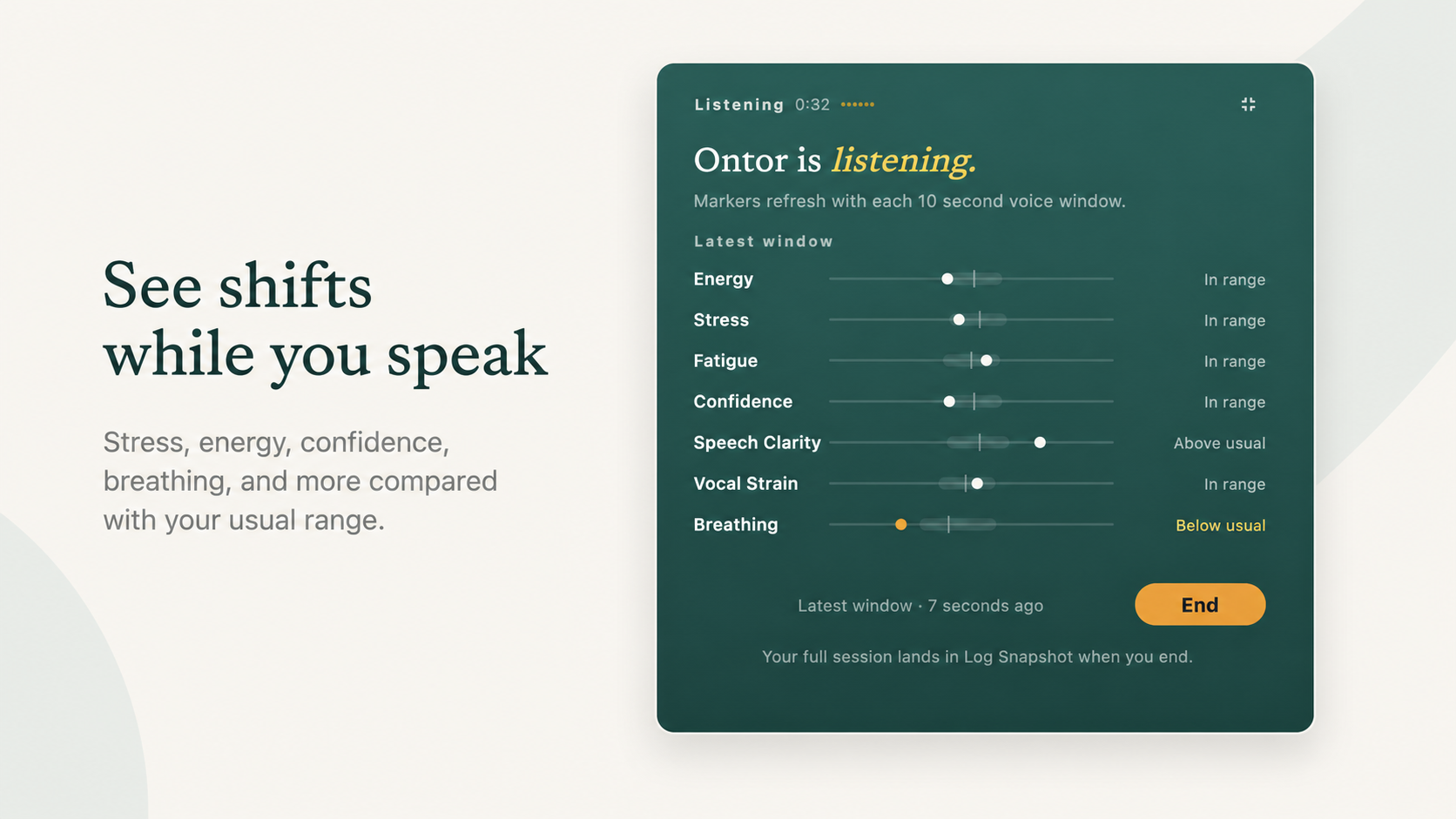
Ontor is a performance tool that reads how someone sounds, not what they said. While a person speaks, it compares voice signals to that person's own usual range. Markers refresh in short voice windows (on the order of about 10 seconds of speech). When a lasting shift shows up (for example stress, energy, speech clarity, vocal strain, or breathing), it can suggest a short optional reset. People can also compare before and after.
For a coach practice already selling Voice Masks® awareness, Psychology of the Voice® work, presence programmes, or VocalEdge-style cohort training, that sits next to the work you already do. Clients still own their readings. Rep-first privacy. What you gain is an unsupervised instrument for the commercial moment Tracy names: when protection, professional cover, or "on" performance leaves personal usual range mid-ask, the seller can see the leave and take a short reset before the next price line or challenge answer.
This is not a claim that Ontor diagnoses health conditions, measures the nervous system medically, treats protective responses, replaces Tracy's or any coach's method, owns Voice Masks® or Psychology of the Voice®, proves conversion lift, or guarantees close rates. It is narrower: short live windows against personal usual range so coaches and clients can see when the ask voice left the teaching voice between sessions.
What shows up in my own Ontor history (mask shift on price and challenge)
I am Sabber Ahamed, founder of Ontor. I use the product on my own speaking, demos, and call-heavy founder days. In my own Ontor session history (founder exploratory data from my own product use, not your clients' outcome data), the price/ask protective pattern shows up the way Tracy names it. Across unsupervised live windows, not only a coaching-room rehearse, pitch, energy, pace, or strain can leave my personal usual range the moment I name a price, take a challenge, or switch into "sell me something" mode. The professional/"on" band can replace the teaching voice mid-ask while I still feel composed. When that shift sticks, a short optional reset is the tool form of noticing the leave before the next ask line. It is not a claim that one cycle removes anyone's Voice Mask for a whole coaching roster.
Here is the live listening view from my own Ontor product use: markers refresh with each short voice window and sit against my usual range. In one window, stress, energy, or strain can sit off usual while the ask is still in progress. That is the kind of mid-ask leave a post-session clip review misses:
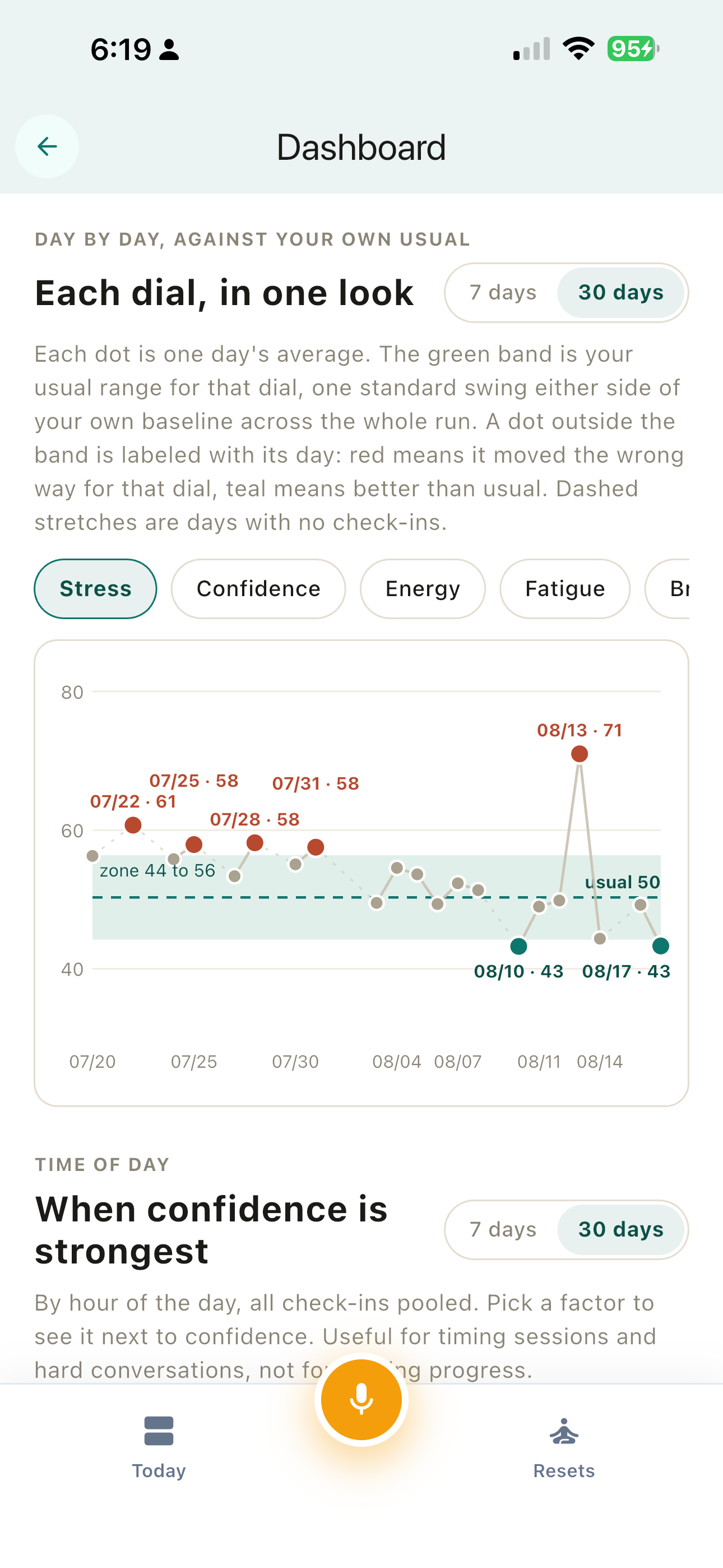
Here is stress against the personal usual band across dials and speaking blocks, from my own Ontor session history. When the high side of the band shows up specifically around challenge answers or price lines, the situational mask Tracy names is already running before anyone books a refresh session:
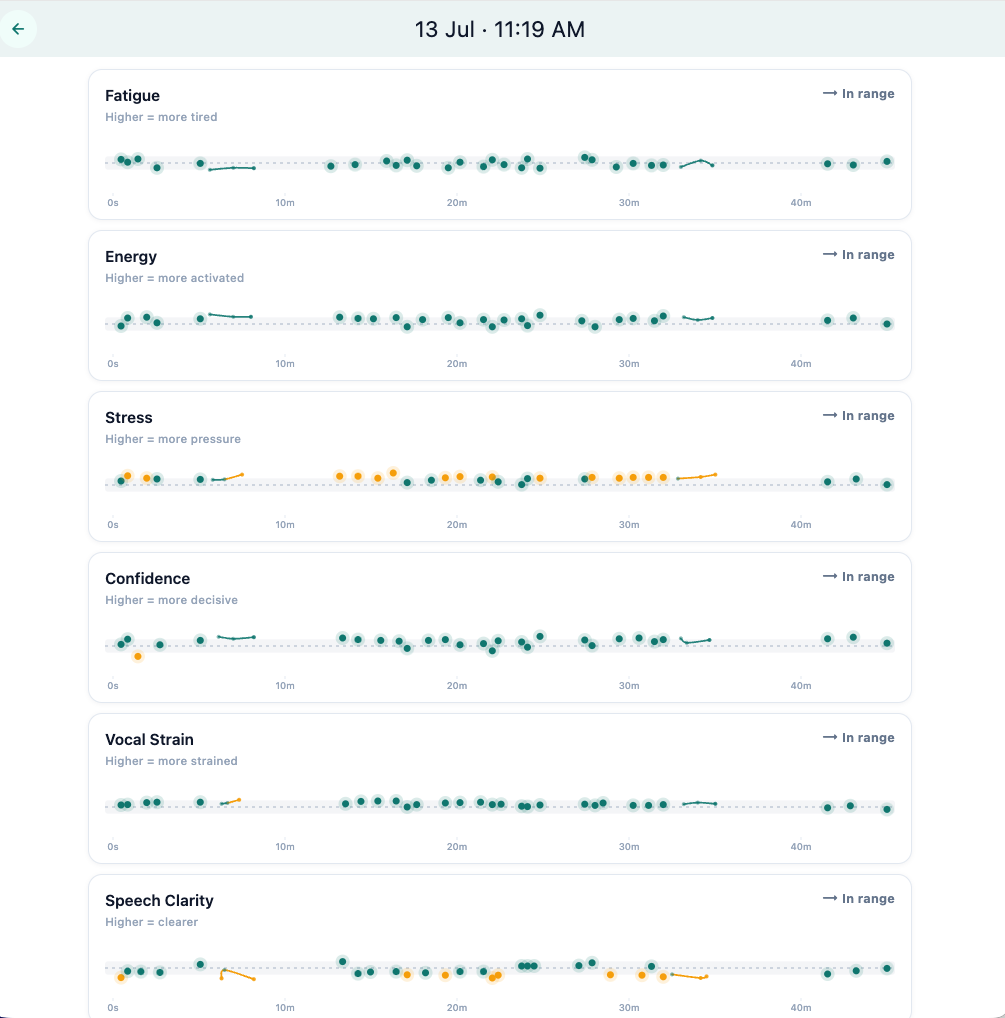
Here is a meeting analysis view from my own Ontor product use after a pressured stretch. Before/after comparison is how I check whether the professional/"on" leave stuck past the ask, without inventing a clinical label for it:
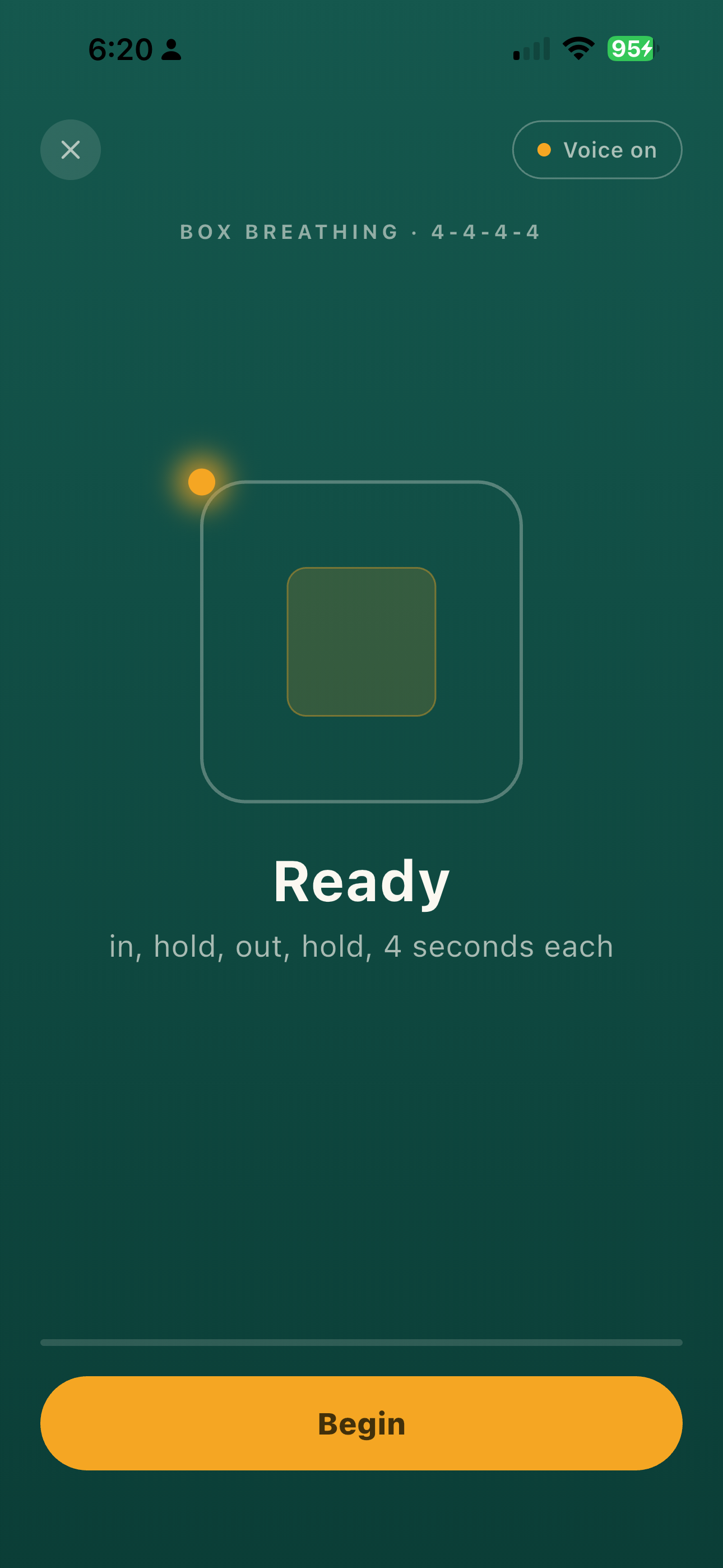
When that private read says I left usual range and the shift stuck, Ontor can surface a short reset before the next live ask. Here is a short breathing reset from my own product use. Cap any medical claim. The product point is a short private loop you own so the next price line or challenge answer can move back toward usual range, not a clinical intervention and not another workshop tip:
In exploratory work on that same personal Ontor history (one person, not a population study), high-stress stretches around asks often did not show an observed return to my personal median within an hour. State also carried forward across nearby windows. That is one reason a private usual-range check during unsupervised sell moments matters for this cut. It is not evidence that a suggested reset caused recovery, improved coaching outcomes, or removed anyone's Voice Mask as a clinical result.
Try it on the next price ask or challenge your client runs without you
Download Ontor - 14 days free, no card required
Install it for a real unsupervised commercial moment, not another role-play. Ask the client to notice how they sound versus their usual range across the next price line, challenge answer, or "sell me something" window: did over-explaining, rushing, professional cover, or "on" performance leave the teaching voice they rehearsed with you? Take a short optional reset if that shift sticks before the next ask. Keep the Voice Masks® awareness, Psychology of the Voice® work, presence programmes, and cohort coaching you already sell. Add a private loop that shows when the ask voice left personal usual range when you are not in the room.
Concrete between-session tool step for the next live block: (1) start Ontor before the sales call or demo, (2) watch short windows against personal usual range specifically through the price and challenge beats, (3) if a lasting leave shows up, take the short optional reset before the next ask line, then compare before/after. That is the try-on-next-call form of this article, not a hired-scorecard and not a hire-fire instrument.
If you sell into pods or teams, the soft path is a research or pilot conversation, or Ontor for teams, with aggregate patterns only. The primary next step for this coaches channel is still the next unsupervised ask: hear protection against personal usual range when they name the price, not only when they rehearse with you.
Sabber Ahamed is the founder of Ontor and an applied ML scientist (PhD in geophysics and signal processing) who builds on-device voice tools. He has shipped production signal and ML systems across radiology AI, healthcare, and manufacturing. Ontor compares how you sound to your own usual ranges and suggests short resets, without claiming clinical or revenue outcomes from marker changes. LinkedIn · About
References
- Tracy Goodwin / Captivate the Room - Advantage: protection sounds; camera tighten/rush/soften/perform; Psychology of the Voice®; Voice Masks® (buyer evidence; spine)
- Clare Wood Podcast Ep. 390 - Why your voice masks are costing you sales with Tracy Goodwin (price ask; sell me something; challenge professional cover; cannot hear within themselves) (buyer evidence; spine quotes)
- Clinton Jordan / VocalEdge - voice tightens under pressure; flat/rehearsed delivery; authenticity over polished robot (buyer evidence; corroboration)
- Christina Dufour - LinkedIn: performing presence goes flat; skills on grounded state (buyer evidence; corroboration)
- Rachel Pietsch / Now You're Talking - occupational voice fatigue (fatigue-only corroboration) (buyer evidence; fatigue-only)
- Jenni Steck - LinkedIn: end-of-day tired voice (fatigue-only corroboration) (buyer evidence; fatigue-only)
- How Ontor works
- Ontor for teams
- About the founder - Ontor
- Install Ontor
- Coaches anxious or robotic same pressure (sibling)
- Polished voice locks under evaluation (sibling)
- Coaches can't hear own voice under pressure (sibling)
- Stage voice dies under live interruption (sibling)
- Thin tight voice became everyday baseline (sibling)
- Practice holds, live dials don't (sibling)
- Call-mode pitch voice (sibling)
- Coaching between sessions (sibling)
- Measure nervous-system regulation (sibling)
- Block-length robot voice (sibling)